• Subscribe to our newsletter
The Media Online
  • Home
  • MOST Awards
  • News
    • Awards
    • Media Mecca
  • Print
    • Newspapers
    • Magazines
    • Publishing
  • Broadcasting
    • TV
    • Radio
    • Cinema
    • Video
  • Digital
    • Mobile
    • Online
  • Agencies
    • Advertising
    • Media agency
    • Public Relations
  • OOH
    • Events
  • Marketing
    • Thought Leaders
    • Campaigns
    • Research
    • Media Education
      • Media Mentor
  • Press Office
    • Press Office
    • TMO.Live Blog
    • Events
    • Jobs
No Result
View All Result
  • Home
  • MOST Awards
  • News
    • Awards
    • Media Mecca
  • Print
    • Newspapers
    • Magazines
    • Publishing
  • Broadcasting
    • TV
    • Radio
    • Cinema
    • Video
  • Digital
    • Mobile
    • Online
  • Agencies
    • Advertising
    • Media agency
    • Public Relations
  • OOH
    • Events
  • Marketing
    • Thought Leaders
    • Campaigns
    • Research
    • Media Education
      • Media Mentor
  • Press Office
    • Press Office
    • TMO.Live Blog
    • Events
    • Jobs
No Result
View All Result
The Media Online
No Result
View All Result
Home News

Beyond the glass ceiling

And the rise of the cyber ceiling.

by Glenda Nevill
August 13, 2026
in News
0 0
0
Beyond the glass ceiling
Share on FacebookShare on Twitter
  • The glass ceiling has shifted to a “cyber ceiling” as women journalists increasingly face misogyny, harassment and coordinated online attacks.
  • Progress for black women in newsroom leadership has stalled, with the gains seen after the 2013 State of the Newsroom report failing to continue.
  • Online abuse is contributing to women leaving journalism, with some moving into government, starting businesses or exiting the profession altogether.
  • AI could intensify online abuse against women, particularly because it operates in an unregulated environment where misinformation can spread easily and coordinated attacks can be scaled.
  • The 2026 Glass Ceilings report broadens the conversation beyond gender, examining race, LGBTQIA+ inclusion, socioeconomic inequality and community media alongside women’s representation and leadership.

Eight years after the publication of the landmark Glass Ceilings report in 2018, the picture for women in South African journalism has not improved. According to media academic Professor Glenda Daniels, many of the gains that once appeared within reach have stalled and in some cases, gone into reverse.

“When we published the previous report, the challenge wasn’t getting women into newsrooms but getting them into positions of power,” Daniels says. “That hasn’t changed. If anything, quite the reverse.”

The 2026 Glass Ceilings report was designed to check the progress of gender equality in South African media. Instead of documenting steady advances, Daniels says the research uncovered what she describes as “complete backsliding”.

“The whole point of Glass Ceilings is a progress report. What kind of progress are we making as women, against sexism, towards our Constitution, diversity and plurality? That’s why we do this research. But what we’ve seen is a complete backsliding, an anti-feminist backlash.”

For Daniels, the metaphor that has shaped decades of conversations about women in leadership no longer fully captures the challenge.

“The glass ceiling has shifted to the cyber ceiling,” she says.
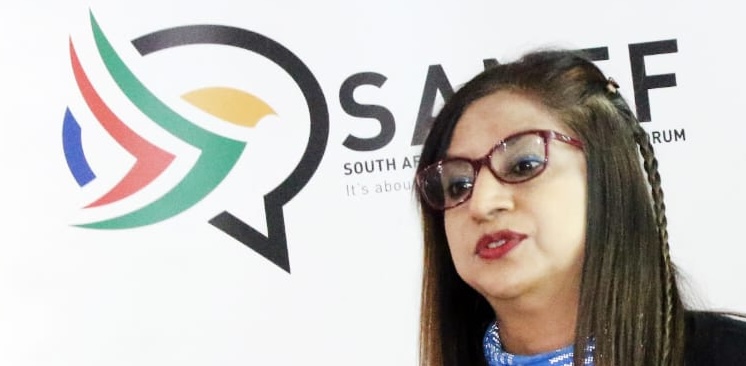
Professor Glenda Daniels, editor of the 2026 Glass Ceilings report

Explosion of misogyny

That shift reflects the explosion of misogyny and organised abuse on social media, where women journalists increasingly find themselves targeted simply for doing their jobs.

“There’s a free-for-all on the internet,” Daniels says. “Groups coalesce around very right-wing, manosphere interests and people begin to believe conspiracy theories such as women are taking away their power. Of course that’s not true.

“All we’re fighting for is equality. That’s what feminism means to most of us.”

Women occupying visible positions in journalism appear to carry the greatest burden.

“The women who are already out there – in politics, investigations, opinion, as editors – are the ones who receive the most backlash,” Daniels says.

The report suggests that what appeared to be an emerging issue in 2018 has now become the defining challenge facing women journalists. “In 2018 we introduced a new chapter on cyber misogyny and wondered whether it would become a trend. It most certainly has.”

The findings are stark. Of the 111 women surveyed, 75% identified cyber misogyny as the biggest problem they face.

“That was the highest percentage across every question in the survey,” Daniels says. “Back in 2018 people thought, ‘Maybe it’s a problem.’ Today it’s full-on.”

Ironically, she says, artificial intelligence may currently occupy a similar position in public thinking.

“When we asked women about AI as a future threat, relatively few thought it was a major issue. That’s exactly where cyber misogyny was in 2018. Now it’s become the biggest threat.”

Brutal backlash

While women continue to dominate reporting roles in many newsrooms, Daniels says representation has not translated into influence.

“Women still seem to be the majority as reporters,” she says. “But you can’t equate women’s numbers with women’s voices. Reporters are still at the bottom of the realm of power.”

Senior editorial leadership remains overwhelmingly male.

“The positions of power – news editors, editors, managing editors, media owners and boards – are still not where women are.”

Unlike the 2018 study, researchers did not attempt to gather management statistics directly from media companies.

“The majority of companies simply did not want to provide those figures last time,” Daniels explains. “They also didn’t want to open their books on the gender pay gap. We decided not to waste our time and instead asked women directly. Their answer was clear: nothing has changed.”

Daniels believes women remain concentrated in middle management rather than executive leadership.
Perhaps the greatest disappointment is the apparent reversal in the progress made by black women in leadership.

“When we did the first State of the Newsroom report, published in 2013, we saw fabulous progress. Black women were moving into editor positions and senior leadership. We thought it would continue to grow in a linear way. That hasn’t happened.”

Again, Daniels returns to one word. “The big word that stands out for me is ‘backlash’.”

Part of that backlash, she believes, stems from the online environment where misogynistic narratives have flourished. Another consequence is that many experienced women are simply leaving journalism.

“Women are withdrawing from journalism,” she says. “They’re moving into government, starting their own businesses or leaving the profession altogether. That’s the saddest part of this entire research.”

MY VIEW IS THAT AI IS GOING TO MAKE THINGS WORSE BECAUSE IT’S AN UNREGULATED SPACE WITH A LOT OF MISINFORMATION. COORDINATED ATTACKS AGAINST WOMEN CAN BECOME MUCH EASIER.

Although formal newsroom policies against discrimination and harassment exist in many organisations, Daniels says culture has not kept pace.

“The overt sexism we experienced years ago has become more covert inside newsrooms,” she says. “The overt hatred now plays out on social media.”

Activist civil society

Women are also becoming less likely to report online harassment. “They’re more reluctant because there’s very little understanding of online violence,” Daniels says.

She recalls earlier international research where women reporting online abuse were told by police to provide evidence of physical injury.

“They’d say, ‘Show me your bruises.’ There’s still a huge lack of understanding about what emotional and online violence actually is.”

Civil society has increasingly stepped into the gap left by employers, with organisations such as the South African National Editors Forum (SANEF) developing peer support, wellness initiatives and legal assistance for journalists facing harassment.

“I don’t believe it should all be doom and gloom,” Daniels says. “Civil society in South Africa is incredibly active. Thank God we’ve still got that activist nature.”

Some media organisations have introduced counselling and support services, but Daniels believes these remain the exception rather than the norm.

Looking ahead, she fears artificial intelligence could further intensify online abuse.

“My view is that AI is going to make things worse because it’s an unregulated space with a lot of misinformation. Coordinated attacks against women can become much easier.”

The new report also broadens its scope beyond gender. It includes chapters examining race, LGBTQIA+ inclusion, socioeconomic inequality and community media.

One chapter, written by News24 journalist Bongkile Makhubela, explores what Daniels describes as “the African Boys’ Club” and the recycling of senior male editors, arguing that black women continue to struggle for genuine inclusion at the highest levels of newsroom leadership.

For Daniels, the overall conclusion is clear. The conversation is no longer simply about breaking the glass ceiling.

“The glass ceiling has shifted to the cyber ceiling,” she says. “That’s the reality women journalists are confronting today.”


Professor Glenda Daniels is a National Research Foundation-rated and full professor at Wits University’s Media Studies department, Johannesburg. She is also secretary general at the South African National Editors Forum (SANEF). Her areas of expertise are: Democracy Theory, Media and Politics, the Politics of Technology, State of the Newsroom and Cybermisogyny.


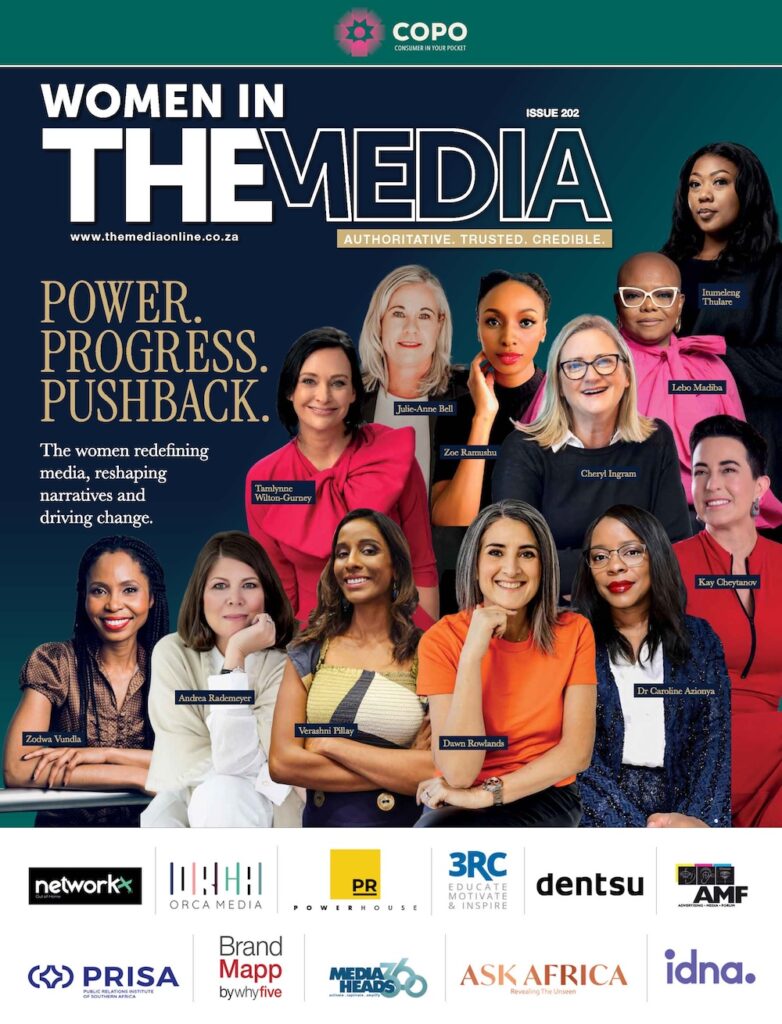
CLICK ON THE COVER TO READ WOMEN IN THE MEDIA 2026

Tags: AI and misinformationAI and online abuseblack women in journalismcyber ceilingcybermisogynygender inequality in mediagender representationGlass Ceilings 2026Glenda Danielsjournalism in South AfricaLGBTQIA+ inclusionmedia industrymedia leadershipmisogyny in journalismnewsroom diversitynewsroom leadershiponline abuse against womenonline harassmentSANEFsocioeconomic inequalitySouth African mediawomen in leadershipwomen in South African mediawomen journalistswomen leaving journalism

Glenda Nevill

Glenda Nevill is the editor of www.themediaonline.co.za She is also a writer, communicator, dog walker, mother, worshipper of Burmese cats. Loves rugby and beach walks. Hates bad grammar and bad manners.

Follow Us

  • twitter
  • threads
  • Trending
  • Comments
  • Latest
Kelders van Geheime: The characters are here

Kelders van Geheime: The characters are here

March 22, 2024
Dissecting the LSM 7-10 market

Dissecting the LSM 7-10 market

May 17, 2023
Awards Wrap: Radio Workshop nominated for Podcast of the Year, Bar & Beverage Awards 2023 winners announced, grab those MOST Awards tickets now

Awards Wrap: PRISM Awards honours PR professionals, Euphoria Telecom launches No Bull Prize, Red & Yellow students thrive at The Loeries

October 21, 2025
Getting to know the ES SEMs 8-10 (Part 1)

Getting to know the ES SEMs 8-10 (Part 1)

February 22, 2018
Sowetan proves that sex still sells

Sowetan proves that sex still sells

105
It’s black. It’s beautiful. It’s ours.

Exclusive: Haffajee draws a line in the sand over racism

98
The Property Magazine and Media Nova go supernova

The Property Magazine and Media Nova go supernova

44
Warrant of arrest authorised for Media Nova’s Vaughan

Warrant of arrest authorised for Media Nova’s Vaughan

41
Beyond the glass ceiling

Beyond the glass ceiling

August 13, 2026
How Africa’s top TV executives turn stories into hits

How Africa’s top TV executives turn stories into hits

August 12, 2026
Beyond girlboss: Women shaping the creative industry

Beyond girlboss: Women shaping the creative industry

August 12, 2026
From the stage to the classroom

From the stage to the classroom

August 12, 2026

Recent News

Beyond the glass ceiling

Beyond the glass ceiling

August 13, 2026
How Africa’s top TV executives turn stories into hits

How Africa’s top TV executives turn stories into hits

August 12, 2026
Beyond girlboss: Women shaping the creative industry

Beyond girlboss: Women shaping the creative industry

August 12, 2026
From the stage to the classroom

From the stage to the classroom

August 12, 2026

ABOUT US

The Media Online is the definitive online point of reference for South Africa’s media industry offering relevant, focused and topical news on the media sector. We deliver up-to-date industry insights, guest columns, case studies, content from local and global contributors, news, views and interviews on a daily basis as well as providing an online home for The Media magazine’s content, which is posted on a monthly basis.

Follow Us

  • twitter
  • threads

ARENA HOLDING

Editor: Glenda Nevill
nevillg@themediaonline.co.za
Sales and Advertising:
Tarin-Lee Watts
wattst@arena.africa
Download our rate card

OUR NETWORK

TimesLIVE
Sunday Times
SowetanLIVE
BusinessLIVE
Business Day
Financial Mail
HeraldLIVE
DispatchLIVE
Wanted Online
SA Home Owner
Business Media MAGS
Arena Events

NEWSLETTER SUBSCRIPTION

 
Subscribe
  • About
  • Advertise
  • Privacy & Policy
  • Contact

Copyright © 2015 - 2026 The Media Online. All rights reserved. Part of Arena Holdings (Pty) Ltd

Welcome Back!

Login to your account below

Forgotten Password?

Retrieve your password

Please enter your username or email address to reset your password.

Log In

Add New Playlist

No Result
View All Result
  • Home
  • MOST Awards
  • News
    • Awards
    • Media Mecca
  • Print
    • Newspapers
    • Magazines
    • Publishing
  • Broadcasting
    • TV
    • Radio
    • Cinema
    • Video
  • Digital
    • Mobile
    • Online
  • Agencies
    • Advertising
    • Media agency
    • Public Relations
  • OOH
    • Events
  • Research & Education
    • Research
    • Media Education
      • Media Mentor
  • Press Office
    • Press Office
    • TMO.Live Blog
    • Events
    • Jobs

Copyright © 2015 - 2026 The Media Online. All rights reserved. Part of Arena Holdings (Pty) Ltd

Not enough quota to unlock this post
Unlock left : 0
Are you sure want to cancel subscription?