
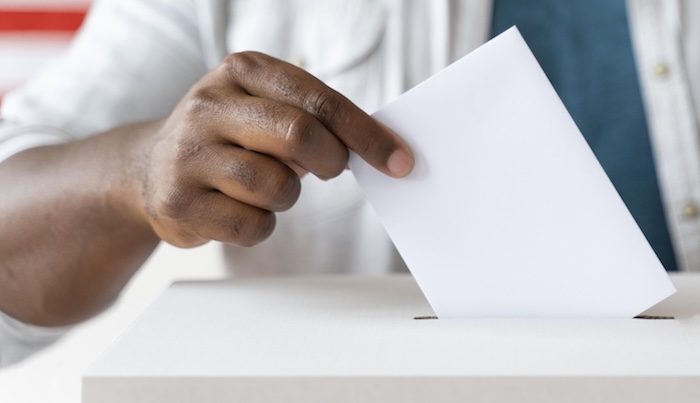
- Nearly 168 million registered voters in South Africa, Nigeria and Kenya are expected to participate in elections between November 2026 and August 2027, intensifying competition for media attention.
- Election coverage will put pressure on already stretched newsrooms, making it harder for brands to secure coverage for product launches and routine announcements.
- Brands need to adapt their communication strategies to changing audience behaviour, particularly in Kenya, where 58% of younger, English-speaking online news consumers surveyed use TikTok for news.
- Misinformation and political sensitivities create reputational risks, particularly in Nigeria, where 73% of online respondents surveyed said they struggle to distinguish real from fake information.
- Pulse Communications recommends that brands plan announcements around election calendars, remain politically neutral, strengthen media relationships and prioritise credible spokespersons and thought leadership over conventional product publicity.
Every year, carefully timed brand announcements disappear without a trace. Over the next nine months, that is set to happen a lot more often across South Africa, Nigeria and Kenya.
Between 4 November 2026 and 10 August 2027, nearly 168 million registered voters in three of Africa’s largest markets head to the polls with about 29.2 million in South Africa[1], 110 million in Nigeria[2] and a projected 28.5 million in Kenya[3]. Other African countries vote in this period too, but these are the three markets where Pulse Communications works every day and where the pressure is already building.
“Most brand news launched in election season will fail because it lands on a newsroom desk with no space and in a feed full of political noise,” says Kirsten Roos, managing partner at strategic communications agency Pulse Communications. “Elections don’t cancel brand communication, but they do change what earns attention.”
Three forces are working against brand stories at once. Each shows up most sharply in one market, but brands will feel all three across the region.
Less room on the desk
Newsrooms are doing more with less. In 2024, it was estimated that South Africa had lost around 70% of its news media workforce[4], and several major newsrooms have restructured since. The journalists who remain are about to be pulled onto election coverage, so every pitch needs to earn its place.
South Africa’s local government elections held yesterday are only the start. More than 500 parties and nearly 137,000 candidates are contesting seats across all 257 municipalities[5]. The IEC then has seven days[6] to declare results, and new councils must be formed within 14 days][7] of that – which, in hung councils, means coalition talks that will keep business desks busy into December.
“A product launch scheduled for December isn’t competing with other brands, it’s competing with the front page,” says Roos. “If your story doesn’t help journalists explain what’s happening in their country right now, it’s going to struggle.”
Then Nigeria, working to a timetable shortened by its new Electoral Act, elects its president and National Assembly on 16 January 2027, followed by governorship polls on 6 February[8] – removing one of the most valuable windows of the year, the new-year announcements.
“In Lagos, January is usually when the year’s big announcements land. This time, January belongs to the candidates,” says Babatunde Abolarin, West Africa lead at Pulse Communications. “Any brand planning a new-year launch should be asking the question: who is actually going to read it?”
The audience has moved
In Kenya, the Reuters Institute’s 2026 Digital News Report found that 58% of its sample of younger, English-speaking online Kenyans use TikTok for news and 58% get news from online creators every week[9]. A press release that reaches only newsrooms misses a large share of the people it’s meant for.
“Kenyan audiences don’t wait for the evening news. By then they’ve already seen it, remixed it and formed an opinion on TikTok,” says Magdaline Muranda, East Africa lead at Pulse Communications. “Brands are judged in public and at speed, so they need to be very deliberate about who they partner with, what they post and when.”
High trust, easy fakes
The information environment raises the stakes further. Kenya and Nigeria share the world’s highest trust in news at 68%, against a global average of 37%[10], yet 73% of online Nigerians surveyed said they struggle to tell real from fake online[11]. High trust helps credible brands, but it also lends credibility to a convincing fake.
“Nigerians trust the news – which is exactly why a fake statement in your name is so dangerous,” adds Abolarin. “In practice, it doesn’t even need to be convincing. It just needs to be forwarded.”
Nigeria adds one more risk and that is being read politically. “Right now, everything is political,” says Abolarin. “In an election season, a ‘new Nigeria, new beginning’ message, a palette that echoes a party’s colours, or a spokesperson with a known lean can be taken as a position, whatever the intent.”
So, what do the brands that stay visible do differently?
There is good news. In South Africa, business is the most trusted of the four institutions Edelman measures[12] and brands that use that trust wisely can stay visible through election season.
The brands that stay visible start with the calendar. They keep big launches away from peaks such as South Africa’s post-election results period, Nigeria’s run from mid-December to mid-February and Kenya’s campaign from late May. They also attach their news to what people actually care about – jobs, prices and services lead the agenda in all three countries.
“Brands with a genuine January story need to decide early,” says Abolarin. “Either bring it forward to early December, or hold it until mid-February, once the governorship results are in. In between, stay present, stay useful and stay politically neutral.”
“Kenya’s official campaign period only kicks off at the end of May, so brands still have a real window in the first five months of 2027,” says Muranda. “This is the time for brands to strengthen media relationships, secure thought leadership opportunities and build a consistent presence in the news agenda before election coverage becomes more prominent.”
Above all, election season is thought leadership season. With the news agenda locked on the vote, the brands that stay visible are the ones explaining something.
“Election and business desks need credible voices who can unpack what the outcome means for jobs, prices, investment or a specific industry, and a well-briefed spokesperson offering that perspective will earn airtime that a product launch simply won’t,” adds Roos.
For brands, it’s the key PR play of the period and one that works with the news cycle, rather than against it. The brands that come out of the next nine months stronger will be the ones that planned around the calendar and had something genuinely useful to say.
Pulse Communications is a results-driven agency that blends traditional and digital PR to deliver measurable ROI. With a sharp team of communication professionals in South Africa, Kenya, Nigeria and The Netherlands, and a broad network of trusted stakeholders, Pulse Communications turns strategy into real impact. Their services include public relations strategy and execution, content creation, media relations, influencer and stakeholder engagement, event management and media training.
Sources
[1]https://www.ewn.co.za/staggering-lge-2026-numbers-more-than-500-parties-137k-candidates/
[2]https://nairametrics.com/2026/10/06/lagos-kano-kaduna-top-nigerias-voter-register-ahead-of-2027/
[3]https://citizen.digital/article/iebc-gazettes-2027-election-period-unveils-key-timelines-for-aspirants-and-campaigns-n388705
[4] https://www.businessday.co.za/news/2026-08-06-south-africas-legacy-media-under-siege-as-171-enca-jobs-on-the-line/
[5] https://www.ewn.co.za/staggering-lge-2026-numbers-more-than-500-parties-137k-candidates/
[6] https://source.acts.co.za/local-government-municipal-electoral-act-2000/index.html?64_determination_and_declaration_of_result_of_election.php
[7] https://www.gov.za/speeches/municipal-managers-have-14-within-which-call-first-council-meetings-16-aug-2016-0000
[8]https://guardian.ng/news/inec-moves-2027-presidential-election-to-january-16-2/
[9]https://reutersinstitute.politics.ox.ac.uk/digital-news-report/2026/kenya
[10]https://reutersinstitute.politics.ox.ac.uk/digital-news-report/2026/dnr-executive-summary
[11]https://www.thecable.ng/?p=1182677
[12]https://www.ewn.co.za/2026/04/29/more-sans-trust-business-above-government-to-heal-a-divided-society-survey