You can arrive in a country and still be nowhere near what is actually happening. Roads close, communications fail, checkpoints appear and people become frightened to talk. Often the difficult part is not finding someone willing to tell you what happened. It is working out what you can actually verify.
In war, the same event can look completely different depending on who is telling you about it. That’s part of what interests me about Sudan.But the more time I spend working on the conflict, the more I find myself asking another question: why aren’t more South African journalists telling the Sudan story?
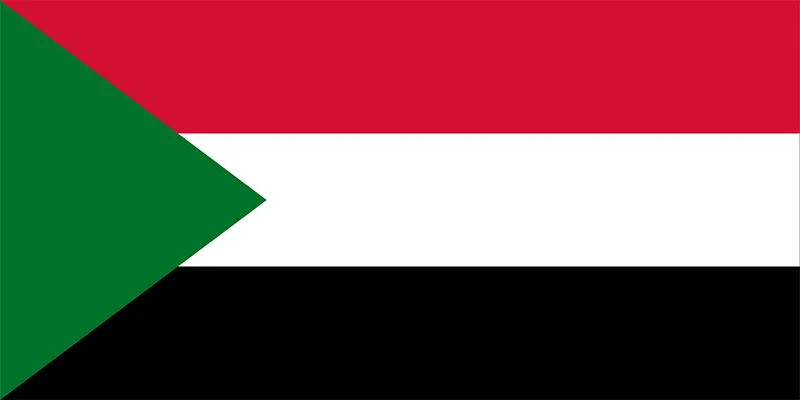
The war between the Sudanese Armed Forces (SAF) and the Rapid Support Forces (RSF) began on 15 April 2023. Three years later, around 14 million people have been forced from their homes. The UN Refugee Agency (UNHCR) describes Sudan as the world’s largest displacement and humanitarian crisis.
It would be wrong to say South African media does not cover Sudan. It does. SABC, News24 and other outlets report major developments, atrocities and diplomatic moves. International wire services including Reuters, AFP and AP also provide important reporting that reaches South African audiences.
What is much harder to find is sustained, original South African reporting that follows Sudan over time and helps us understand not only what happened, but what is changing and why it matters.
There are very practical reasons for this. Sudan has become extraordinarily difficult to report. Journalists cannot simply move freely between areas controlled by the SAF and those controlled by the RSF. Access is restricted, and getting close to the fighting can mean negotiating with one of the people fighting it.
For foreign correspondents, embedding with one side can sometimes be one of the few ways of reaching particular areas. But that immediately creates another problem. Who controls where you go? Who decides what you see? And what happens when you later want to report from the other side?
I recognise that dilemma from other wars. Front-line reporting has changed dramatically during my career. Increasingly, getting close to a battlefield means negotiating access with one of the people fighting on it. That does not make the resulting journalism invalid. But it makes one question even more important: What am I not being shown?
For South African newsrooms, all of this comes on top of the cost of foreign reporting – travel, insurance, security, local producers, communications and the time needed to develop sources and verify information. International agencies therefore become essential. The problem isn’t using them. The problem comes when international reporting stops supplementing our own understanding of Africa and starts doing most of that understanding for us.
Sudan matters to South Africa politically too.
Speaking at the African Union summit in February, President Cyril Ramaphosa said the situation in Sudan remained a concern. He called on the warring parties to lay down their arms, allow humanitarian access and embark on what he called an “inclusive national political dialogue” towards a sustainable resolution.
If our government has a position on Sudan, South African journalism has something to interrogate. What is Pretoria actually doing? How much influence does it have? What would an inclusive political settlement look like? And are we asking those questions often enough?
This is also where narrative becomes important.A study published in April by the French Institute of International Relations examined Sudan’s online propaganda war. It found the SAF, RSF and their supporters competing aggressively to shape how the conflict is understood.
Crucially, it also found that when there is too little reporting from the field, false and misleading information has more room to spread. That matters because the RSF’s record of atrocities has rightly attracted enormous international scrutiny. But there is a danger in allowing the brutality associated with one actor to confer legitimacy by default on the other.
The SAF is Sudan’s national army. That gives it an institutional legitimacy the RSF does not have, and makes the shorthand tempting: army versus militia. Journalism has to be more suspicious of neat categories than that. The point isn’t to pretend the allegations against the two sides are identical. They aren’t.
It is to ensure that the horror associated with one actor doesn’t determine how critically we examine the other.The same applies beyond Sudan’s borders. Outside actors are helping shape this war. Much attention has rightly focused on allegations of UAE support for the RSF, but SAF has its own external relationships, with Egypt, Iran and Turkey all reported to have provided military support.
If we are going to follow the weapons, money and political backing sustaining one side of this war, we should be just as determined to follow those sustaining the other. This isn’t taking sides. It is reporting.And this is where the relative absence of sustained South African reporting matters.
The problem isn’t that South Africans can’t find news about Sudan. They can. The problem is that if we aren’t doing enough of the reporting ourselves, we become more dependent on other people’s decisions about which stories matter, which sources are credible and which frames are used to explain the war.
There are already journalists finding different ways to address the access problem. Sudanese reporters continue to work inside the country and from exile. International organisations and newsrooms work with local journalists, producers and researchers.
Open-source techniques can help verify events in places journalists cannot physically reach. We need far more of these models.South African newsrooms could commission Sudanese journalists, build longer-term relationships with reporters in the region, pool resources and develop journalists who follow African countries long enough to understand them – rather than discovering them when catastrophe makes the headlines.
South Africa sees itself as an important political and diplomatic actor on this continent. Our journalism should be just as curious about it.
We don’t need South African correspondents permanently stationed in every African capital. But we do need more of our own sources, more relationships with African journalists, more expertise that survives beyond the breaking-news cycle and more willingness to ask whose version of a conflict we are receiving.
Because the problem isn’t that South Africans can’t find news about Sudan. They can. The question is who is deciding which Sudan story reaches them. And in a war where controlling the story is itself part of the battle, that matters.
Paula Slier is an international journalist and speaker who works on information warfare, disinformation and media literacy. She has reported from conflict zones across the Middle East, Africa and Europe.