- YuLife CEO Tal Gilbert argues that AI adoption must prioritise employee trust, wellbeing and human connection, not just productivity gains.
- YuLife’s YouGov research found that a quarter of UK workers using AI tools felt increased workplace pressure.
- Gilbert believes AI should empower employees to do better work rather than be viewed primarily as a tool for reducing jobs.
- South Africa’s established financial services, insurance, mining and agricultural sectors offer opportunities to apply AI to industry-specific challenges.
- Gilbert says AI can enhance personalised employee wellbeing support, but human judgement, empathy and customer relationships must remain central. *
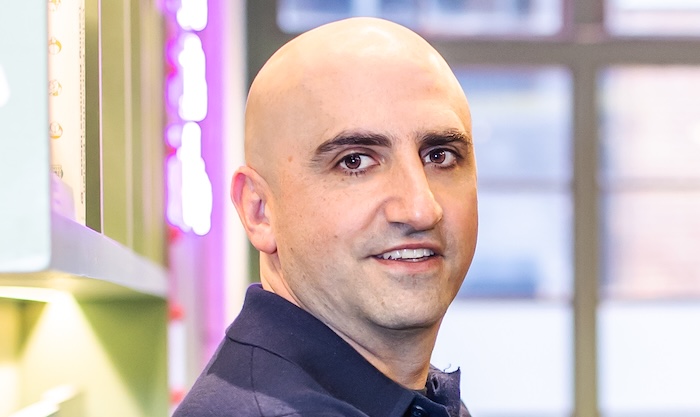
[PARTNER CONTENT] Tal Gilbert takes his time with a question. The CEO of insurtech YuLife trained as an actuary, and a career spent weighing risk, has left him wary of quick answers, particularly on the one subject every executive is now expected to have a quick answer for.
Ask him about artificial intelligence and he starts not with the technology but with the people it lands on.
“Almost every company I speak to has an AI strategy,” he says. “Far fewer have thought about what it feels like to be the employee on the receiving end of it.”
YuLife has reason to care about the answer. The London-headquartered company, sells employee benefits built around wellbeing, and describes itself as AI-forward. In March it asked YouGov to survey more than 1100 working adults in the UK about the technology.
Pressure at work
A quarter of those using AI tools said it had increased the pressure they feel at work. About a third doubted that any productivity gains would be reinvested in their wellbeing or development.
“That tells you the tools are arriving faster than the trust,” Gilbert says. “People can see what AI does for the company. They are still waiting to hear what it does for them.”
Businesses have discovered that declaring themselves “AI-first” can be easier than managing the reality of that shift. As companies increasingly explore how AI can take on tasks traditionally performed by people, some have faced employee uncertainty, customer backlash and questions about what this means for the future of work.
The challenge is not simply adopting AI, but finding the right balance between embracing its potential, maintaining trust and recognising the value people continue to bring to the business.
Gilbert sees the same risk wherever a company leans too hard on the technology. “Rely on AI so heavily that your customers and your staff start wondering whether anyone is still home, and you have spent trust that took years to earn,” he says. “Efficiency shows up in a spreadsheet within a quarter. Trust takes much longer to come back.”
Culture and behaviour
The mistake, as he sees it, is treating AI as an IT project or a cost line. Culture and behaviour decide whether it works, and those are human questions, not technical ones.
“If the first question you ask is how many roles this saves, you have already limited what you will get out of it,” he says. “Ask what your people could do with it that they can’t do today. The answers are far more interesting, and they are usually worth more.”
YuLife tries to take its own advice. AI tools have gone to everyone in the business, from the newest hire to the executive team, with the expectation that people will experiment and share what they learn. The parts of the job that depend on judgment, warmth and knowing the customer stay in human hands.
“I want every person here, whatever their role, to have the tools to do the best work of their career,” Gilbert says. “What we guard is the humanness. Companies choose YuLife because it feels as though somebody cares about their people. That feeling is the business, and no model gets to take it over.”
Reads the patterns
The same thinking runs through the product. YuLife’s app turns wellbeing into something closer to a game: members earn rewards for walking or meditating, take on challenges and compete with their colleagues.
Underneath, AI reads the patterns and steers each person towards support that fits, whether the need is physical, mental or financial. The employer sees only the aggregate, an anonymised picture of how the workforce is doing.
“Insurers have been trusted with the most private details of people’s lives for a very long time,” he says. “That history is a responsibility. AI makes the information more useful, so we have to be more careful with it than we have ever been.”
That caution was learnt the long way round, across several markets.. After studying statistics and actuarial science at Wits, Gilbert read development studies at Oxford, a detour from the numbers into the question of how people’s lives improve.
Room to experiment
He joined Discovery in 2004 to help launch a health insurer in the UK, then spent the best part of 20 years taking the Vitality model abroad, with senior roles in the UK and Hong Kong before running Vitality in the US.
“Every market taught me something different about how people relate to their health and their money,” he says. “The constant is that nobody changes because an insurer tells them to. They change when it is enjoyable, when their friends are doing it, and when somebody notices.”
Of all those markets, his home country still strikes him as among the most inventive. Its financial system, he argues, is less settled than those of the UK or the US, which leaves insurers and banks freer to try things and consumers more willing to go along.
“When a system is less entrenched, you have more room to experiment,” he says. “Some of the most original ideas in insurance anywhere in the world began in South Africa, and I don’t think that is an accident.”
That is also how he reads the country’s prospects in AI. He does not expect SA to build the large language models that power the technology, and is untroubled by that.
Rassie has built belief
“The value sits in what you do with it,” he says. “We are world class in financial services and insurance, in mining, in agriculture. Put AI to work in the places where we already know more than most, and South Africa has a real advantage. I would love what we are building at YuLife to be part of that story at home as much as anywhere else.”
For a model of how to lead through that kind of change, he looks to Springbok coach Rassie Erasmus.
“What Rassie has built is belief with a plan behind it,” Gilbert says. “Every player knows why he is there and what is expected of him, and that clarity frees people to be brilliant.”
Then comes a comparison that only a South African running a London company could risk. “My English colleagues will forgive me,” he says, laughing. “When England reach a semifinal, the whole country starts bracing for heartbreak. When the Springboks get there, we have already planned the braai for the final.”
Behind the joke is a serious point about how he leads . A team that expects to win prepares differently, and he wants that expectation at YuLife in SA and in the UK alike.
“It is what I would wish for any South African business looking at AI right now,” he says. “We have every reason to expect to be good at this. We just have to bring our people with us.”
* Summary created by AI
* Sponsored content