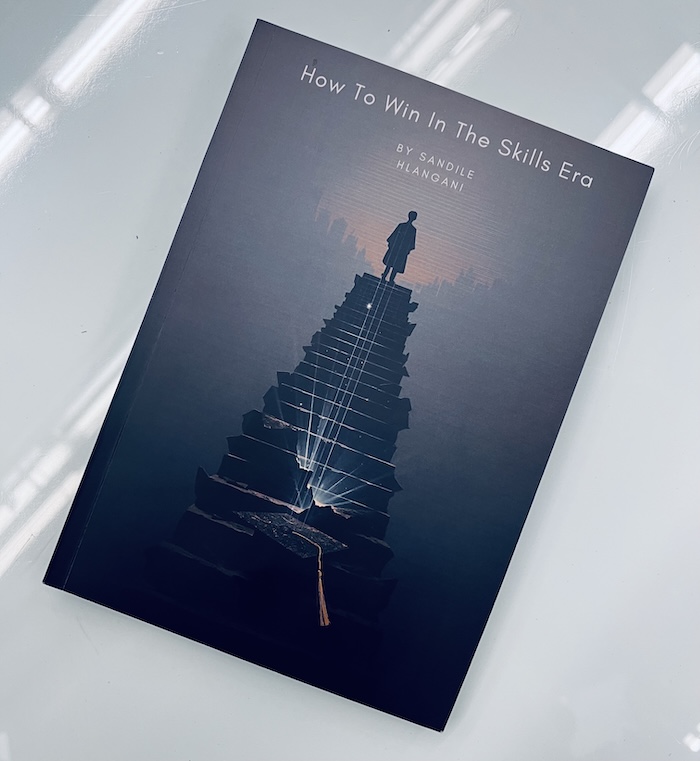
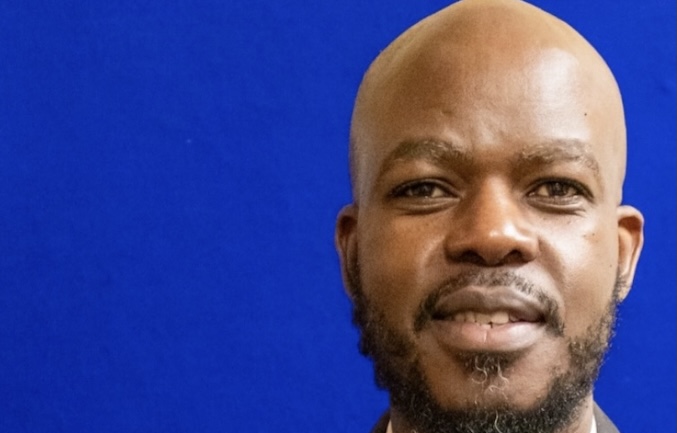
- South Africa has entered a “skills era”. Sandile Hlangani says practical, adaptable skills now matter as much as formal qualifications.
- Youth unemployment is also a skills challenge. The book highlights digital literacy, AI literacy, critical thinking and entrepreneurship as essential skills for today’s economy.
- Universities need to adapt to the future of work. Hlangani argues qualifications should be paired with practical, digital and entrepreneurial experience.
- AI raises the value of human judgement and creativity. He says workers will increasingly compete with people who know how to use AI effectively and ethically.
- The digital divide remains an opportunity divide. Publishing the book in print is intended to make it accessible to South Africans with limited internet access or expensive data.
Sandile Hlangani’s book How To Win In The Skills Era asks a difficult question: Is South Africa preparing young people for the jobs that exist?
He argues that South Africa’s skills challenge is not just about qualifications but about preparing people for an economy reshaped by AI, digital work and entrepreneurship.
As South Africa grapples with high youth unemployment, rapid advances in artificial intelligence and a widening gap between education and the labour market, communicator and technology strategist Hlangani believes the country needs to rethink what it means to prepare people for work.
That is the central argument of How To Win In The Skills Era, which has been gaining traction in schools and libraries since its launch earlier this year.
Rather than dismissing formal education, Hlangani argues that qualifications alone are no longer enough. He says graduates and school leavers increasingly need practical digital skills, entrepreneurial thinking and the ability to adapt as technology changes the workplace.
“The ability to solve problems, create value and apply practical skills matters more than simply holding a qualification,” Hlangani says.
Why the conversation matters now
South Africa’s unemployment crisis has made the transition from education to employment one of the country’s biggest policy and economic challenges. Young people entering industries such as media, communications and technology are doing so at a time when AI is automating routine tasks, while employers are placing greater value on digital fluency and multidisciplinary skills.
Hlangani says many young people are still being prepared to search for jobs instead of creating opportunities. “One of the biggest gaps is that we are still teaching young people to look for jobs, when the world increasingly needs people who can create value,” he says.
He believes the skills deficit goes beyond technical expertise. Critical thinking, storytelling, adaptability, digital literacy and responsible use of AI have become essential capabilities across industries.
For media professionals, the shift is particularly significant. As he says, “The future journalist may not only need to find the story, they may need to build the platform that tells it.”
A South African skills gap, not a talent gap
One of the book’s strongest themes is that opportunity remains unevenly distributed across South Africa.
Hlangani argues that young people from rural communities often have the same potential as those in major cities but face barriers including limited access to equipment, affordable data, professional networks and industry exposure. “Talent is everywhere, opportunity isn’t.”
That distinction, he says, is critical in a country where geography and income continue to shape access to education and employment.
Universities still matter but they need to evolve
Hlangani is careful not to position the book as an attack on higher education. Instead, he argues that universities have been overtaken by the speed of technological change.
“I don’t think universities are the problem. I think the pace of change has overtaken the way we prepare young people for work.”
He believes qualifications should be complemented by practical, entrepreneurial and digital skills, while institutions need to reassess whether some programmes still lead to meaningful employment opportunities.
Emerging fields such as AI, cybersecurity, e-commerce, data and digital content creation are growing rapidly, he says, and curricula need to reflect those shifts.
AI changes the value of human skills
Drawing on his experience across broadcasting, radio, technology and strategic communications, Hlangani argues that AI is changing the nature of work rather than simply replacing workers.
He says routine tasks will increasingly be assisted by AI, making human judgement, creativity, communication and ethics even more valuable.
“In media, AI can help you research, transcribe, translate or generate ideas, but it cannot replace the responsibility of deciding what is true, what matters to an audience and how a story should be told ethically,” he explains.
Instead of competing against AI, he says workers will increasingly compete against people who know how to use AI effectively and responsibly.
Practising what he writes
Hlangani says the book is grounded in his own experience of experimenting with entrepreneurship rather than simply advocating for it.
Alongside his younger brother, he launched Hlangani Brothers, selling everyday household products including MQADI Toilet Paper, Lafu Lafu Toilet Paper and MQADI Dishwashing Liquid.
The business now supplies individual customers, crèches and private companies in Gauteng. “Talk is cheap, so I decided to practise what I preach. We are still working our 9-to-5s, still learning, still building and still dreaming.”
Why print still matters in a digital economy
In an age dominated by digital publishing, Hlangani made a deliberate decision to release How To Win In The Skills Era in print.
He says too many South Africans still face barriers to accessing online information because of the cost of data and unreliable connectivity.
“South Africa’s digital divide is not simply about who has a smartphone. It is about who can afford data, has reliable connectivity and has the time and environment to use the internet,” he notes.
The decision has already had a wider impact. Following its release, the book was selected for distribution to libraries across the Eastern Cape through a provincial Department of Arts and Culture tender.
For Hlangani, the digital divide is ultimately about access to opportunity.
“Affordable data, public Wi-Fi, accessible digital platforms and practical support for entrepreneurship must go alongside physical resources such as books, libraries and community learning centres.”
“Because ultimately, the digital divide is not just a technology problem but an opportunity problem.”