- South African newsrooms should portray marginalised communities as active agents of change, not just victims of poverty, crime or service delivery failures.
- Ethical journalism means naming sources, using their own words and recognising their skills, ambitions and contributions.
- Briefly News reported on Limpopo developers Marvel Shibambu and Malunghelo Mathonsi, who built the free Novar educational app on a second-hand computer bought for R700.
- Dignity-centred reporting should address structural barriers alongside individual achievements and follow up to assess the lasting impact of community initiatives.
- Social Development Month in October offers South African media an opportunity to highlight community-led solutions and improve public understanding of social support programmes.
South African newsrooms owe marginalised communities stories that show people as agents of their own lives. Visibility means a face on a screen or a name in a headline. Representation means people appear with ambitions, skills and a say in what happens next. Dignity depends on the latter.
October is Social Development Month, a Department of Social Development initiative that raises awareness of services that fight poverty and support vulnerable communities, including older persons, children, and people with disabilities.
The campaign runs together with the National Development Agency and SASSA, and it helps communities learn which social support programmes exist and how to access them. The month is a fitting moment for the media to reflect on its role in shaping how these communities are seen.
Crisis coverage teaches readers to expect the worst
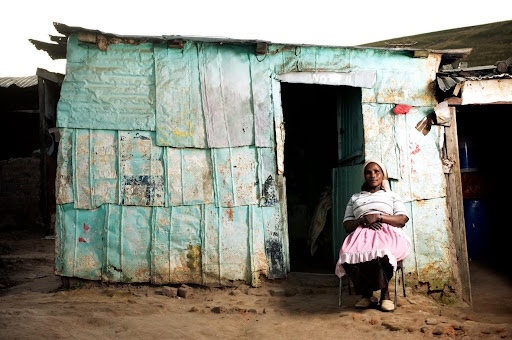
Too many stories reach marginalised communities only when something has gone wrong. A service delivery protest, a crime scene or a hunger statistic opens the door, and the camera leaves when the crisis story ends. Readers who only meet a community through its worst day learn to see that community as a problem. Policymakers, employers and neighbours learn the same lesson.
Agency is the corrective. A story that records what people do to overcome the problems they face gives readers a fuller and more accurate picture. It also changes how the people in the story are treated, because a community shown with skills and initiative gets approached as a partner.
Putting builders at the centre
Briefly News has seen this in its own reporting. Marvel Shibambu and Malunghelo Mathonsi grew up in a village in Limpopo and taught themselves to code. They built Novar, a free learning app for high school learners, on a second-hand computer they bought for R700.
Briefly News reported on their work, and a fundraiser run by a content creator raised R80,000 in 24 hours. Marvel later became part of Briefly News’ Young Money Makers project, which spotlights young South Africans who turned challenges into career breakthroughs. Readers met two young developers as builders, and they responded with money and attention.
Another example is the Footprints Foundation in Bethlehem, Free State. Its founder, Maseromo Evelyn Mofokeng, recently hosted a celebration for 125 learners aged five to 14 and gave them school shoes, uniforms, stationery and books. The story names the person doing the work, shows how the help reaches children and tells readers how to support it. The people involved are community members taking action.
Four habits turn dignity into newsroom practice
Newsrooms can put dignity into practice by following four habits.
First, name people and let them speak in their own words. A source who is quoted at length and credited properly is treated as an expert on their own life.
Second, ask what people are already doing before asking what they lack. Almost every community has organisers, entrepreneurs, carers and learners whose work never reaches a news desk because nobody asked.
Third, show the systems around the individual. The Novar developers built their app with zero funding, which tells readers something about the barriers young South Africans face and what support can unlock. A story that includes the barrier and the response shows readers where help makes a difference.
Fourth, return to the story. Following up months later shows whether a fundraiser reached the people it was meant for, whether a programme grew and what changed. A community covered once and then forgotten has been used for content.
Honesty about hardship belongs in the same story
Dignity in reporting also asks for honesty about hardship. Telling stories of agency does not mean polishing away poverty, and a journalist who turns every struggle into a triumph misleads readers about what people face.
The aim is accuracy: the real constraints, and the real effort people put into working through them, belong in the same story.
Readers and institutions shape what newsrooms commission
The audience carries part of this responsibility. Readers decide what gets clicked, shared and discussed, and the stories that earn attention shape what newsrooms commission next. Sharing a story about a community organiser or a young coder tells editors that these stories matter.
Institutions have a role too. Social Development Month brings government, agencies and community organisations into the same conversation, and journalists can join it by treating them as partners in reporting. Programmes become easier to find when communities see them described accurately, and communities become easier to understand when their own voices lead the story.
Marginalised communities have never lacked stories worth telling. What has often been missing is the editorial choice to tell them with care, depth and respect.
This October, let that choice become a habit that outlasts the month. When a community appears in the news, it should be recognisable to its own members as the place they know, with the people they know doing the work they know is hard.
Disclaimer: The writer is Hilary Sekgota, human interest head of desk at Briefly News. Views expressed here are the writer’s own and do not necessarily reflect the official policy or position of any organisation.