• Subscribe to our newsletter
The Media Online
  • Home
  • MOST Awards
  • News
    • Awards
    • Media Mecca
  • Print
    • Newspapers
    • Magazines
    • Publishing
  • Broadcasting
    • TV
    • Radio
    • Cinema
    • Video
  • Digital
    • Mobile
    • Online
  • Agencies
    • Advertising
    • Media agency
    • Public Relations
  • OOH
    • Events
  • Marketing
    • Thought Leaders
    • Campaigns
    • Research
    • Media Education
      • Media Mentor
  • Press Office
    • Press Office
    • TMO.Live Blog
    • Events
    • Jobs
No Result
View All Result
  • Home
  • MOST Awards
  • News
    • Awards
    • Media Mecca
  • Print
    • Newspapers
    • Magazines
    • Publishing
  • Broadcasting
    • TV
    • Radio
    • Cinema
    • Video
  • Digital
    • Mobile
    • Online
  • Agencies
    • Advertising
    • Media agency
    • Public Relations
  • OOH
    • Events
  • Marketing
    • Thought Leaders
    • Campaigns
    • Research
    • Media Education
      • Media Mentor
  • Press Office
    • Press Office
    • TMO.Live Blog
    • Events
    • Jobs
No Result
View All Result
The Media Online
No Result
View All Result
Home News Media business

Why World Cup stadiums are losing their brand names

FIFA's 'clean stadium' policy requires host venues to remove or conceal branding belonging to companies that are not official tournament sponsors.

by Herman Blignaut
July 6, 2026
in Media business
0 0
0
Why World Cup stadiums are losing their brand names

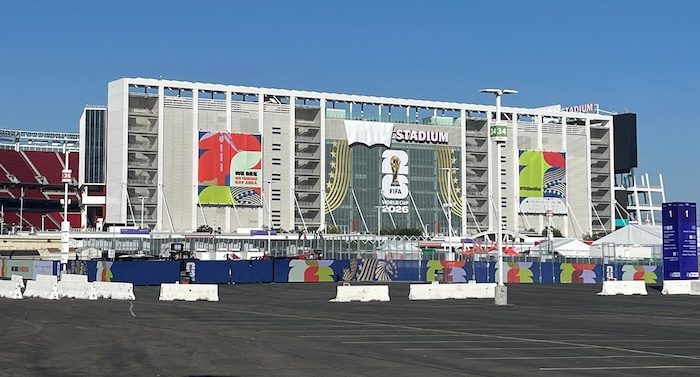
Levi's Stadium in Santa Clara rebranded for the FIFA World Cup/Alyssa Goard

Share on FacebookShare on Twitter
  • FIFA’s clean stadium policy requires non-sponsor branding to be removed or concealed at World Cup venues
  • Stadiums such as Levi’s Stadium are temporarily renamed to comply with FIFA sponsorship rules
  • The policy protects official sponsors and prevents ambush marketing during the FIFA World Cup
  • Temporary logo removal does not affect underlying trade mark ownership or intellectual property rights
  • The World Cup demonstrates how trade marks and commercial agreements protect brand value and sponsorship exclusivity *

The 2026 FIFA World Cup is underway, bringing its trade mark spectacle to 16 host cities across Canada, Mexico and the United States. Behind the excitement, however, lies years of planning and a complex web of commercial arrangements designed to protect one of the world’s most valuable sporting brands.

Among the tournament’s lesser-known requirements is FIFA’s “clean stadium” policy, which requires host venues to remove or conceal branding belonging to companies that are not official tournament sponsors.

The rule has placed a spotlight on stadium naming rights and corporate branding, with venues across North America temporarily shedding their commercial identities in favour of names linked to their host cities.

One of the most talked-about examples is Levi’s Stadium in Santa Clara, California. Although the venue is hosting World Cup matches, Levi’s is not an official FIFA sponsor. As a result, the stadium has been temporarily renamed “San Francisco Bay Area Stadium” for the duration of the tournament.

The clean stadium policy explained

FIFA’s clean stadium policy is designed to preserve the exclusivity purchased by its official commercial partners. Sponsors invest significant amounts of money to secure the right to associate their brands with the World Cup, and FIFA is determined to ensure that those rights are not diluted by competing brands receiving exposure within official venues.

In practice, this means that stadium signage, advertising displays and branded materials belonging to non-sponsors must be removed, covered or replaced. These requirements extend beyond stadium names and large-scale advertising.

Reports from World Cup venues indicate that branding on products and equipment within stadiums has also been concealed or replaced where necessary to comply with FIFA’s commercial requirements. Similarly, in Boston, reports indicate that payment terminals were replaced to align with the tournament’s commercial requirements.
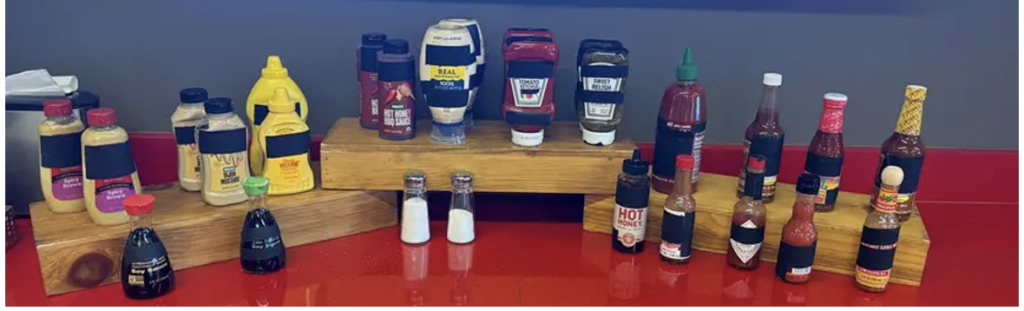
Source: The San Francisco Standard

Implementing these requirements across multiple venues requires extensive planning and coordination among tournament organisers, host venues and commercial partners.
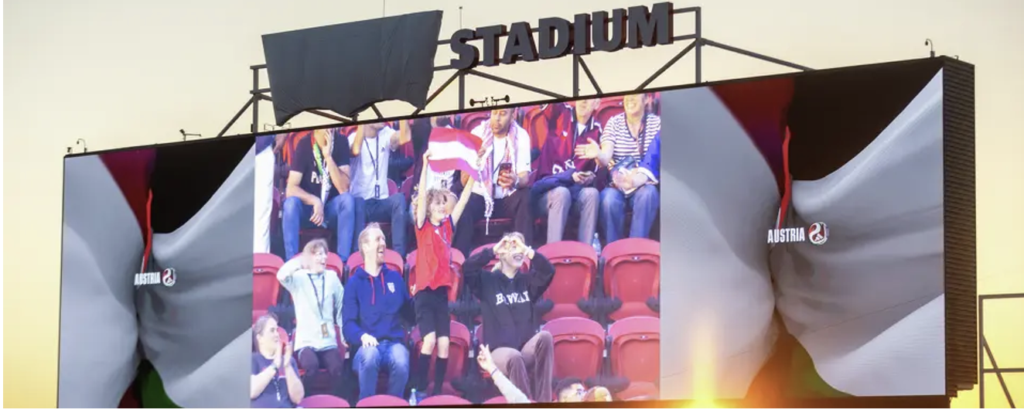
Source: SF Gate

Major sporting events frequently involve strict controls over commercial messaging within official venues. From an intellectual property perspective, however, requiring a brand to remove or cover its logo does not diminish a brand owner’s trade mark rights.

The trade mark remains registered, enforceable and fully owned by its proprietor. What changes is the ability to display or use the trade mark within a particular commercial environment governed by the event’s commercial rules.

Preventing ambush marketing

A key objective of these restrictions is to prevent ambush marketing; the practice of creating an association with a major event without obtaining official sponsorship rights. By controlling the commercial landscape within its venues, FIFA seeks to ensure that only authorised partners benefit from the exposure and goodwill associated with the tournament.

For a non-sponsor brand owner, the consequences are commercial rather than proprietary. The company retains its registered trade mark rights, and to license others to do so, outside the World Cup environment. However, it may not display those marks within official tournament venues where doing so would conflict with FIFA’s sponsorship arrangements.

The temporary concealment of its branding during the tournament does not weaken the enforceability of the underlying trade mark rights. Rather, it reflects contractual and commercial restrictions that apply within the context of the event.

Lessons for businesses

The World Cup’s brand protection framework offers a powerful reminder of the commercial value that intellectual property can create when it is strategically managed and rigorously enforced.

FIFA has spent decades building an extensive portfolio of trade marks and related intellectual property rights that enable it to regulate how the tournament is marketed and commercially associated with third parties.

For businesses, the lesson extends far beyond sport. Intellectual property is not merely a legal asset; it is a commercial asset capable of generating substantial value, attracting investment and creating competitive advantage. The stronger the brand, the greater the incentive to protect it.

The FIFA World Cup demonstrates how trade mark rights, together with contractual and commercial arrangements, can be used to control the use of branding within a specific environment.

These mechanisms support the exclusivity offered to official sponsors while preserving the underlying intellectual property rights of non-sponsor brand owners.

Herman Blignaut is a partner at Spoor & Fisher, Africa’s largest specialised intellectual property law firm, with deep African roots and a global reach. The firm specialises in all aspects of IP law, including trade marks, copyright, patents, registered designs, anti-counterfeiting, commercial work with an IP flavour, and litigation in these fields. Clients have trusted the firm to protect, manage and enforce their IP across Africa and the Caribbean for over 100 years.



 

Tags: ambush marketingFIFA World CupHerman BlignautIntellectual PropertyLevi's StadiumSan Francisco Bay StadiumsponsorshipSpoor and Fishertrade marks

Herman Blignaut

Herman Blignaut is a partner at Spoor & Fisher, Africa’s largest specialised intellectual property law firm, with deep African roots and a global reach. The firm specialises in all aspects of IP law, including trade marks, copyright, patents, registered designs, anti-counterfeiting, commercial work with an IP flavour, and litigation in these fields. Clients have trusted the firm to protect, manage and enforce their IP across Africa and the Caribbean for over 100 years.

Follow Us

  • twitter
  • threads
  • Trending
  • Comments
  • Latest
Kelders van Geheime: The characters are here

Kelders van Geheime: The characters are here

March 22, 2024
Dissecting the LSM 7-10 market

Dissecting the LSM 7-10 market

May 17, 2023
Getting to know the ES SEMs 8-10 (Part 1)

Getting to know the ES SEMs 8-10 (Part 1)

February 22, 2018
Keri Miller sets the record straight after being axed from ECR

Keri Miller sets the record straight after being axed from ECR

April 23, 2023
Sowetan proves that sex still sells

Sowetan proves that sex still sells

105
It’s black. It’s beautiful. It’s ours.

Exclusive: Haffajee draws a line in the sand over racism

98
The Property Magazine and Media Nova go supernova

The Property Magazine and Media Nova go supernova

44
Warrant of arrest authorised for Media Nova’s Vaughan

Warrant of arrest authorised for Media Nova’s Vaughan

41
Why World Cup stadiums are losing their brand names

Why World Cup stadiums are losing their brand names

July 6, 2026
Illegal sharing could mean loving The Polygamist to death

Illegal sharing could mean loving The Polygamist to death

July 3, 2026
Grid Worldwide exits TBWA\SA to reclaim independence

Grid Worldwide exits TBWA\SA to reclaim independence

July 3, 2026
Beyond the data

Beyond the data

July 3, 2026

Recent News

Why World Cup stadiums are losing their brand names

Why World Cup stadiums are losing their brand names

July 6, 2026
Illegal sharing could mean loving The Polygamist to death

Illegal sharing could mean loving The Polygamist to death

July 3, 2026
Grid Worldwide exits TBWA\SA to reclaim independence

Grid Worldwide exits TBWA\SA to reclaim independence

July 3, 2026
Beyond the data

Beyond the data

July 3, 2026

ABOUT US

The Media Online is the definitive online point of reference for South Africa’s media industry offering relevant, focused and topical news on the media sector. We deliver up-to-date industry insights, guest columns, case studies, content from local and global contributors, news, views and interviews on a daily basis as well as providing an online home for The Media magazine’s content, which is posted on a monthly basis.

Follow Us

  • twitter
  • threads

ARENA HOLDING

Editor: Glenda Nevill
nevillg@themediaonline.co.za
Sales and Advertising:
Tarin-Lee Watts
wattst@arena.africa
Download our rate card

OUR NETWORK

TimesLIVE
Sunday Times
SowetanLIVE
BusinessLIVE
Business Day
Financial Mail
HeraldLIVE
DispatchLIVE
Wanted Online
SA Home Owner
Business Media MAGS
Arena Events

NEWSLETTER SUBSCRIPTION

 
Subscribe
  • About
  • Advertise
  • Privacy & Policy
  • Contact

Copyright © 2015 - 2026 The Media Online. All rights reserved. Part of Arena Holdings (Pty) Ltd

Welcome Back!

Login to your account below

Forgotten Password?

Retrieve your password

Please enter your username or email address to reset your password.

Log In

Add New Playlist

No Result
View All Result
  • Home
  • MOST Awards
  • News
    • Awards
    • Media Mecca
  • Print
    • Newspapers
    • Magazines
    • Publishing
  • Broadcasting
    • TV
    • Radio
    • Cinema
    • Video
  • Digital
    • Mobile
    • Online
  • Agencies
    • Advertising
    • Media agency
    • Public Relations
  • OOH
    • Events
  • Research & Education
    • Research
    • Media Education
      • Media Mentor
  • Press Office
    • Press Office
    • TMO.Live Blog
    • Events
    • Jobs

Copyright © 2015 - 2026 The Media Online. All rights reserved. Part of Arena Holdings (Pty) Ltd

Not enough quota to unlock this post
Unlock left : 0
Are you sure want to cancel subscription?