
-
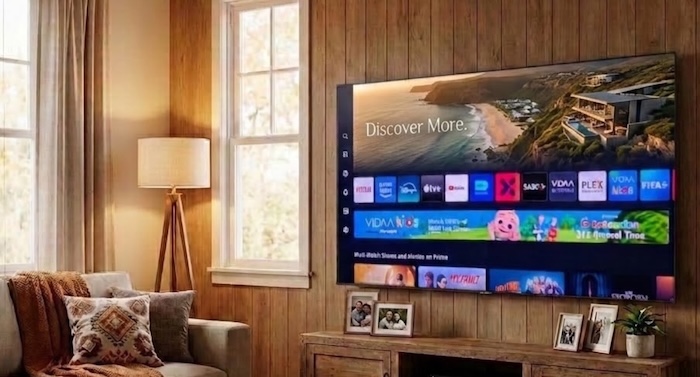
The connected TV home screen has become premium advertising space, reaching viewers before they choose a streaming app, live sport or other content.
-
Home screen advertising shifts TV planning from programmes to audience behaviour, allowing brands to appear at moments of high viewing intent rather than during specific shows.
-
Brands can own the viewing journey without owning content rights, as shown by a South African retailer that reached rugby fans on the home screen before a major match.
-
Connected TV platforms enable audience-first media buying across smart TV ecosystems including VIDAA, TCL, LG and Whale TV, reducing fragmentation for advertisers.
-
The future of CTV advertising is contextual and interactive, with the television home screen evolving into the “front page” where brands engage viewers before content begins. *
When you switch on your TV, what do you see? The home screen, where you decide your next move. Should you stream a movie? Catch up on your series? Watch the live game? Whatever you choose, it starts right there – and that makes the home screen one of the most valuable pieces of advertising real estate on televisions today.
For decades, TV advertising has focused on programming. Advertisers could plan around a fairly predictable viewing schedule, knowing which shows audiences were likely to watch and when. Streaming has flipped the table completely, giving viewers far more choice over what they watch and where they watch it.
For advertisers looking to capture attention, the home screen offers a way to reach viewers before they disappear into an app or channel. It puts brands front and centre, giving them visibility across an increasingly fragmented viewing landscape.
The advantage of being first
I first realised the power of reaching people before they decide where to go next while working in a different medium. In 2013, I sold the first-ever wraparound advert on the main section of a major Sunday newspaper, making the brand the first thing readers saw.
For 70 years, television advertising has largely been built around interrupting what somebody is watching. The home screen creates an opportunity to become part of the journey before they’ve started watching at all.
For media planners, that creates a way to reach audiences that doesn’t depend on knowing which programme or app they will choose.
We recently put this into practice when a prominent South African retailer wanted to connect with rugby audiences around a big match. The brand didn’t own the broadcast rights or sponsorship, so we focused on where those fans would be before and around the game: the home screen.
They didn’t buy the rugby. They bought the journey to rugby. That allowed the retailer to become part of the viewing occasion without buying the content itself.
The campaign also showed why timing is so important. When viewers return to it, they are actively choosing what to watch next, which gives us a clear signal of intent. Instead of spreading spend continuously, advertisers can concentrate it around the points when their audience is most likely to be there.
Behaviour, not programming, determines when a brand appears. And it’s not just for sporting events – a big entertainment release or retail event such as Black Friday can create its own high-value viewing windows, giving brands more ways to plan around audience behaviour at a particular time.
Start with the audience
This also changes the starting point for connected TV planning. At Reach Africa, our partnerships across different TV manufacturers and operating systems such as VIDAA, TCL, LG and Whale TV allow us to look across the landscape rather than planning around the inventory of a single platform.
We can start with the audience a brand wants to reach, rather than trying to find them one platform at a time. That means the media plan can follow the viewer instead of being limited by what one content owner has available.
And this is only the beginning. As the television evolves beyond a screen for broadcast, streaming and gaming into a more intelligent interface in the home, the opportunity for advertisers will evolve with it. The next phase won’t simply be about repurposing a TV ad or digital video for the home screen, but creating experiences and actions around those moments when viewers are actively engaging with the device.
For brands, that means thinking less about filling an advertising slot and more about what they can do with the moment.
As more of our viewing converges on the same device, the television itself becomes the platform. And sitting at the entrance to everything is the home screen – the new ‘front page’.
* Summary created by AI
Adiela Dramat, is senior client partner at Reach Africa, a connected TV (CTV) specialist simplifying access to premium CTV audiences across Africa. Operating across Smart TV OEMs, streaming platforms and broadcaster environments, Reach Africa enables scaled, brand-safe Advertising Video on Demand (AVOD) and Free Ad Supported TV (FAST) campaigns through a single buying layer. By reducing fragmentation across the ecosystem, Reach Africa helps advertisers plan, buy and measure CTV more effectively, while supporting sustainable revenue growth for platform and content partners.