
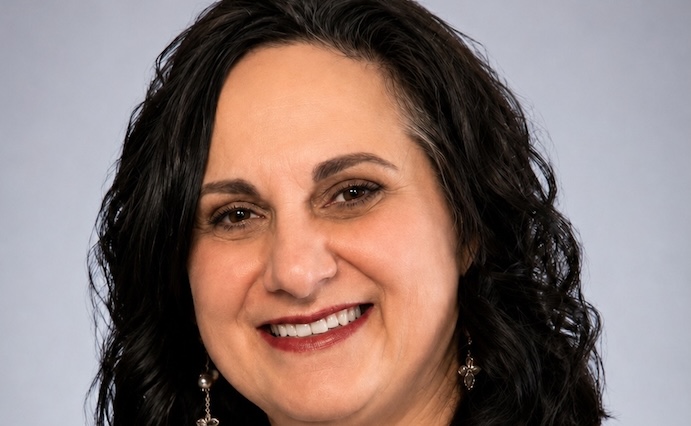
From an 88-year-old heritage radio station to an always-on multimedia brand, RSG is embracing the realities of the omni-channel era.
Business manager Louise Jooste believes the future of radio isn’t about choosing between broadcast and digital but about meeting audiences wherever they are.
In this conversation with Altus Venables for The Media Online, she unpacks RSG’s commercial proposition, the enduring value of the Afrikaans consumer market, the rise of podcasting and streaming, and why the next generation of broadcasters needs to be as comfortable on social media as behind a microphone.
Q: The elevator pitch: If we were sitting down over a quick coffee, how would you introduce yourself, both personally and as the custodian steering RSG?
I’m Louise Jooste, business manager of RSG, and I’ve been fortunate to spend 20 years in public-service broadcasting. My route into radio wasn’t conventional. I started in a mining-sector and engineering environment but broadcasting gave me something I’ve always valued: a blank canvas where you can decide what you want to say, how you want to say it and what you want to achieve.
Today, my responsibility is to help steer an 88-year-old heritage brand into its next chapter without losing the trust that built it.
Q: Station identity: If RSG walked into the room right now, as a person, who are they? How would you describe the brand’s personality, tone, and cultural heartbeat across South Africa?
If RSG walked into the room, I think she would be confident, warm, knowledgeable and curious – someone who knows where she comes from but isn’t afraid of where she’s going. RSG is proudly Afrikaans, but Afrikaans itself is diverse and constantly evolving. Our cultural heartbeat is about belonging, quality and variety, while reflecting the lives of people across South Africa.
The brand has heritage, but it is certainly not stuck in the past!
Q: The commercial muscle: Looking at RSG strictly from a business perspective, break down the brand’s footprint, what does your reach, demographic profile, and market clout look like right now?
RSG’s strength is its national footprint and the depth of its relationship with its audience. It broadcasts nationally on FM and extends that relationship through streaming and digital platforms. Its commercial value isn’t simply about the number of people we reach; it is about the quality of attention and trust we command.
RSG speaks to a mature, engaged audience with purchasing influence, while our strategic challenge is to broaden that base and attract the next generation of Afrikaans-speaking and Afrikaans-understanding consumers.
Our current commercial proposition is therefore increasingly about a multimedia relationship, rather than a radio spot.
Q: Language as a market asset: In an increasingly globalised, English-dominant media landscape, why does the Afrikaans consumer market remain one of the most resilient and commercially responsive in the country?
Afrikaans should never be viewed as a niche language with limited commercial potential. Language creates intimacy. When consumers hear a brand communicating in a language that feels like home, the message can become more personal and culturally relevant.
Afrikaans is one of South Africa’s major languages and, according to the latest Census 2022 data from Statistics South Africa, Afrikaans is the country’s third most widely spoken language, after isiZulu and isiXhosa.
Recent ROOTS research reinforces the commercial significance of this market: 41% of more than 25,000 decision-makers surveyed were fluent in Afrikaans, and 69% were in LSM 9-10. That tells marketers there is a substantial, economically active Afrikaans-speaking consumer market.
Beyond FM: Audiences today consume content across an omnichannel ecosystem. How is RSG actively expanding into digital, streaming, and podcasting to attract and retain younger Afrikaans audiences?
The future isn’t about choosing between radio and digital but rather about making RSG available wherever our audience chooses to consume content. We have live streaming, podcasts, social platforms and digital content, and we are increasingly thinking about content in a platform-neutral way.
Our challenge is also generational: we need to retain the trust of our traditional audience while making RSG relevant and discoverable to younger audiences. I’ve said before that if you don’t adapt, you become irrelevant. I believe that more strongly today than ever.
Q: Modern broadcast talent: With media becoming so visual and interactive, what defines a true ‘power player’ or top-tier broadcaster on RSG today?
A great broadcaster today has to be much more than a good voice. They need curiosity, strong storytelling instincts, credibility, emotional intelligence and the ability to understand different platforms. They must be able to create content that can live beyond the microphone – on video, social media, podcasts and digital platforms – while still understanding the unique intimacy of radio.
The strongest talent can make people feel that they are having a conversation with them, even when thousands of people are listening.
Q: The ROI and campaign formula: For the CMOs and media planners reading this: what separates an average radio spend from a brilliant, high-impact campaign that moves the needle across RSG’s platforms?
The best campaigns don’t treat radio as a place to put an advert; they treat RSG as a relationship with an audience. Great campaigns start with a clear objective, understanding the audience and then build an idea that fits naturally into the content environment. The real opportunity comes when a campaign works across platforms – on air, digitally, socially and through activation – with consistency but without simply duplicating the same message everywhere.
Relevance, frequency, creativity and measurable outcomes are what turn media-spend into impact.
Q: The personal passion: At the helm of such a massive operation, what is the single most rewarding part of your job day-to-day?
The most rewarding part is the impact. I can make a difference to someone’s life through the strategies and decisions I implement whether that is giving a young producer an opportunity, helping develop future talent, creating a platform for an artist or ensuring that an important story reaches the people who need to hear it.
Radio is ultimately a people business, and that responsibility never becomes ordinary.
Q: Executive hurdles: Steering a legacy national broadcaster comes with significant responsibility. As a female leader in broadcast, what are some of the biggest structural or industry challenges you’ve faced and overcome?
As a woman leader, one of the biggest lessons has been understanding that you don’t have to lead according to someone else’s definition of authority. Women have made enormous progress, but structural expectations still exist around who is perceived as decisive, authoritative or commercially strong.
I have learned to be comfortable with making difficult decisions, taking responsibility for them and not confusing leadership with the need to be liked.
Q: Leadership lessons: What are the non-negotiable leadership lessons you’ve learned along the way that continue to guide how you manage your team and business?
Keep learning. Stay curious. Listen properly. Develop people and create opportunities for them to grow. And don’t become so attached to yesterday’s success that you become afraid of tomorrow’s challenge. I was fortunate to have mentors who brought me into decision-making before I was formally responsible for it.
I now see mentoring future leaders as part of my own responsibility. Leadership is not about having all the answers; it is about building a team capable of finding the answers together.
Q: Women’s Month: To close: what is your core message to South African women across the creative, corporate, and media sectors who want to step up, claim their space, and lead with authority?
My message to women is simple: don’t wait for permission to occupy the space you have earned. Prepare yourself, know your value, speak with authority and be willing to make difficult decisions. You don’t have to become somebody else to lead. And when you get into a position of influence, don’t close the door behind you; open it for someone else.
The strongest legacy isn’t simply what you achieve yourself; it is the people you empower to achieve great things after you.
With a strong background in public relations, Altus Venables understands how to bring a brand’s message to life with authenticity and impact. A fully bilingual voice artist, he delivers everything from formal, deep baritone and bass tones to lighter, upbeat, conversational reads in both Afrikaans and English. He specialises in corporate, conversational, hard sell, soft sell, announcer and narrative voice work. Beyond the studio, Altus is an experienced MC, DJ, soloist and chorister who has performed on stages across South Africa, Europe and the United States.