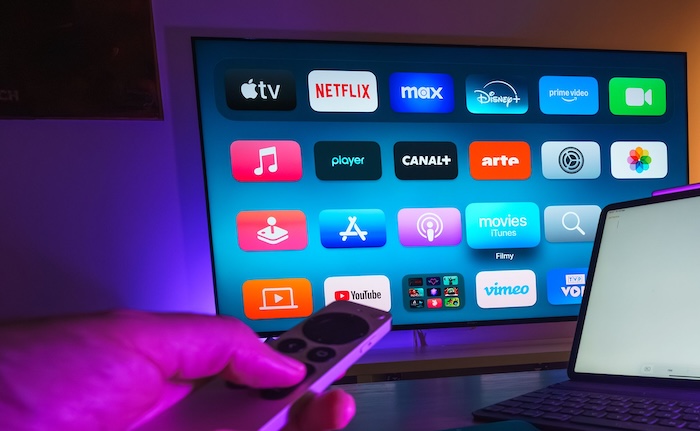
- Connected TV (CTV) advertising offers new opportunities to reach audiences on television screens, but fragmented platforms make campaigns increasingly complicated to buy.
- Advertisers must navigate multiple TV manufacturers (OEMs), operating systems, streaming apps and content platforms, each with different inventory, targeting and reporting systems.
- More advertising inventory does not necessarily deliver greater value. Advertisers need reliable measurement of unique reach, audience duplication and cross-platform frequency.
- Aggregation and independent technology partners can simplify CTV media buying by coordinating access to multiple platforms, although aggregation alone does not solve audience duplication or measurement inconsistencies.
- Reach Africa works across smart TV manufacturers, operating systems, streaming services, FAST platforms and broadcasters to help advertisers access CTV audiences across diverse African markets through a single buying layer.
The more television evolves, the more complicated it becomes to buy. It’s time the industry made things easier for advertisers.
Imagine you’re a media buyer tasked with reaching 500 000 households through a connected TV (CTV) campaign. Sounds straightforward, right?
Until you discover that the audiences you’re trying to reach are spread across multiple television original equipment manufacturers (OEMs), operating systems (OS), streaming apps and content platforms – and each comes with its own inventory, buying arrangements, targeting capabilities, reporting standards…the list continues.
All of a sudden, you find yourself juggling several suppliers and negotiating multiple commercial agreements – all while scratching your head, trying to work out whether the impressions you’re buying represent new audiences or the same households several times over. All this before a single advert has appeared on screen.
Welcome to the increasingly complicated business of buying television in 2026.
CTV has opened up enormous opportunities for advertisers – offering more ways than ever to reach audiences on the biggest screen in the home – but as the ecosystem expands, so does the complexity behind it.
And while the industry has become extremely good at developing new advertising opportunities, I’m not convinced we’ve been quite as good at making them easy to buy.
More inventory doesn’t necessarily mean more value
Fragmentation is a natural consequence of how the television ecosystem has developed over time, with different players all offering different advertising opportunities.
Through a TV manufacturer, an advertiser might have access to home-screen placements, while a video on demand (VOD) platform might offer advertising within its content. Each has a role to play, and each comes with its own commercial and technical considerations.
The problem arises when advertisers are expected to navigate all of these independently and coherently. When campaigns run across multiple suppliers, buyers may face inconsistent reporting, disparate definitions of what constitutes ‘reach’ and varying levels of transparency.
Frequency is another area that can become a headache for buyers: a campaign might have frequency controls within individual platforms, but that doesn’t automatically mean the same household won’t see the advert repeatedly across several environments.
Having access to more inventory and understanding the value that inventory delivers are two very different things. Certain environments can contribute incremental reach, but simply summing impressions doesn’t tell you how many unique households or people you’ve reached – nor does it tell you whether each placement is contributing to the campaign’s objectives.
The industry needs to take responsibility
I believe the industry needs to focus on simplifying access without oversimplifying the ecosystem itself. We shouldn’t pretend that every platform operates in the same way, or that all inventory is interchangeable.
A home-screen placement and an in-stream video advert don’t necessarily serve the same purpose – each offers different audiences, formats and measurement capabilities – and these distinctions are important when building an effective media plan.
But at the same time, advertisers shouldn’t need to become experts in the technology behind every TV to benefit from the opportunities it creates.
This is where aggregation and specialist technology partners have an increasingly important role to play. Bringing inventory together through a more coordinated buying relationship can reduce the number of suppliers advertisers need to manage and creates opportunities to plan across different environments.
Of course, aggregation is more than simply packaging inventory together. Combining multiple sources of supply doesn’t automatically eliminate audience duplication, create universal frequency controls or make every platform’s data directly comparable. The value lies in understanding these differences, coordinating execution and helping advertisers make informed decisions about where to invest.
At Reach Africa, this is central to how we approach the market. We work across multiple OEMs, OS, streaming environments, FAST platforms and broadcast partners, rather than representing a single content ecosystem.
Relevant in Africa
Our independence allows us to start with the advertiser’s objectives and work backwards to identify the environments best suited to achieving them. It’s an approach that recognises television as an interconnected advertising opportunity, while respecting the different roles of the platforms and partners that make it possible.
And it’s especially relevant in Africa, which is far from homogeneous – and where connectivity, viewing behaviour and available inventory all vary considerably between markets. A buying model that works in one country may not always translate neatly into another.
As CTV continues to grow across the continent, advertisers will quite rightly expect better coordination and a clearer understanding of what their investment is delivering. And meeting these expectations requires collaboration across the ecosystem, alongside continued improvements in technology and measurement.
The opportunity for the industry is vast – but we need to make it easier for advertisers to take advantage of it. The technology behind television can be complex. The buying experience shouldn’t have to be.
Adiela Dramat, is senior client partner at Reach Africa, a connected TV (CTV) specialist simplifying access to premium CTV audiences across Africa. Operating across Smart TV OEMs, streaming platforms and broadcaster environments, Reach Africa enables scaled, brand-safe Advertising Video on Demand (AVOD) and Free Ad Supported TV (FAST) campaigns through a single buying layer.