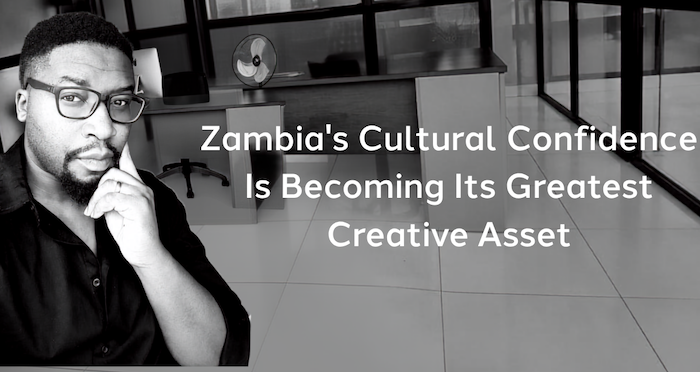
As someone who works with brands in Zambia every day, one of the most interesting shifts I have observed is not technological. It is cultural, writes Paul Banda, digital & creative manager, dentsu Zambia.
Zambia is becoming increasingly confident in its own identity. You can see it in the growing popularity of the phrase Zambia Ku Chalo or Zambia to the World. What started as an expression of national pride has become a reflection of something bigger: a generation that is increasingly comfortable sharing its culture, humour, creativity and perspective with the world.
That confidence is changing the creative landscape.
Many brands looked outward for inspiration, often taking cues from larger global and regional markets. Today, some of the strongest creative ideas are emerging from local truths, local experiences and conversations that already exist within Zambian culture.
The opportunity for brands is not to ask what is trending globally. It is to understand what people are already talking about, laughing about and connecting over locally.
The closer creativity gets to a genuine cultural truth, the less effort audiences need to make to see themselves in it.
Local culture not being replaced but remixed
One assumption often made about younger audiences is that greater access to global content leads to weaker local identity.
In Zambia, I am seeing the opposite. Young people are consuming global culture at an incredible pace, but they are not abandoning local culture in the process. They are remixing it.
Local music, slang, humour, fashion, food and everyday experiences are increasingly shaping how people express themselves online. Global influences are still present, but they are being filtered through a distinctly Zambian lens.
This is particularly evident in humour.
Many of the most shared pieces of content in Zambia are rooted in situations or references that feel immediately recognisable to local audiences. What might seem ordinary to an outsider can become a powerful creative device because people instantly recognise themselves in it.
That familiarity creates connection.
For brands, localisation can no longer be reduced to placing a Zambian face into a campaign. It requires a deeper understanding of how people speak, what they value, what they celebrate and what makes them laugh.
The smartphone has changed the creative brief
At the same time, digital platforms have transformed how people encounter brands.
For many Zambians, the smartphone has become the primary gateway to culture. People are not waiting for a brand campaign to appear on television. Brands now appear alongside music, creator content, community conversations, memes and entertainment throughout the day.
That changes the nature of creativity.
Brands are no longer competing only with each other. They are competing with everything else in a person’s feed.
The feed is free. Attention is expensive.
This puts greater emphasis on relevance. People decide within seconds whether something deserves their attention, and increasingly they are drawn towards content that feels authentic, entertaining or culturally familiar.
It is also changing the role of creators.
What I find particularly interesting is that influence is becoming less dependent on scale. In many cases, creators with smaller but highly engaged audiences can create more meaningful impact because their communities trust them. Their influence is built on shared experiences, not simply reach.
For brands, the question is no longer how to distribute a campaign. It is how to become part of conversations and communities that already exist.
Creativity moving beyond campaigns
Digital has also challenged traditional approaches to creative development. The campaign remains important, but it is no longer sufficient on its own.
What increasingly determines success is the ecosystem of content surrounding that campaign. The ongoing stories, reactions, conversations and cultural moments that keep an idea relevant long after launch.
This creates significant opportunities for markets like Zambia. We do not always need the production budgets of larger markets to compete creatively. In many instances, an idea rooted in a genuine local insight can outperform work with far greater investment behind it.
We have seen examples where creator generated content, grounded in a cultural moment people recognise, delivers greater visibility and engagement than highly produced campaigns.
That is because people respond to relevance before they respond to polish.
Zambia’s opportunity
One of the biggest misconceptions about African creativity is that it should be measured against a single standard.
Every market has its own cultural codes, humour, personalities and rhythms. Zambia is no different.
Our creative opportunity does not come from trying to replicate larger markets. It comes from understanding what makes Zambia unique and finding ways to turn those insights into ideas that resonate more broadly.
Digital has removed many of the barriers that once limited how far creative work could travel.
Today, content can originate in Lusaka and find an audience far beyond Zambia’s borders. We have already seen creators such as Ba Matero build audiences around content that is unapologetically rooted in Zambian culture.
That is encouraging because it demonstrates that cultural specificity and broad appeal are not opposites. In many cases, the more authentic the insight, the further it travels.
Why local understanding m,atters
This is why proximity to culture has become such an important advantage for brands.
The most useful insights rarely emerge from reports or trend decks. They emerge from understanding the conversations, behaviours and cultural shifts happening in real time.
Working closely with brands and audiences in Zambia, we see how quickly culture evolves and how local nuances influence the way people respond to ideas.
Understanding a market is not simply about operating within it. It is about understanding the context behind people’s behaviours, aspirations and relationships with brands.
The closer you are to culture, the better positioned you are to recognise the opportunities within it.
The future of African creativity belongs to the people closest to culture. Not necessarily those with the biggest budgets, but those with the deepest understanding of how people live, connect and express themselves. The most influential ideas will come from brands and creators who can take a deeply local truth and turn it into something that feels universally human.