
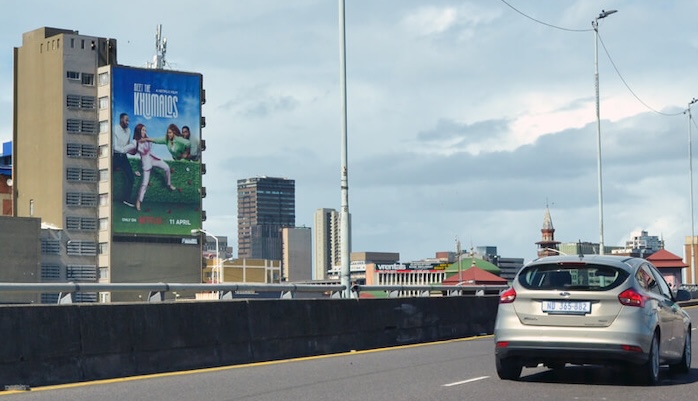
- Location determines impact – Strategic placement is the biggest factor in OOH campaign success.
- Precision targeting boosts ROI – Geotargeting and geofencing help brands reach the most relevant audiences.
- Visibility matters – Clear, easy-to-read billboards capture attention in just a few seconds.
- High-traffic sites maximise reach – Busy roads and urban hotspots deliver repeated exposure and stronger brand recall.
- Placement drives action – Well-positioned ads can influence purchasing decisions, online searches and social media engagement.
The right location is not only for displaying the advertisement. The out of home (OOH) industry has evolved beyond that and understands that in order to deliver the message to the target audience, location is critical. Location ensures that the message reaches the right audience.
When the location is right, the message travels far. Location-targeted campaigns, with the help of advanced methods such as geotargeting and geofencing, helps to reach potential customers with content that’s relevant to their location, often resulting in improved engagement, conversion rates and driving ROI.
One of the key advantages of billboards is their power to communicate a simple yet impactful message.
Location really is the heartbeat of OOH advertising, and it can make a campaign resonate with the target audience, leaving a permanent impression and driving significant results.
Considering that 70% of adults spend their time out of home, it’s a no brainer that reaching these individuals in the right environment is key in leveraging physical locations and public spaces to deliver brand messages.
Why location matters
Visibility
The run up and close up leading to the billboard should be easy to see and read. The industry rule of thumb is the 3 to 6-second rule. It is assumed that the target audience are typically driving at high speeds, this is the maximum amount of time an advert has to capture attention, convey its message and be understood before it passes from view.
The advertisement must be clear and concise. The creative agencies understand that seven words or fewer, one dominant visual, bold high contrast fonts do the work.
Traffic volume
A billboard on a busy route exposes a brand to thousands — or even millions — of potential customers every month which leads to relative cost per impression. More passing vehicles means more opportunities for an advert to be seen.
The incredibly broad audience frequently makes them a highly cost-effective medium. High-volume arteries ensure that the same audience sees the advert multiple times a week, which is crucial for building deep brand memory.
Audience relevance
A well-placed billboard ensures that the message reaches the right audience, increasing the likelihood of attention, interest and action. According to a Nielsen study on online activation, up to 46% of adults conduct an online search for a brand or product after seeing an OOH advertisement.
Billboard advertising acts as a powerful catalyst for online engagement. OOH Industry research confirms that a significant percentage of consumers turn to search engines or social media to look up a brand shortly after seeing an outdoor advert.
The ubiquity of smartphones which are always at armlength allows consumers to immediately look up a brand after spotting a notable, unskippable roadside advertisement
Frequency & exposure
We understand that the consumer interaction with the billboard is brief, therefore repetitive, predictable exposure, along daily commute routes is what builds brand awareness and drive campaign objectives. Repeated exposures on daily commutes turn these moments into deep-rooted, long-term recall.
Daily commute routes is what builds brand familiarity and drives real-world behaviour. Industry studies on OOH advertising consistently show that higher frequency drives stronger sales and engagement metrics. Viewers choose how much attention to pay to them, meaning repeat exposure builds trust rather than irritation.
Industry research conducted shows that while a single exposure might yield around a 9% spontaneous recall, bumping that to five exposures improves recall to 56% thereby increasing brand recall. This statement solidifies the argument that the right location with the right advertisement drives ROI.
Environment and context
A billboard that complements the local architecture and landscape reduces visual clutter. When a billboard’s message aligns seamlessly with its physical surroundings and the audience’s mindset, it transforms from a simple advert into a relevant, memorable experience.
The environment where is billboard is located is important because it influences how people perceive, understand, and respond to the advertisement. A billboard should fit its surroundings and be placed where its message is relevant to the audience. For example, promoting coffee near a busy intersection by a shopping centre feels natural and highly convenient to the target market.
Ellah Ndlovu is senior account manager at Face First Media, an out-of-home media owner in KwaZulu-Natal. Its focus is not simply on growing its footprint, but on developing and managing high-quality static and digital advertising assets in strategic locations that deliver real value for advertisers. From major highways and key arterial routes to urban centres and regional towns, the network provides brands with premium visibility across South Africa’s second-largest provincial economy.