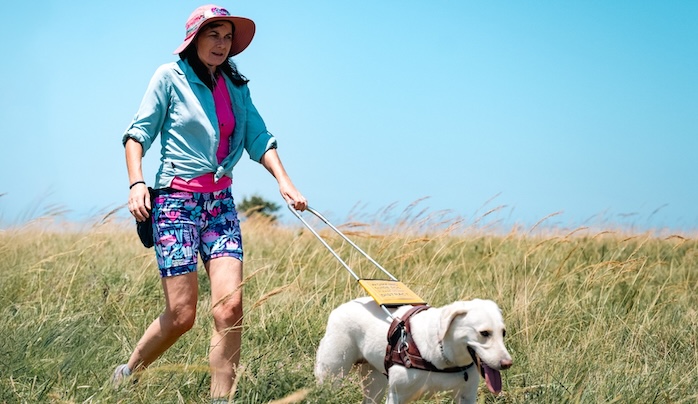
- Paws on the Path was a supporter-led fundraising campaign that raised R500 000 for the South African Guide-Dogs Association for the Blind.
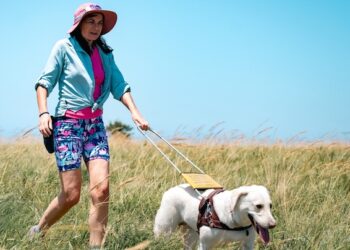
- The campaign was inspired by a blind handler and her guide dog, Jaydee, attempting to become the first blind handler and guide dog team to complete the 65km Pondo Trail.
- The campaign combined BackaBuddy fundraising, Instagram content, partner amplification, WhatsApp groups, Facebook communities and earned media to reach donors.
- Newsclip media monitoring recorded 33 print, online and broadcast placements, with an Advertising Value Equivalent (AVE) of R1 078 485.
- Four speaking engagements in East London generated just over R100 000, demonstrating the fundraising potential of community connections beyond traditional influencers and corporate sponsors. *
Paws on the Path began with a personal challenge.
After losing my sight, I was matched with my first guide dog, Jaydee, in 2023. A year into our partnership, I signed up to take on the 65km Pondo Trail with Wild Child Africa. As our training progressed, I wondered whether the challenge could become something bigger.
That idea became Paws on the Path, a supporter-led fundraising campaign with one objective: raise R500 000 for the South African Guide-Dogs Association for the Blind.
There was no agency. No campaign budget. No dedicated team.
Start with a story that matters
I wanted to shine a light on SA Guide Dogs, an organisation that had given me so much.
I wanted to show the extraordinary partnership and trust between a person who cannot see and a guide dog doing something a little out of the ordinary together.
Taking on a multi-day hiking trail was something I had never imagined I would be able to do again after losing my sight.
Lastly, I wanted to show that living with blindness did not mean living small.
Jaydee and I would attempt to become the first blind handler and guide dog team to complete the Pondo Trail. There was a strong human story at the core of the campaign.
Build the distribution system, not just the content
I brought 25 years of global marketing experience to the campaign, but this was very different territory. With limited capacity, I kept the channel strategy tight.
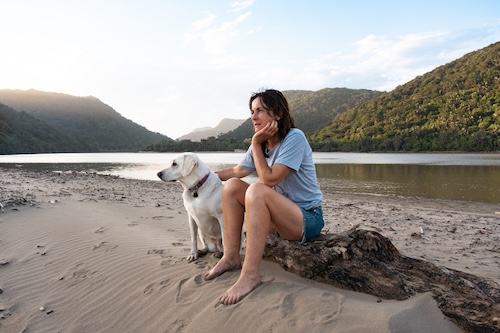
BackaBuddy became the fundraising destination and Instagram the primary owned social channel. With virtually no social following, owned media alone was never going to get us to R500,000.
The distribution model became: owned story, partner amplification, community distribution and earned media.
SA Guide Dogs brought credibility and channels. Wild Child Africa amplified the campaign. Friends and family carried the story into WhatsApp groups, Facebook communities and personal networks. Earned media extended it further.
Awareness was not the same as understanding the ask
By December, donations had slowed. Then, at a party in January, I discovered a bigger problem.
People kept stopping me to talk about Jaydee and the Pondo Trail, but several did not realise I was fundraising.
The next day, my husband filmed a 48-second direct-to-camera video in three takes. I explained what we were doing, why, that we were raising R500 000 — and asked people to help.
The video travelled into WhatsApp groups and Facebook communities, amplified by friends, family, SA Guide Dogs and Wild Child Africa. Donations accelerated.
Awareness of the story is not the same as understanding the ask. Audiences consume fragments, not campaigns.
The community became the distribution network
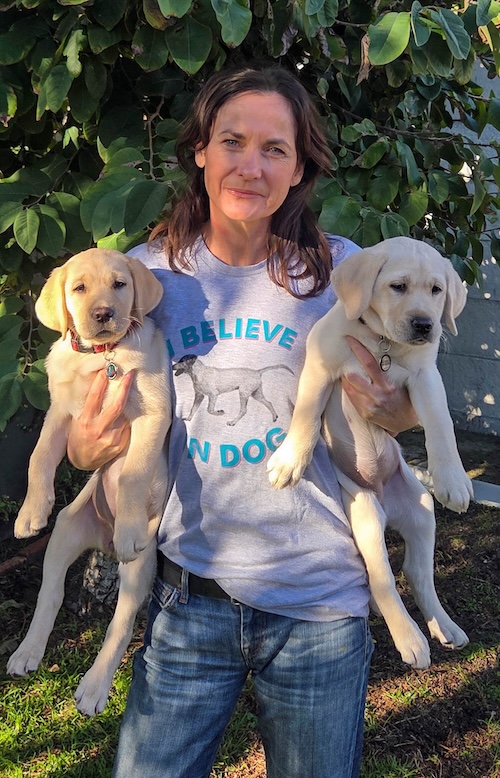
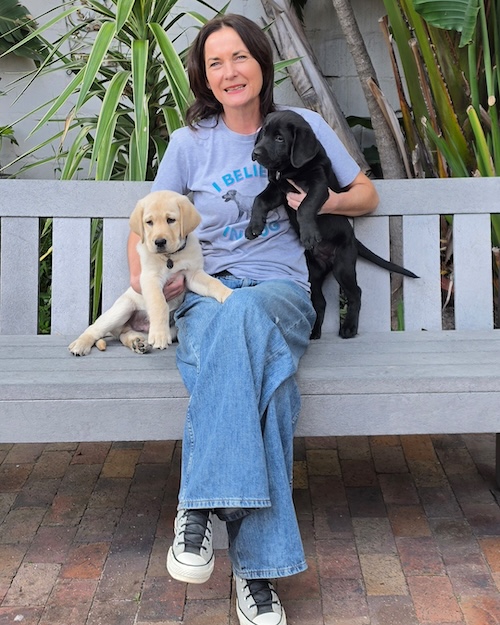
Friends helped with photography and design, wore campaign T-shirts, shared content and opened their networks. My brother-in-law approached a man wearing a Heart FM T-shirt at the gym and told him about the campaign. That chance conversation led to two Heart FM appearances.
There was no formal ambassador programme. People simply cared enough to act.
There was not a single corporate contribution. Paws on the Path became people giving to people, with donations ranging from R15 from a little girl in my niece’s class to an anonymous R50,000 gift.
Earned media needs a story that keeps moving
I built PR around genuine news moments: the build-up, completing the trail and eventually reaching the fundraising target.
Coverage grew from targeted pitching and partner networks into inbound media interest.
Media monitoring by Newsclip, commissioned by Wild Child Africa, recorded 33 placements across print, online and broadcast, with a total Advertising Value Equivalent of R1,078,485.
After we completed the trail, another problem emerged. Beforehand, the content had a natural narrative engine: training, vet visits, swimming lessons and the countdown. Afterwards, posts became variations of “help us reach our goal”.
Engagement declined.
The audience had not necessarily tired of the cause. The story itself had stopped moving.
Look beyond the obvious influencers
Then an Instagram message arrived from a woman in East London whom I had never met. She offered to organise fundraising events if I travelled there.
A local optometrist covered my flight. Four speaking engagements in 24 hours generated just over R100 000 — more than one fifth of the target.
One of the most consequential people in the campaign was not an influencer, major donor or corporate brand. She had followed the story and decided to act.
Visibility is not always a proxy for influence.
What can other campaigns take from it?
The campaign did not succeed because of one channel or tactic. It worked through the interaction of story, distribution and responsiveness.
The funds were allocated to raising and training four future guide dogs, with additional funding supporting programmes for guide dog trainers.
A month after fundraising closed, organisers of the International Fundraising Congress Cape Town Pop-Up found Paws on the Path online and invited me to present the case study in September. I shared the stage with Toni Erasmus, Regional Marketing Manager at SA Guide Dogs, who contributed the organisation’s perspective.
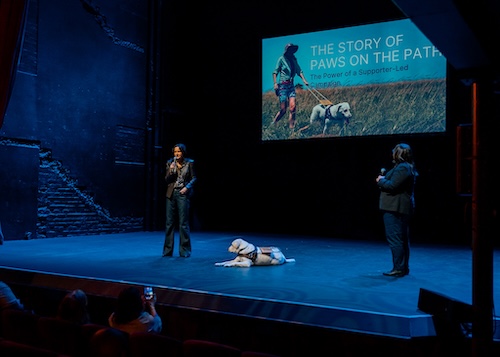
The organisers later reported it was one of the day’s highest-rated sessions, with attendee feedback highlighting both practical learning and inspiration.
I distilled the campaign into four components:
Supporter-led. Organisation-enabled. Partner-amplified. Community-powered.
The useful question is not how to copy the campaign. It is this:
Who are the supporters already within our communities who could become powerful campaigners — and what do they need to succeed?
* Summary created by AI
Angela Blackwell is a Cape Town-based marketing leader, strategic advisor and speaker with 25 years of global marketing experience, including more than 20 years at Accenture. She is the founder and campaign director of Paws on the Path, the supporter-led campaign that raised R500,000 for SA Guide Dogs.
Connect with Angela: LinkedIn | Instagram — Angel on the Blind Side