• Subscribe to our newsletter
The Media Online
  • Home
  • MOST Awards
  • News
    • Awards
    • Media Mecca
  • Print
    • Newspapers
    • Magazines
    • Publishing
  • Broadcasting
    • TV
    • Radio
    • Cinema
    • Video
  • Digital
    • Mobile
    • Online
  • Agencies
    • Advertising
    • Media agency
    • Public Relations
  • OOH
    • Events
  • Marketing
    • Thought Leaders
    • Campaigns
    • Research
    • Media Education
      • Media Mentor
  • Press Office
    • Press Office
    • TMO.Live Blog
    • Events
    • Jobs
No Result
View All Result
  • Home
  • MOST Awards
  • News
    • Awards
    • Media Mecca
  • Print
    • Newspapers
    • Magazines
    • Publishing
  • Broadcasting
    • TV
    • Radio
    • Cinema
    • Video
  • Digital
    • Mobile
    • Online
  • Agencies
    • Advertising
    • Media agency
    • Public Relations
  • OOH
    • Events
  • Marketing
    • Thought Leaders
    • Campaigns
    • Research
    • Media Education
      • Media Mentor
  • Press Office
    • Press Office
    • TMO.Live Blog
    • Events
    • Jobs
No Result
View All Result
The Media Online
No Result
View All Result
Home Broadcasting Television

Why the SABC and public broadcasting still matter in the streaming era 

Public broadcasting remains one of the largest investors in local storytelling and creative talent in South Africa.

by Themba Gwejela
March 16, 2026
in Television
0 0
0
Why the SABC and public broadcasting still matter in the streaming era 
Share on FacebookShare on Twitter

In debates about South Africa’s media future, two claims often surface at the same time: that the future of broadcasting lies entirely in streaming, and that “Nobody watches the SABC anymore”.

Both arguments overlook something important. They fail to recognise how the public broadcasting ecosystem actually works, and the role it continues to play in South Africa’s media landscape.

Public broadcasting exists to fulfil a public service mandate. Unlike purely commercial media organisations, its role is not only to generate revenue or chase ratings. Public broadcasters exist to inform, educate and entertain, while reflecting national culture and serving audiences across languages and communities.

This mandate fundamentally shapes how public broadcasters operate.

Mixed sources

Across the world, public broadcasters are typically funded through a mix of sources, including licence fees, public funding and limited advertising. Very few rely primarily on commercial revenue.

The SABC is unusual in this regard. More than 80% of its funding comes from commercial activities, making it one of the most commercially dependent public service broadcasters globally.

What is often overlooked is that this funding model does not only sustain the broadcaster itself, it also supports an entire creative economy.

Every commissioned programme, whether a drama series, documentary, children’s show or entertainment format, creates work across a wide creative value chain. Independent production companies, writers, directors, actors, presenters, technicians, editors and composers all form part of this ecosystem.

Investor in South African storytelling

Public broadcasting therefore remains one of the largest investors in local storytelling and creative talent in South Africa. Each production helps sustain jobs while ensuring South African stories continue to be told by South Africans.

Yet the funding model that supports this ecosystem has come under growing strain.

South Africa’s television licence fee currently stands at around R265 per year and has remained largely unchanged for about 14 years. Over that period, the cost of producing content has risen significantly.

Production budgets have increased, technology infrastructure has become more expensive and audiences increasingly expect content to be available across multiple platforms.

At the same time, licence fee evasion remains high, further reducing the available funding pool.

The result is a system that is increasingly expected to deliver more with fewer resources.

Significant investment

Audiences expect high-quality local dramas, trusted news coverage, children’s programming, sports broadcasting and digital platforms that allow them to watch content wherever and whenever they choose. Meeting those expectations requires significant investment.

Sport provides a useful example of how this ecosystem functions. Major sporting events do not simply appear on television – broadcast rights must be purchased, and globally those rights have become increasingly expensive.

In fact, broadcast rights revenue is a major source of funding for professional leagues, national teams and development programmes across many sporting codes.

In South Africa, certain sporting events are designated as events of national importance, meaning they must be available on free-to-air television. However, those rights still need to be purchased using the same revenue pool that funds news, local productions and digital platforms.

The difference is access

Understanding this ecosystem also helps explain another widely repeated claim: that nobody watches the SABC anymore.

The reality is that South Africa’s television landscape is structured around two types of platforms: free-to-air broadcasting, such as the SABC and e.tv, and subscription television services such as DStv.

The key difference between these platforms is access.

Free-to-air television is available to any household with a television set and the ability to receive a signal. Subscription services require a monthly fee. That difference significantly shapes audience reach.

Because free-to-air television remains the most accessible platform, it continues to deliver the largest audiences in the country.

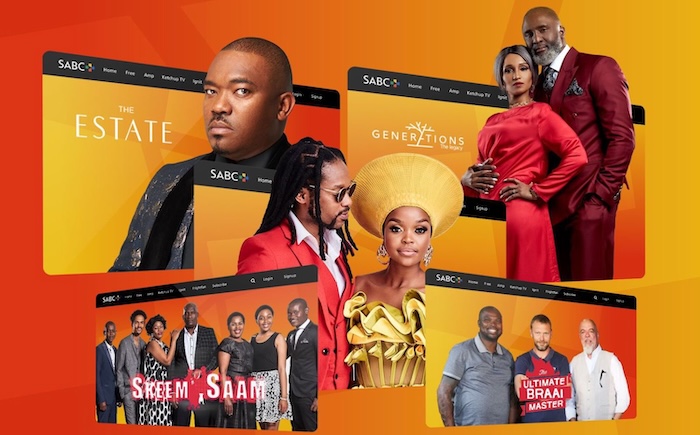
This is why many of South Africa’s most watched programmes regularly appear on SABC and e.tv channels. Shows such as Skeem Saam, Generations and Uzalo have remained among the most widely watched programmes in the country for years.

‘Must carry’ rules

Another detail often overlooked is that South African broadcasting regulations require Pay-TV operators to carry the free-to-air channels. These “must-carry” rules ensure that public broadcasting services remain widely accessible across platforms.

Public broadcasting, therefore, is about far more than television channels.

It is a national media ecosystem that supports local storytelling, sustains thousands of jobs and ensures that a country can see and hear itself reflected in its own media landscape.

In a rapidly evolving digital environment, recognising and sustaining that public value has never been more important.

Themba Gwejela is the group executive: corporate affairs and marketing at the SABC. 


Tags: mandatepublic broadcasterSABCShowMaxstreamingThemba GwejelaTV licence

Themba Gwejela

Themba Gwejela is the Group Executive: Corporate Affairs and Marketing at the SABC.

Follow Us

  • twitter
  • threads
  • Trending
  • Comments
  • Latest
Awards Wrap: Radio Workshop nominated for Podcast of the Year, Bar & Beverage Awards 2023 winners announced, grab those MOST Awards tickets now

Awards Wrap: PRISM Awards honours PR professionals, Euphoria Telecom launches No Bull Prize, Red & Yellow students thrive at The Loeries

October 21, 2025
Beyond girlboss: Women shaping the creative industry

Beyond girlboss: Women shaping the creative industry

August 12, 2026
Media Moves: TASTE turns 20, Anele, Lira and Janine van Wyk are FEARLESS in new campaign; Alex Okosi new MD for Google Africa, Accenture Song wins Telkom business

Media moves: MultiChoice Group and FAME Week Africa launch drama commissioning opportunity, Retroviral appoints Koketso Masisi as ECD, Primedia+ launches Apple CarPlay and Android Auto

August 13, 2026
The great advertising divorce

The great advertising divorce

August 11, 2026
The Shards transforms Bret Easton Ellis’s 1980s LA nightmare into a warning for the present

The Shards transforms Bret Easton Ellis’s 1980s LA nightmare into a warning for the present

0
Heineken backs South Africa’s next generation of creative talent at Cannes Young Lions 2026

Heineken backs South Africa’s next generation of creative talent at Cannes Young Lions 2026

0
Behind every application is a life

Behind every application is a life

0
Philipstown WireCar dominates Bookmarks as Accenture Song and Ogilvy tie for top agency prize

Philipstown WireCar dominates Bookmarks as Accenture Song and Ogilvy tie for top agency prize

0
Philipstown WireCar dominates Bookmarks as Accenture Song and Ogilvy tie for top agency prize

Philipstown WireCar dominates Bookmarks as Accenture Song and Ogilvy tie for top agency prize

August 14, 2026
The Shards transforms Bret Easton Ellis’s 1980s LA nightmare into a warning for the present

The Shards transforms Bret Easton Ellis’s 1980s LA nightmare into a warning for the present

August 14, 2026
Heineken backs South Africa’s next generation of creative talent at Cannes Young Lions 2026

Heineken backs South Africa’s next generation of creative talent at Cannes Young Lions 2026

August 14, 2026
Behind every application is a life

Behind every application is a life

August 14, 2026

Recent News

Philipstown WireCar dominates Bookmarks as Accenture Song and Ogilvy tie for top agency prize

Philipstown WireCar dominates Bookmarks as Accenture Song and Ogilvy tie for top agency prize

August 14, 2026
The Shards transforms Bret Easton Ellis’s 1980s LA nightmare into a warning for the present

The Shards transforms Bret Easton Ellis’s 1980s LA nightmare into a warning for the present

August 14, 2026
Heineken backs South Africa’s next generation of creative talent at Cannes Young Lions 2026

Heineken backs South Africa’s next generation of creative talent at Cannes Young Lions 2026

August 14, 2026
Behind every application is a life

Behind every application is a life

August 14, 2026

ABOUT US

The Media Online is the definitive online point of reference for South Africa’s media industry offering relevant, focused and topical news on the media sector. We deliver up-to-date industry insights, guest columns, case studies, content from local and global contributors, news, views and interviews on a daily basis as well as providing an online home for The Media magazine’s content, which is posted on a monthly basis.

Follow Us

  • twitter
  • threads

ARENA HOLDING

Editor: Glenda Nevill
nevillg@themediaonline.co.za
Sales and Advertising:
Tarin-Lee Watts
wattst@arena.africa
Download our rate card

OUR NETWORK

TimesLIVE
Sunday Times
SowetanLIVE
BusinessLIVE
Business Day
Financial Mail
HeraldLIVE
DispatchLIVE
Wanted Online
SA Home Owner
Business Media MAGS
Arena Events

NEWSLETTER SUBSCRIPTION

 
Subscribe
  • About
  • Advertise
  • Privacy & Policy
  • Contact

Copyright © 2015 - 2026 The Media Online. All rights reserved. Part of Arena Holdings (Pty) Ltd

Welcome Back!

Login to your account below

Forgotten Password?

Retrieve your password

Please enter your username or email address to reset your password.

Log In

Add New Playlist

No Result
View All Result
  • Home
  • MOST Awards
  • News
    • Awards
    • Media Mecca
  • Print
    • Newspapers
    • Magazines
    • Publishing
  • Broadcasting
    • TV
    • Radio
    • Cinema
    • Video
  • Digital
    • Mobile
    • Online
  • Agencies
    • Advertising
    • Media agency
    • Public Relations
  • OOH
    • Events
  • Research & Education
    • Research
    • Media Education
      • Media Mentor
  • Press Office
    • Press Office
    • TMO.Live Blog
    • Events
    • Jobs

Copyright © 2015 - 2026 The Media Online. All rights reserved. Part of Arena Holdings (Pty) Ltd

Not enough quota to unlock this post
Unlock left : 0
Are you sure want to cancel subscription?