

- Consumers are under financial pressure: 72% say their finances have stagnated or worsened, increasing demand for value, reliability and convenience.
- AI Search is changing buying journeys: 23% use ChatGPT, Gemini, Claude or Perplexity to compare products, prices and deals – more than double last year.
- Businesses are behind on AI: Three-quarters have no strategy for managing their visibility in AI-generated answers.
- Poor CX drives silent switching: 81% experienced a negative customer experience, while only 24% publicly complained.
- CX metrics can miss the truth: 48% of consumers say survey responses may not reflect their actual experience, making behavioural data increasingly important.
South African consumers are feeling the financial squeeze, but tighter budgets are not necessarily translating into a search for the cheapest option. Instead, consumers are demanding greater value, convenience and confidence from brands – and increasingly turning to AI to help them decide where to spend their money.
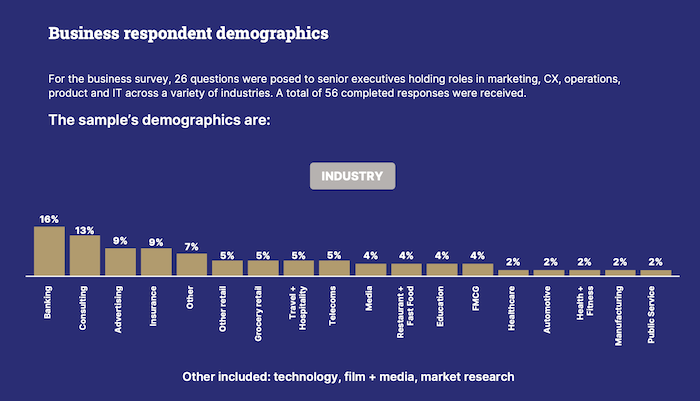
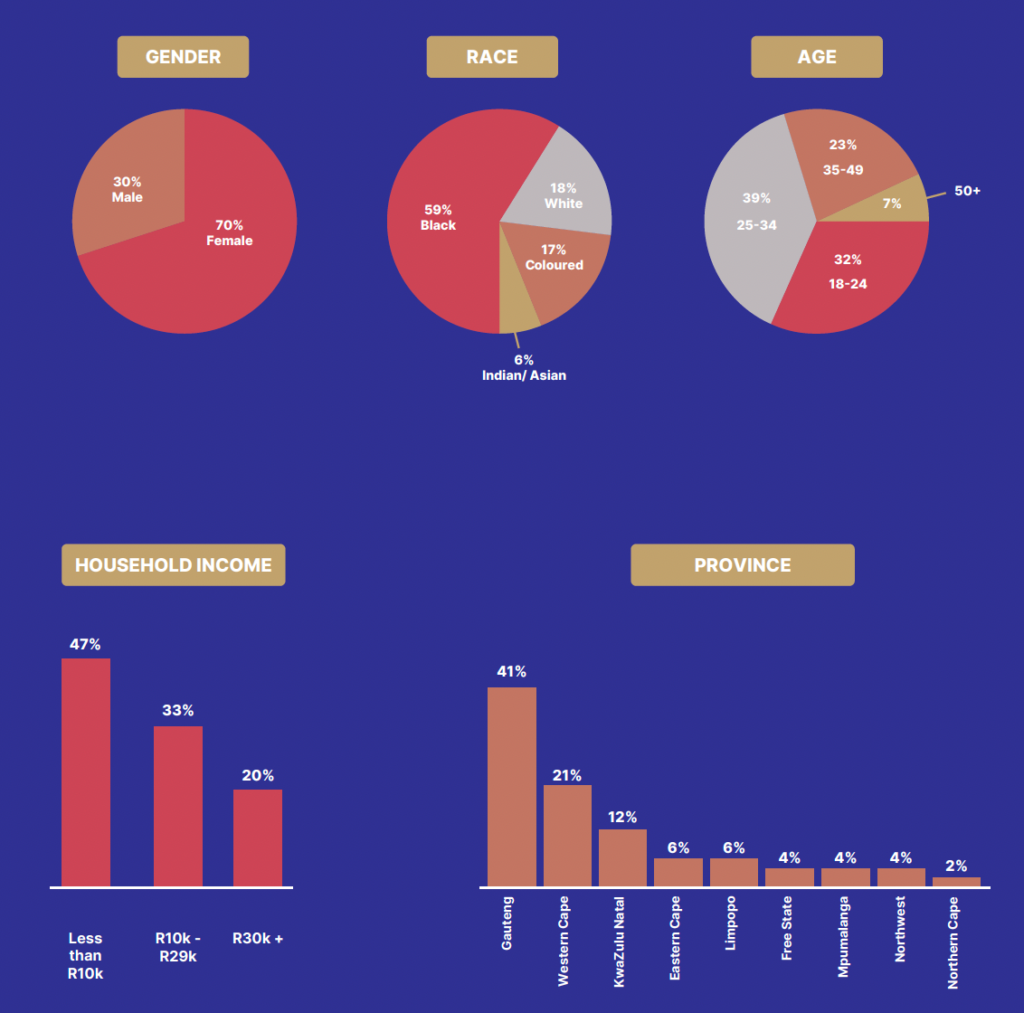
The findings come from the 2026 South African Customer Experience Report, now in its eighth consecutive year. The study surveyed 2 000 consumers across income groups and 56 business executives during the second quarter of 2026.
With inflation at 5%, oil prices fluctuating and economic growth remaining weak at 1.2%, 72% of consumers say their financial position has either stagnated or deteriorated over the past year.
Half of consumers say helping them find the best deal is an important quality when dealing with customer-facing staff. Yet only 7% of business leaders identify this as a priority, highlighting a growing gap between what customers need and what businesses believe matters.
The report is produced annually by Rogerwilco CEO Charlie Stewart, ovatoyou founding director Amanda Reekie and Julia Ahlfeldt of Julia Ahlfeldt CX Consulting.
Consumers are doing the maths
Financial pressure is prompting consumers to scrutinise purchases more closely, weighing price against quality, reliability, effort and the risk of making the wrong decision.
At the same time, AI is giving consumers unprecedented access to information before they engage directly with a brand.
Almost a quarter (23%) of consumers now use AI Search tools such as ChatGPT, Gemini, Claude and Perplexity to compare products and prices, find deals and discounts, and answer questions. That figure has more than doubled in a year.
Yet three-quarters of the businesses surveyed do not have an active strategy for managing how they appear in AI-generated answers.
More than just another Google
“Consumers increasingly expect information to be available immediately, easy to understand and capable of answering anything that matters to them. The quality of any organisation’s digital footprint has therefore become part of the customer experience itself,” says Stewart.
AI is also moving beyond information gathering into action. Some 67% of consumers say they would be comfortable allowing AI to fill a shopping cart, while 62% would be comfortable using AI to place a meal-delivery order. Around half would allow AI to book travel or medical appointments on their behalf.
“AI is more than just another Google,” says Ahlfeldt. “Consumers aren’t only using it to find information, they’re starting to use it to make decisions and take action on their behalf.”
AI is also emerging as a customer-service tool. One in four consumers turns to AI first when they need help solving a problem, while only 7% of businesses recognise this behaviour. Almost a third of businesses still assume customers would rather call a contact centre.
Poor experiences are driving customers away
The report found that 81% of consumers experienced a negative customer experience during the past 12 months, up from 76% in 2024.
However, fewer consumers are publicly complaining. Just 24% post about poor experiences on social media or review platforms, compared with 50% in 2023.
Instead, many simply leave.
“The danger is that businesses may interpret declining complaints as improving customer experience when customers have simply stopped telling them what is wrong,” says Reekie.
She says switching is increasingly driven by the overall value equation rather than price alone.
“The effort to buy, maintain or resolve problems becomes an emotional and practical tax they are not willing to pay for,” she says. “Wasted time, effort and costly mistakes matter more than price.”
Businesses may be getting false feedback
The report also warns that traditional customer experience measurements may not provide businesses with a complete picture.
While 79% of businesses continue to use surveys to collect customer feedback, 48% of consumers say they either ignore surveys, give a neutral score despite being unhappy, or provide a more positive score than their actual experience warrants.
Combined with the decline in public complaints, this could leave businesses with a misleading picture of customer satisfaction.
The report recommends complementing measures such as Net Promoter Score (NPS) and Customer Satisfaction (CSAT) with behavioural indicators including retention, repeat purchases, cart abandonment, complaints, reviews and switching.
“This isn’t about throwing out traditional metrics like CSAT or NPS, but more about contextualising them,” says Reekie. “Businesses need a multi-dimensional, composite view of their customer’s context that combines survey scores with deep consumer research and hard behavioural data like repeat purchases, cart abandonments, and actual churn.”
A new economics of customer experience
The report describes an emerging “CX Economy” in which financially constrained consumers are also more digitally empowered.
Consumers can research, compare and interrogate brands before making a purchase, while AI gives them another tool to test whether brand promises stack up.
“Customer experience is no longer simply about what happens after somebody buys from you,” says Stewart. “Increasingly, it determines whether they buy from you at all.”
South African consumers may still be looking for deals, but the research suggests that value is broader than price. Trust, convenience, reliability and confidence increasingly determine whether a consumer completes a purchase – or quietly walks away.
For brands, the message is clear: AI has increased consumer power, while economic pressure has raised the stakes of every purchase. A good deal is no longer enough if the experience fails to deliver on the promise.
The rules of customer experience are being rewritten.