
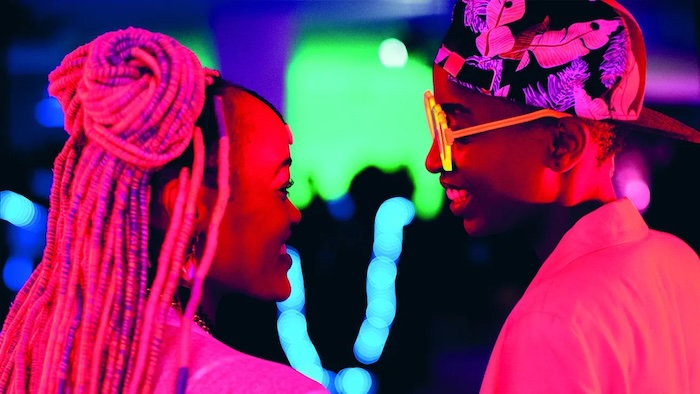
The film Rafiki is a charming love story that plays out in urban Kenya. It follows two teenage girls whose close friendship slowly turns into first love. Directed by rising filmmaker Wanuri Kahiu, it was celebrated as groundbreaking by critics and at festivals when it was released in 2018. But back home in Kenya, where homosexuality is criminal, the film was banned.
On 23 January 2026, after an eight-year legal campaign by the film producers, the Kenyan Court of Appeals ruled that the 2018 ban was not reasonable in terms of the country’s constitution. This means they and director Wanuri Kahiu can now submit the film for classification under Kenya’s Films and Stage Plays Act as part of the process to allow public screenings.
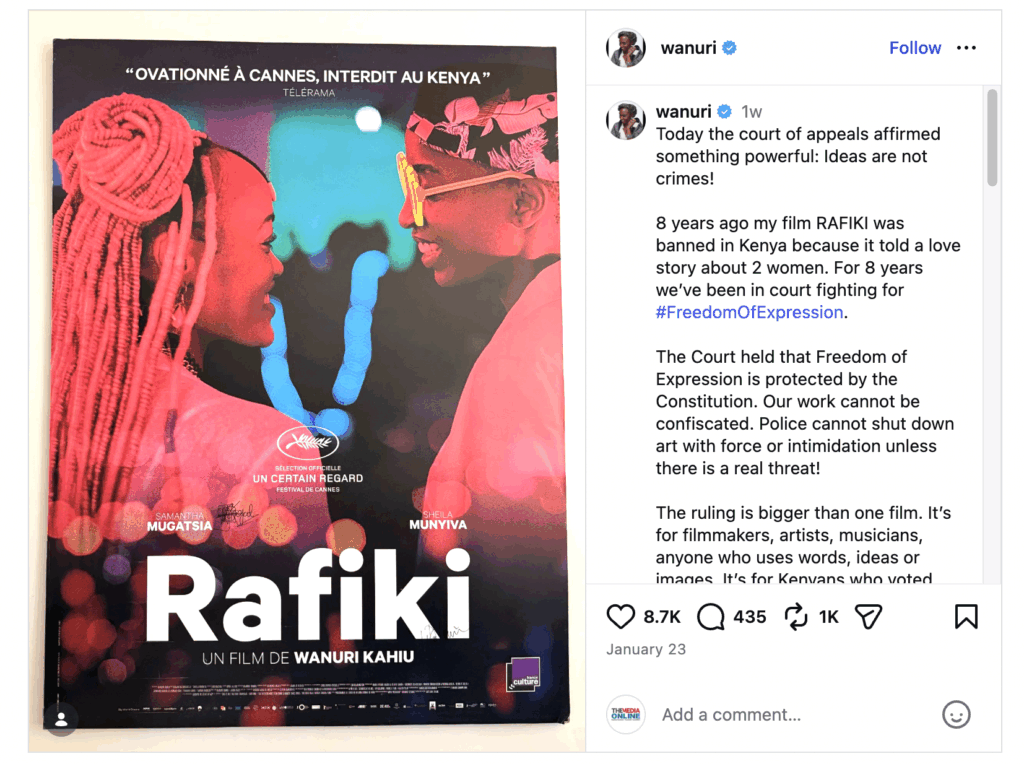
The court stressed that depicting a same-sex relationship doesn’t amount to promoting illegal conduct, which is how the state-funded Kenya Film Classification Board had justified the ban in 2018. The film’s happy ending was perceived to be “promoting homosexuality”. The ban quickly became a symbol of the problems filmmakers face whenever they challenge traditional views on sex, gender and morality.
The ruling marks more than the ongoing rehabilitation of a single film. It signals a subtle but significant shift in how African film might negotiate censorship in the years to come.

Bryan Berlin/ Wikimedia Commons, CC BY-NC-SA
My research as a scholar of African queer cinemas has focused on how such moments reveal the fragile yet transformative possibilities through which African film cultures negotiate visibility and legitimacy. And the right to imagine queer futures and freedom of speech on their own terms.
At first glance, the ruling might appear modest. Kenya has not decriminalised same-sex relations, and legal restrictions on LGBTIQ+ lives remain firmly in place. Even so, Rafiki’s chance of a return is very important.
It marks the first time a Kenyan film previously prohibited for queer content has been potentially permitted public circulation. Other recently banned queer-themed films like I am Samuel remain banned.
Although largely symbolic, the gesture disrupts long-standing assumptions about what African films can show, who they can centre, and which lives can be made visible.
Censorship and representation
African film industries have historically operated under difficult systems of moral, religious, and political regulation. From colonial censorship boards to postcolonial classification authorities, film has been treated as requiring constant surveillance.
Sexuality, especially queer sexuality, has been one of the most heavily policed domains. Films tackling same-sex desire have often been banned, restricted to festival circuits, or forced into underground circulation. In South Africa, the film Inxeba/The Wound was effectively banned from mainstream cinemas. In Nigeria, the first independent queer film Ìfé was prohibited from cinemas.
Rafiki’s initial banning followed this pattern. Despite being selected for screening at the important Cannes Film Festival, it was deemed unsuitable for Kenyan audiences. An internationally celebrated Kenyan film could be screened overseas but not in Nairobi.
So the ruling disrupts this asymmetry. It shows that national cinemas cannot indefinitely insulate themselves from transnational circuits. Overseas, African queer films increasingly gain visibility, prestige and market value.
Kenyan law appears, in this sense, to be more flexible and changing in response to international attention, cultural pressure and public image.
African audiences
One of the most significant implications of the potential unbanning concerns the question of audiences. Bans don’t just suppress content; they also actively shape who is imagined as the viewers. For decades, queer African films have been implicitly addressed to foreign audiences, festivals and academic readers, rather than to local publics.
Allowing Rafiki to screen at home will challenge this idea. It will open a space, even if it’s a fragile one, for Kenyan audiences to encounter queer lives. Not as abstract political controversies but as intimate, everyday narratives. Rafiki tells a deliberately modest story, grounded in the innocence of first love and the textures of everyday life in the city.
This matters because being represented is not only about being visible. It’s also about producing audiences. More than depicting queer lives, films like Rafiki shape new viewing communities and new forms of recognition.
In this sense, the ruling contributes to a slow reconfiguration of African film publics. It suggests that African audiences are not uniformly conservative or inherently hostile to queer narratives. Instead, they are plural and capable of engaging with complex stories about identity, love and desire.
These publics have been changing, thanks in part to streaming platforms and digital technologies. Even where films are banned from cinemas, viewers can still watch, share and debate them online. This shift is important as cinema spaces themselves are declining across many African countries.
African filmmakers
For African filmmakers, the ruling carries both practical and symbolic importance. Practically, it signals the possibility that national classification regimes may become more negotiable and more responsive to legal challenges and public pressure.
The 2018 High Court ruling that temporarily lifted the ban to allow limited screenings had already established an important precedent. The current unbanning consolidates that into institutional practice.
Symbolically, the decision offers a measure of protection to filmmakers who dare to take aesthetic and political risks. Rafiki was shot cautiously in order to evade state surveillance.
It teaches us that queer storytelling is no longer automatically incompatible with national cinema. This may encourage a new generation of African directors, screenwriters and producers to pursue narratives once seen as too dangerous, too marginal, or too commercially unviable.
But caution should not be thrown to the wind. The ruling does not signal the end of censorship, nor does it guarantee a hospitable environment for filmmakers. Classification boards still retain broad powers, and political backlash remains likely.
A fragile opening …
The unbanning of Rafiki should not be overstated. Legal prohibitions against same-sex relations remain in force. Violence against queer communities persists, and cultural backlash is inevitable. Yet openings in cultural policy often precede legal and social change, not the other way around.
Cinema, precisely because it works through emotions and the visual, can create the conditions for new ethical and political sensibilities to emerge.
Rafiki’s return would ultimately represent a possibility that African films can speak more openly about intimacy, vulnerability and difference. A possibility that African audiences can encounter these stories on their own terms.
This story was updated to clarify details of the legal ruling.
Gibson Ncube, Senior Lecturer, Stellenbosch University
This article is republished from The Conversation under a Creative Commons license. Read the original article.