
- BrandMapp 2025 data suggests South Africans have more shared interests and values than differences across race, age, gender, religion and income.
- The braai remains a powerful Heritage Day symbol, but it represents broader themes of community, humour and togetherness.
- Crime is the biggest shared concern among South Africa’s consumer class, while education is the leading social cause people want to support.
- Travel, music, movies, cooking and dining out rank among the country’s most popular shared passions.
- Radio and television continue to play a significant role in everyday South African life, with 60% listening to radio and 70% watching TV daily.
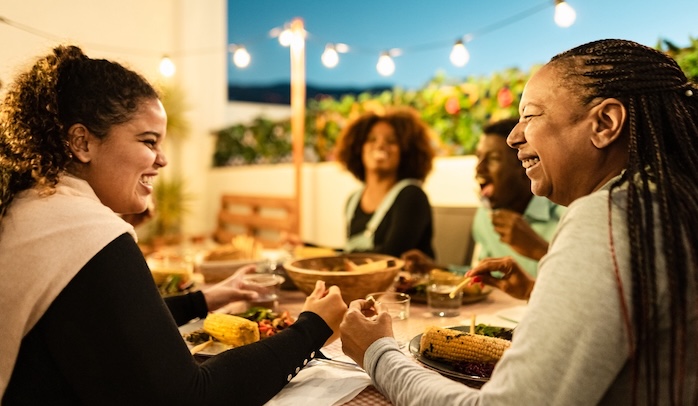
Ask South Africans what they’re going to do on Heritage Day, and the top answer isn’t likely to be a museum trip. While citizens of other countries may celebrate their tangible, intangible and natural heritage by visiting monuments, art galleries and National Parks, South Africans are more inclined to gather around a fire – to see who’s there, share a meal and have a few good laughs.
“There are good reasons why heritage crystallises around the braai for South Africans,” says Brandon De Kock, director of storytelling for BrandMapp.
“First, it’s delicious – let’s not underplay how universally skilled we are when it comes to cooking over open fires. In part, braaiing is the most famous beat of today’s South African culture just because we’re simply, undeniably good at it.
“That kind of exceptionalism is incredibly unifying. But there’s nuance to the braai too. And as a later-in-the year counterpoint to the State of the Nation address, Heritage Day invites us to reflect on the mind-state of the nation,” he says.
Different cuts of meat
Scan across South Africa’s economic divide and there will be noticeably different cuts of meat laid out on the grills.
But, De Kock adds, “Alongside the braai, slightly outside the frame, slightly blurry, are ordinary South Africans, from all walks of life, with very similar skills, motivations and feelings about what it means to get together to share a meal – to nourish ourselves and each other with good food and good humour.”
Braaiing is so universal in South Africa that it crosses the boundaries of 11 official languages and nine provinces. “We can be forgiven for thinking it’s that one thing that binds us,” says De Kock.
But the latest BrandMapp dataset, the largest survey of the South African consumer class, tells a different, richer story.
Striking number of shared interests
“When we looked at the data with the goal of identifying unity, not difference, there’s a striking number of shared interests, overlapping views and other merging elements all weaving the social fabric that’s holding us together in this moment,” De Kock explains.
South Africans of every generation, across races, genders, religions and income brackets, are joined in some significant ways.
“BrandMapp data shows that we have more points of connection than of divergence,” De Kock says. “That’s something that bears contemplating more around 24 September, because for so long the dominant narratives of our nation are about mapping our divides.”
The South African consumer class – those living in households with monthly incomes of R10k+ – is made up of around 14 million people and as De Kock says, “if you want insights into how diverse citizens think and live out their lives, this segment of the population is a group that closely resembles the total South African demographic.”
Whatever language we speak and whatever core culture we identify with , we simply have a whole lot in common with each other.
And that stretches across age and gender too.
Shared interests
We are strongly united in our top passions for travel, music, movies, cooking and dining out.
Identical worries
Most of us report that crime is the single biggest thing that keeps us awake at night.
Universal spirit
We’re all touched by Ubuntu, with the majority prioritising staying in touch with friends and family, and 40% who also love to cook for our loved ones.
Collective outlook
Just 35% of us are purely optimistic about the future of South Africa, while 40% say they are unsure. “So, perhaps what this data says is that we are really united in that only one in five of us is pessimistic about the future of the country,” says De Kock. “It’s a notably small minority glumly flirting with shades of pessimism.”
Mutual laughs
Comedy is the favourite type of movie for 65% of us. “We know this anecdotally, but our data that confirms that having a sense of humour is quintessentially South African,” De Kock says. “We’re not just friendly, we’re also funny.”
Unified hope
Half of us believe that education is the social cause most worthy of supporting. De Kock adds, “This is actually a triumphant datapoint when you think about how many critical causes there are to support across South Africa.”
There are other signs of South Africa’s ‘same pinch’ in the data. The majority of us love food markets – the top choice for attending a live event. Our eating-out culture is strong. We all love music, even though we differ on genre. And 60% of us listen to the radio, while 70% watch TV every day.
De Kock concludes, “So perhaps the mind-state linking South Africans is reflected less in the grand symbols of national identity and more in the ordinary things we do together – eating, laughing, listening, watching, worrying, supporting those we love and hoping for a better future. That’s really the essence of what we are taking forward this Heritage Day.”
BrandMapp 2025 insights are available directly from the BrandMapp team at WhyFive Insights and by subscription via Telmar, Softcopy, Nielsen and Eighty20. For data access email Julie-anne@whyfive.co.za