
The Media Online’s weekly column delivering news of award wins, entries, competitions, dates to note and winners in the media.
Publicis Groupe Africa named finalist 65 times at Loeries 2026
Publicis Groupe Africa has earned 65 finalists at the Loeries 2026, ahead of the awards nights in Cape Town on 8 and 9 October. The shortlists span six agencies and cover everything from film, radio and print craft to live events, AI and the festival’s new Creative Strategy category.
The Groupe also has three of the nine Young Creatives shortlisted this year, a strong sign of the talent coming through its agencies.
LePub Johannesburg and Machine lead the Groupe with 22 finalists each. The finalists are across multiple clients, including Heineken, Mondelez and RocoMamas.
Machine’s Spotify trilogy earned finalists across OOH, print, art direction and photography, Audio Experiences, Live Events and Data Driven Campaign and Industrial & Product Design.
Koo Govender, CEO of Publicis Groupe Africa, says: “Sixty-five finalists is a true reflection of the tremendous talent and ambition across our Groupe. Behind every shortlist is a team that pushed a brilliant idea further and a great client who trusted them to bring it to life. Seeing that work recognised is incredibly rewarding.”
Publicis West Africa earned seven finalists for Nestlé and PepsiCo, while The Partnership Agency earned six, led by Too Good’s Paid Sick Leave for Cows and Leo Singapore’s Vaseline & the Real Nigerian Prince for Unilever earned five, including Creative Strategy, Comedic Impact and Social Impact Campaign.
The Loeries Young Creatives programme recognises the region’s most promising emerging talent. This year, three of the nine shortlisted creatives come from Publicis Groupe Africa:
- Sebastian Dupper, LePub Johannesburg
- Hamzah Limalia, Machine
- Valentino Fernandez, Nestlé One

Nick Hamman takes Forty Under 40 South Africa Media award
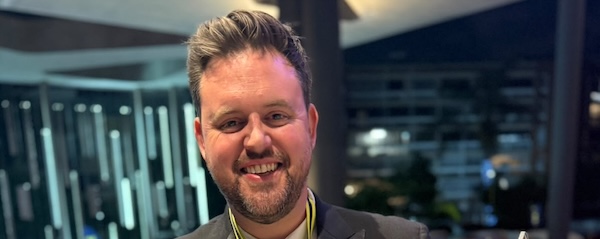
5FM breakfast host and Hammy Eats co-founder Nick Hamman has been named a 2026 Forty Under 40 South Africa winner in the Media (Digital and Social) category.
Hamman received the award at the national ceremony on Saturday, 3 October, recognising his work across radio and digital media.
As host of 5 Breakfast, Hamman has built a strong youth audience while using the show as a platform for music, news, storytelling and South African culture. His annual 5FM Heritage Tour, now in its 10th year, takes listeners across the country, highlighting local communities, food and stories.
His digital footprint extends through Hammy Eats, the food platform he co-founded with JD Mostert. The platform generates about 30 million video views a month and profiles independent South African food businesses. Hamman says it has helped generate millions of rand in business for small and emerging food entrepreneurs.
“I’m incredibly grateful to be named a 40 Under 40 South Africa winner in Media (Digital and Social),” says Hamman. “I’m proud to do this work both on 5FM and through Hammy Eats, where we tell the stories of South African food businesses and help more people discover them.”
Masi Mdingane, business manager for 5FM and Good Hope FM, says the award reflects Hamman’s ability to work across traditional and digital media.
“Nick is an on-air and social media powerhouse with a massive heart for South Africa,” says Mdingane. “He celebrates Mzansi, its people and its food with infectious passion, and he uses his platforms to change people’s lives for the better.”
Hamman continues to host 5 Breakfast on weekday mornings from 6am to 9am, alongside his work with Hammy Eats.
Creativity born from constraints ‘explodes’ in 2026, finds D&AD
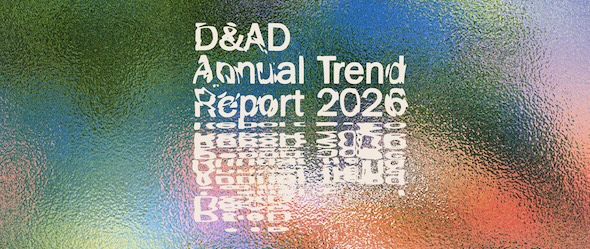
Creative work is increasingly turning rules, regulations and technical limitations into opportunities for ideas, according to D&AD’s 2026 Trend Report.
Released as part of the D&AD Annual 2026, the report identifies six trends emerging from 50 000 pieces of work entered from 89 countries across 46 categories, alongside discussions in 42 jury rooms and insights from 300 leading creatives.
D&AD says constraint-driven creativity “hasn’t ever exploded in the entries like it has this year”, with limitations increasingly becoming the creative brief rather than an obstacle.
Examples include work using Google Maps rules as a distribution mechanism, Saudi Airlines turning baggage restrictions into an opportunity, and Wikifarmer working within regulations around throwing rice at weddings.
D&AD also highlights community involvement as increasingly important to cultural relevance. Its new Cultural Influence Pencil attracted 354 entries, but just 18 were shortlisted or awarded, suggesting the industry still has work to do in demonstrating genuine cultural influence.
“Deep community listening is a prerequisite, not a nice-to-have,” the report states.
The six trends are completed by The New Attention Grabbers, Defying Category Conventions and The Brand Hack – Subverting a Big Moment.
Donal Keenan, D&AD chief commercial and operations officer, says this year’s awards provide a significant body of evidence for understanding how creative work is changing. “What comes through strongly this year is that audiences are harder to impress and easier to lose,” he says. “The work that rose to the top took real risks, showed genuine skill and gave people a reason to pay attention.”
D&AD describes 2026 as a “year of reckoning” for creativity.
The D&AD Annual 2026 also features insights from contributors including Baratunde Thurston, Ione Gamble, Sir John Hegarty, Rachel Lowenstein, Diipa Büller-Khosla and Thomas Kolster, alongside profiles of Black Pencil-winning work, industry rankings and judge-curated selections.
The D&AD Annual 2026 and D&AD Trend Report 2026 are available here.
Red Wall campaign signals new era for property marketing
For decades, property developments in South Africa have been marketed with a familiar formula: branded billboards, glossy brochures, polished renders and launch-day banners.
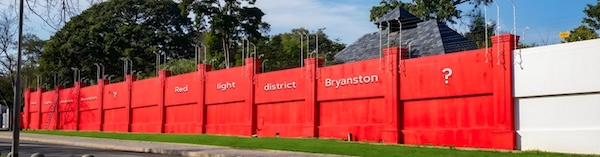
When Craft Homes set out to launch Bryanston Country Estate, its in-house marketing team took a different approach. It removed the branding altogether and launched with nothing more than a painted red wall.
Five weeks later, the campaign had generated more than 6 400 qualified competition entries and attracted more than 800 visitors to the official launch. It also contributed to more than R381 million in residential sales, including 91 freestanding homes in the estate.
The campaign has now earned a Silver Award for Best Online Competition by a Corporate at the 14th annual WesBank New Generation Social & Digital Media Awards.
The idea was built around a simple question: what if a development could earn people’s curiosity before asking for their business?
Craft Homes painted a prominent boundary wall at the corner of Grosvenor and Bryanston Drive bright red, with no logo or explanation. Each week, a new cryptic one-liner appeared on the wall, prompting speculation in WhatsApp groups, on social media and on local radio.
A dedicated website and Facebook page converted that curiosity into participation, offering R50 000 to anyone who could identify who was behind the wall.
When Tabasco and SPAR attempted to claim the wall as their own, Craft Homes embraced the hijacks, turning them into further amplification. The campaign generated more than 370 000 TikTok views, a Twitter/X reach of more than 252 000 and a Facebook reach exceeding 380 000.
Before revealing the brand, Craft Homes also used the attention to create a community benefit. An on-site blood drive with the South African National Blood Service generated 123 blood donations and 47 stem cell registrations.
The campaign culminated in a key-drop event, where five finalists attempted to open a locked door. A local resident succeeded, winning R50 000, before Craft Homes was revealed as the developer behind the wall.
The Red Wall campaign represented a marketing investment of R1.31 million, excluding VAT. Against more than R381 million in residential sales generated, the results demonstrate the potential of creativity to operate as a commercial strategy rather than simply an awareness tool.