Excitement will abound on 11 June 2026, when South Africa takes on Mexico in the highly anticipated 2026 FIFA World Cup opener in Mexico City. This will serve as a re-match of the opening game of the 2010 FIFA World Cup, as well as South Africa’s return to the World Cup stage after failing to qualify for the three previous tournaments.
Like the fan-fever that followed the Springboks’ win at the 2024 Rugby World Cup, we can expect to see a wave of green and yellow sportswear take over the streets of Mzansi in support of Bafana Bafana. Of course, to be South African is to be patriotic when we kill it on the field. No DNA, just RSA, as they say.
With the FOMO that accompanies these events, an uptick in patriotic marketing practices is to be expected and traders looking to “back the boys” must navigate the legal and regulatory maze surrounding patriotic marketing practices.
Misleading patriotic marketing in terms of the ARB
Patriotic marketing is a strategy that uses symbols of national pride, identity and cultural heritage to foster a sense of consumer loyalty.
If you are keen to use patriotic marketing strategies, then it is important to avoid making any false claims when marketing your goods. You should not claim that your goods are of local origin when they are not. This is considered dishonest and misleading by the Advertising Regulatory Board (ARB).[1]
The Code of Advertising Practice states that advertisements cannot abuse the trust of consumers; or exploit their lack of experience or knowledge. The Code also states that advertisements should not contain any statements or visuals that may mislead consumers.
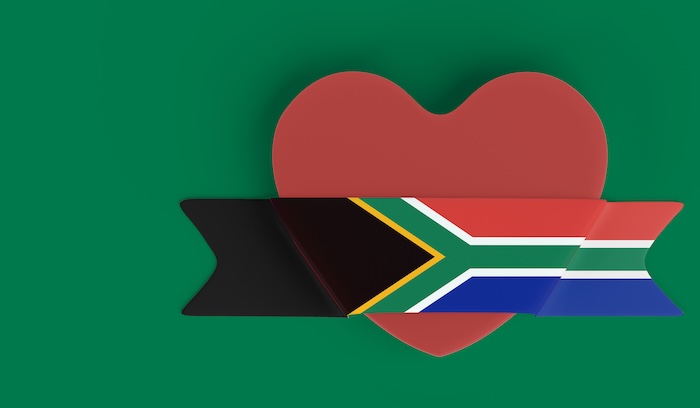
On 14 April 2025, the ARB handed down a decision against a local advertiser known as Cape Flair, which operated a website that advertised clothing with numerous references to South Africa and Cape Town. The landing page featured images of the South African flag inside a heart shape, accompanied by the words “Cape Town, SA”.
The website also displayed a picture of a well-known Cape Town beach with the phrases “Cape Town’s signature style, tailored for South Africa” and “South African Fashion, from the heart of Cape Town”.
These tactics misled an unsuspecting consumer by creating the false impression that the goods were locally made. As it turns out, the advertiser had been selling clothes sourced from a global distribution chain. A ‘return’ address pointing to China was the giveaway.
The ARB found the advertisements to be dishonest and misleading. In its decision, the board highlighted the surge in consumer support for local brands, further stressing the need to prevent deceptive advertising.
Proudly South African (more than just a statement)
Traders often declare their goods as “proudly South African”, with pure and honest intentions. However, this slogan and its accompanying logo are registered trade marks in South Africa, owned by the Proudly South African organisation, which means that they cannot be used without the consent of this organisation.
Improper use of these marks is also prohibited by the Merchandise Marks Act, which is primarily concerned with protecting consumers from deception in trade.
To use PROUDLY SOUTH AFRICAN marks on marketing material, a business must become a member of the Proudly South African organisation. Membership entails the following:
- At least 50% of production costs of locally made goods must be incurred in South Africa;
- Imported goods must be substantially transformed in South Africa;
- The quality of goods or services must be of high standard;
- Compliance with fair labour practices and legislation must be ensured; and
- Adherence to proper environmental standards must be maintained.
Non-members who utilise these protected marks may be found liable for trade mark infringement. In terms of the Merchandise Marks Act, unauthorised use would constitute a criminal offence.
Use of national symbols on packaging
The Merchandise Marks Act also prohibits persons from using trade marks which contain the national flag, armorial bearings or any other heraldic emblem, without authorisation. It also prohibits the use of the national flag, coat of arms seal and symbols of State patronage, in trade marks, without authorisation.
To use these symbols on product packaging, authorisation must be obtained from the minister of trade, industry and competition. The minister usually requires the design and integrity of these symbols be preserved in their correct proportions.
The Registrar of Trade Marks may call for proof of such authorisation before accepting a trade mark application which incorporates a national symbol. If accepted, the Registrar will also require the trade mark applicant to disclaim their rights to the exclusive use of these symbols (which means that traders cannot claim a monopoly in their use of these symbols or stop others from using them).
Beyond these symbols, trade mark rights to the exclusive use of common cultural phrases such as LOCAL IS LEKKER or RAINBOW NATION will likely need to be disclaimed (or they will simply be rejected by the Trade Mark Registrar) because they are too common to function as a distinguishing trade mark.
The Consumer Protection Act
Like the Merchandise Marks Act, the Consumer Protection Act protects against instances of false, misleading or deceptive representations made by traders in the marketing of their goods. These include false representations relating to the qualities, standards, grade, style, sponsorship or approvals of any goods.
Falsely marketing your goods as being made in South Africa would also be in contravention of the Consumer Protection Act, entitling consumers to approach the High Court or the National Consumer Tribunal for relief.
Unlawful competition
Misrepresentations relating to the nature of goods may also constitute a form of unlawful competition. A key question to consider is whether the misrepresentative marketing tactics would attract customers under the false belief that the goods have some characteristic which they do not possess.[2]
If goods are marketed in a deceptive manner aimed at confusing consumers into believing that the goods are locally made, then affected consumers may approach the High Court for relief.
In summary
If you’d like to avoid High Court litigation, be sure to adhere to the legal and regulatory requirements for proper patriotic marketing. After all… nothing kills the gees faster than a good old fashion cease-and-desist letter.
Spoor & Fisher is Africa’s largest specialised intellectual property law firm, with deep African roots and a global reach. The firm specialises in all aspects of IP law, including trade marks, copyright, patents, registered designs, anti-counterfeiting, commercial work with an IP flavour, and litigation in these fields. Spoor & Fisher is ranked in the top band in the latest editions of leading legal directories, both local and international, and has a reputation for pioneering innovations and contributions to IP law and academia. Clients have trusted the firm to protect, manage and enforce their IP across Africa and the Caribbean for over 100 years.
[1] The ARB is an independent and self-regulatory body that enforces the Code of Advertising Practice. The Code sets standards for responsible advertising practices in the South African marketplace.
[2] Milestone Beverage CC and Others v The Scotch Whisky Association and Others 2021 (2) SA 413 (SCA)