Media agencies have built highly successful businesses over many years by hiring specialists. There would be a TV planner, a print buyer, a digital performance manager, an out of home specialist and a strategist or business unit head tying it all together. But that language belongs to a bygone era.
In South Africa, this problem is exacerbated by our digital maturity curve. Because our digital landscape matured later than international markets, many of our industry veterans possess 15 years or more of deep, above-the-line (ATL) expertise but lack genuine, hands-on platform fluency.
The dynamics of our game have shifted substantially, but if you look carefully, you’ll find a landscape awash with talent, but an industry still trying to field a decade-old lineup.
On the other side of the coin, younger digital natives understand the algorithms but often lack a foundational grasp of macro business strategy or commercial metrics.
Yet despite this, agencies are still predominantly hiring for siloed channels. This is at odds with our current reality where clients don’t need a traditional TV planner or an isolated performance planner anymore. Clients need decision clarity from a single individual who can navigate business strategy, platform economics, and commercial storytelling simultaneously.
Modern chief marketing officers (CMOs) don’t have the time to sit in a boardroom, playing referee between their digital team and their traditional media buyers. They are navigating their own boardrooms, where they are being asked to prove how media delivery directly contributes to corporate growth and a return on investment.
CMOs need partners who can bridge the gap between media and message, capable of clear, unified strategic directions.
The ‘bomb squad’
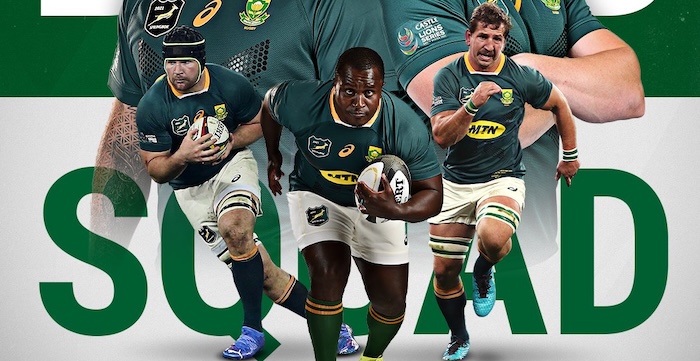
Rassie Erasmus turned the world of rugby on its head when he ripped up the traditional rugby rulebook to invent the ‘Bomb Squad’. If that were not enough, he ruffled even more feathers by fielding a 7-1, forward-back, split on the bench. Not only did it work in devastating fashion, it fundamentally changed the long-held belief about fixed player positions.
Like Rassie’s hybrid players, agencies need backline players who are adept at the dark arts of the forward battle, and they need battle-hardened forwards who are fleet of foot and comfortable running intricate backline moves.
I would argue that the media agency game is ripe for a tactical reset. What, then, does this disruptive hybrid player look like?
Engineering the high-impact planner
The answer lies in actively, and deliberately, dismantling the old silos to build ‘high-impact planners’. The industry, and the clients it serves, need individuals who are thoroughly proficient across the entire media and agency ecosystem.
A high-impact, modern planner must combine high-level strategy, deep analytics, robust trading literacy and absolute fluency across major platforms like Google and Meta. They must understand margin structures, client pricing dynamics, and broader commercial growth drivers.
If we return to the Springbok analogy, the genius of building a hybrid player is that they can navigate separate but related worlds seamlessly.
Turning the lens to our industry, we live in the era of attention. If we try to field the exact same bench we fielded ten years ago, we trap ourselves in a transactional relationship that fails to capture the true economy of consumer attention, focusing only on the vanity metrics of media.
It is imperative to cultivate multi-faceted talent so that clients can be assured that the person executing the campaign at the coalface possesses the strategic maturity to optimise it effectively. It allows us to merge creative intent with media distribution. Most importantly, it means that client budgets are treated as high-yielding investments rather than mere operational expenses.
The cold hard fact is that if proper, daily, well-thought-out strategic optimisation is not happening on every rand spent, every day, millions of rands are at stake.
Designing the future
At Connect, we believe the future does not lie in fielding a team of rigid channel specialists who only know how to play one position. The future will be built on an agile, multi-positional workforce capable of defending a budget and capturing consumer attention.
Our recent SCOPEN accolade, being voted the second best agency to work for in South Africa, is driven in a large part by how we see our various teams, their roles in the organisation and how they add value across the brands we represent.
I proudly serve on the board of the Advertising Media Forum, where education and talent development remain central priorities. Alongside many respected industry leaders, there is ongoing work to strengthen the pipeline of young talent entering the media industry.
But isolated efforts will not solve a structural issue. This requires a collective industry reset.
The agencies that adapt fastest – by building hybrid talent, integrating strategy with execution and investing deeply in commercial and creative capability – will define the next era of growth.
Marvin Kgasoane is chief client officer at Connect, part of the Up & Up Group.