
- Confidence drives performance: Confidence is a critical leadership skill, not a soft skill.
- Leadership is gender-neutral: Great leadership is defined by values, capability and integrity.
- Psychological safety fuels success: People perform best when they feel supported and safe to contribute.
- Women should lead with confidence: Speak up, trust your perspective and rely on facts over politics.
- Self-belief creates leaders: Early encouragement and strong role models build lasting leadership confidence. *
I was adopted when I was three days old.
Many people hear that and immediately assume it must have left some deep mark. The truth is far less dramatic. I was blessed with wonderful parents who did everything they could for me and made a lot of sacrifices along the way. More importantly, they gave me every ounce of confidence a child could hope for.
My father passed away a few months ago. Like many people who lose someone significant, I find myself reflecting on what he left behind. Not in a material sense, but in the lessons, values and beliefs that shaped the way I lead today.
My father spent his career in business, and from a young age, I sat captivated by his stories. He travelled extensively, negotiated tough deals, managed complex relationships and wrestled with difficult ethical decisions.
Every story carried a lesson. From him, I learned that leadership is rarely about easy answers. It’s about making difficult decisions while staying true to your values. Most importantly, he never placed limits on what I could achieve. There was never a ceiling.
The greatest gift of my life
He taught me about business, expected me to think independently and gave me the confidence to navigate environments that were unquestionably male dominated. That confidence became one of the greatest gifts of my life.
At the same time, another influence was quietly shaping my worldview: Sport.
From the age of three, I developed an obsession with horses that eventually led me to compete nationally and internationally. Equestrian sport is unusual because men and women compete directly against one another.
In that environment, gender was largely irrelevant. We shared the physical work. We competed against each other. We learned from each other. We won and lost on equal terms. The lesson became deeply ingrained: Capability mattered more than gender.
For years, this perspective made it difficult for me to understand why some women struggled in the workplace. In my younger years, I was probably less empathetic than I should have been. My view was simple: Work hard, perform well and success will follow. Experience has taught me that the reality is more complicated.
Lessons from elite sport
Over the last two decades, I have spent significant time studying leadership and high performance, drawing lessons from business and elite sport. One observation stands above many others: People perform best when they feel confident.
Confidence is not a nice-to-have. It is a performance requirement. When people feel fearful, unsupported or psychologically unsafe, performance deteriorates. Athletes call it choking under pressure. The same thing happens in organisations every day.
Great leaders understand this. They build cultures that are supportive, accountable and exceptionally clear. Not necessarily comfortable, but safe enough for people to think, contribute and perform at their best.
I work with many women who hesitate before asking the difficult questions or challenging a decision because they worry about being perceived as aggressive. My advice is simple: Your perspective has value. Find ways to express it confidently and constructively.
I also believe women must be conscious of workplace dynamics that can undermine trust. High-performing teams operate through transparency, facts and measurable outcomes. Conversations grounded in data create clarity. Conversations grounded in speculation create politics. And politics destroys confidence faster than almost anything else.
Reflecting society
Ultimately, leadership is not a male skill or a female skill. Leadership is a human skill.
The best teams I have worked with have reflected society itself, bringing together diverse perspectives, strengths and experiences. That balance creates better decisions, stronger cultures, and better results.
And for aspiring women who want to build successful careers, my advice is this: Invest in your confidence. Surround yourself with people who believe in you. Stay anchored to your values. Speak up when it matters. Look after your physical, mental and emotional wellbeing.
Because leadership is a privilege.
But it is also demanding, stressful and sometimes lonely.
The stronger your foundation, the stronger your ability to lead others.
My father understood that long before I did.
And as I head out for a run, one of the many habits that keeps me grounded, I realise that his greatest gift wasn’t teaching me about business.
It was teaching me to believe I belonged in it.
* Summary created by AI
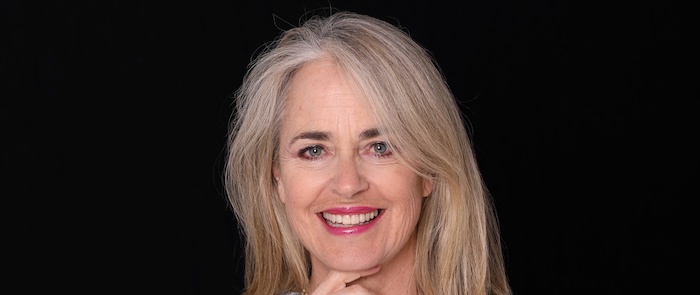
Lynn Madeley is the CEO and co-founder of High Performance Matters (HPM), leadership coach and one of the architects of modern agency growth across Africa. Over a career spanning more than 30 years, she has built, led and transformed businesses across Africa, Europe and Asia. Formerly CEO of Havas Southern Africa and COO of Publicis Groupe Africa, she is recognised for scaling organisations, building high-performance cultures and developing exceptional leaders. A qualified executive coach who has been coaching throughout her adult life, Lynn helps CEOs, boards and leadership teams turn strategy into measurable performance.