
OpenAI’s recent suggestion that companies could move to a four-day work week, while paying employees for five, has predictably sparked global excitement.
On the surface, it feels like a progressive recalibration of work in the age of artificial intelligence. But for those of us in the communications, marketing and creative industries, the proposal raises a more complex question: are we solving the right problem, or simply rebranding it?
AI is already transforming how agencies operate.
From content generation to data analysis and campaign optimisation, tasks that once took days can now be executed in hours. The promise is clear: greater efficiency, faster turnaround times, and potentially, more space for strategic and creative thinking.
The ‘always-on’ culture
But in practice, many agencies are experiencing something quite different: compressed timelines, heightened client expectations, and an “always-on” culture that AI has accelerated rather than alleviated.
This is where the idea of a four-day work week becomes both appealing and problematic. It suggests that productivity gains from AI can be neatly translated into reduced working hours. But in a sector where value is not measured purely in output, but in insight, originality, and human connection, productivity is far more nuanced.
Creativity does not scale linearly, and it certainly doesn’t conform to a compressed schedule.
There is also a risk that initiatives like this become a form of what we might call “efficiency theatre”, highly visible, headline-grabbing changes that fail to address deeper structural issues. In many agency environments, the challenge is not the number of days worked, but the intensity and unpredictability of the work itself.
Same pressure, condensed
Deadlines are driven by news cycles, client demands and cultural moments that do not adhere to a four-day framework. Without a fundamental rethink of how work is scoped, valued and delivered, a shorter week could simply mean the same pressure, condensed.
From a South African perspective, the conversation becomes even more layered. We operate in a context marked by inequality, high unemployment, and uneven access to technology. While some organisations are experimenting with AI-enabled productivity gains, many others are still grappling with basic digital transformation.
A blanket adoption of a four-day work week risks creating a two-speed economy, where only certain sectors and individuals benefit.
As an industry, we also have a responsibility to lead on the ethical and responsible use of AI. Through bodies like PRISA, there is a growing emphasis on ensuring that AI augments rather than replaces human creativity, and that it is deployed in ways that are transparent, fair, and aligned with societal values.
An important conversation
This requires thoughtful governance, ongoing skills development and a commitment to maintaining the integrity of our profession.
The real opportunity presented by AI is not simply to work less, but to work differently. It is to redefine what constitutes value in our industry, shifting from volume to impact, from speed to significance.
That may well result in more flexible working models, including shorter weeks in some contexts. But these should emerge from deliberate strategy, not reactive policymaking.
OpenAI has started an important conversation.
But if we are to truly future-proof our industry, we need to move beyond simplistic solutions and engage with the deeper transformation that AI demands.
The goal should not be fewer days at work, but better work – done responsibly, sustainably, and with human creativity at its core.
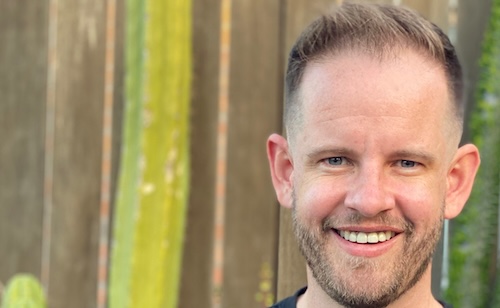
Howland is the CEO of the Cape Town based communications and marketing agency, Alkemi Collective. He also serves as President of the Public Relations Institute of Southern Africa.