From legal enforcement to smarter planning and stronger measurement, out of home (OOH) – including digital out of home (DOOH) – is levelling up on every front. As one of the few media channels that reaches people in the real world rather than on a device, it’s evolving quickly to match how audiences move, behave and pay attention.
This makes it one of the most exciting and dynamic arenas available to brands – who will have to adapt fast if they want to use it well in 2026.
-
Legal compliance will be the top priority
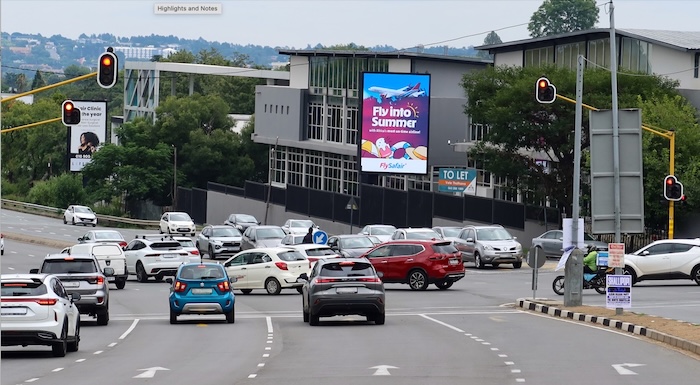
South Africa’s OOH landscape has long been viewed by some as a bit of a ‘wild west’, with billboards rising and falling with impunity. But Johannesburg – previously perceived as less stringent than the Western Cape when it comes to OOH site legalities – is now showing a more assertive approach.
This includes the removal of unauthorised structures along major routes like Winnie Mandela Drive, demonstrating that compliance with municipal by-laws and safety standards is becoming a growing priority.
Media buyers have argued that they rely on their partners to secure the right approvals, yet the City has made its position increasingly clear: if a structure isn’t permitted, it may be subject to removal, and further action will follow.
More striking still is how far accountability has shifted. Councils are now, in some instances, issuing legal notices directly to CEOs and CMOs when their brands appear on illegal sites, regardless of who handled the booking. The old assumption that someone else checked the paperwork is being challenged, with greater emphasis on the brand undertaking due diligence.
Cape Town presents a different picture. Its clearer by-laws, approval processes and consistent enforcement have created an environment where proper compliance is achievable and the risks are far lower. Johannesburg’s more complex and evolving regulatory environment has turned, “Is this site legal?” into one of the most important questions in the media planning process.
Cape Town continues to show what a well-regulated market looks like when the rules are applied evenly. In 2026, understanding the regulatory differences between cities is no longer optional – it’s central to safeguarding brand reputation and budget.
-
Direct buying and pDOOH will work together, not compete
For some time now, direct loop-based buying and programmatic DOOH (pDOOH) have been seen as rivals. The industry is now waking up to the fact that they aren’t opponents at all – they’re simply different tools that work best when used together.
Direct buying gives a brand firm footing: consistent visibility and a sense of permanence in the landscape. Programmatic offers something complementary; it lets a campaign respond to real-world conditions, be deployed quickly and optimised for performance.
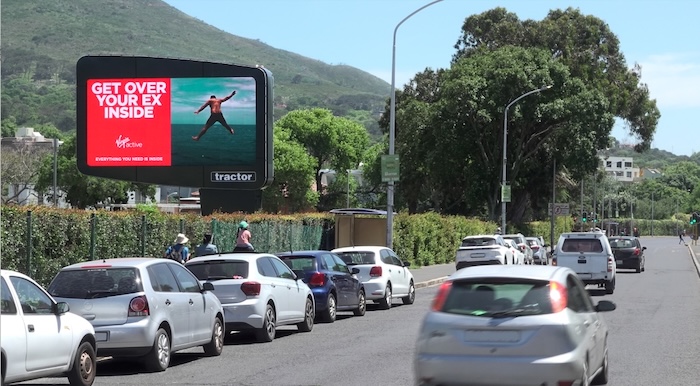
The most effective advertisers are no longer choosing one approach over the other. Instead, they’re building campaigns where direct placements provide stability and brand-building scale, programmatic layers bring agility, targeting and measurable impact. In 2026, the discussion will finally move beyond either-or thinking, and the two approaches will start functioning as a single, more intelligent way of planning OOH.
-
Advertisers will demand full visibility into DOOH spend
As more digital OOH spending passes through aggregators, marketers are beginning to ask a simple question: Where is our money actually going? For years, the path from budget to screen has been obscured by layers of intermediaries, each taking a portion along the way.
Brands are now realising that they often have little visibility into how much of their spend pays for real media, how much is absorbed by technology partners, and how much disappears into mark-ups they never see. That opacity is no longer acceptable.
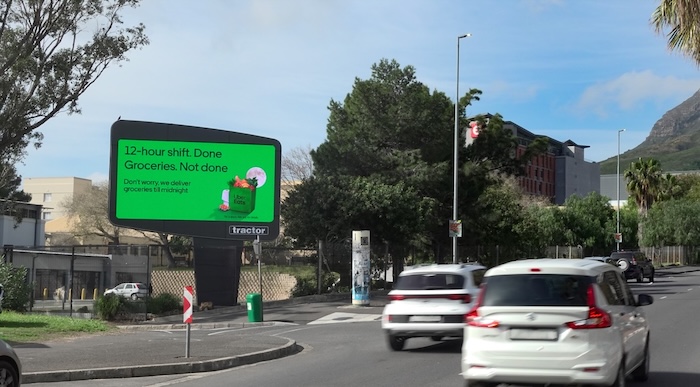
Marketers want direct sight of which screens they are buying, how inventory is allocated and optimised to meet campaign commitments, and whether they are getting the value they were promised. This shift is pulling brands closer to media owners, such as Tractor Outdoor, who can provide straightforward pricing, greater control over inventory availability and immediate clarity about what they’re investing in.
In 2026, transparency stops being a nice-to-have and becomes one of the defining expectations in DOOH.
-
Brands will rethink what an effective OOH campaign looks like
OOH can no longer be planned by buying a lot of sites at once and assuming that broad visibility is enough. Campaigns need to be built with intention. As digital matures within OOH, brands are starting to ask more sophisticated questions: what does a ‘good’ digital holding actually look like, what benchmarks define success, and what minimum level of presence is required to deliver meaningful impact.
The scale of a holding, the mix of static and digital, and the role each placement plays in the bigger picture all matter more than they ever have. While static gives a campaign its staying power, digital gives it immediacy – and when those elements are combined with care rather than habit, a campaign stops fading into the background and starts working harder for the brand.
At the same time, the medium is being judged with far more precision. Improved movement data now shows whether people actually did something after seeing an ad, which means OOH can’t rely on visibility alone.
This is also pushing brands to reassess how they weight their investment geographically – questioning whether spend is being allocated in line with audience opportunity, or overly concentrated in a single region.
In 2026, demonstrating measurable impact and deploying spend more deliberately across high-performing markets, such as Cape Town, that will define what an effective OOH campaign really looks like.
-
Attention will become the main currency
The most forward-looking shift for 2026 is the rise of attention as a core planning metric. New research shows that large-format DOOH attracts far more focused attention than most digital channels – and holds that attention for longer.
This is changing how brands judge quality. Instead of counting how many people might have passed a site, planners will want to know whether people actually looked, for how long, and under what conditions. How fast people are moving, how far away they are and the setting itself all influence how much attention a site can earn.
This is why high-visibility locations with long dwell times – the true premium end of the market – will grow even more valuable.
Steve Duck is chief revenue officer: media at Tractor Outdoor.