Dear Jarred
How do you square your personal values with your business? In advertising, I find that we frequently do business with companies whose products and ethics don’t necessarily match my own. I am a very values-driven person and I find that I am constantly compromising those values on behalf of my clients.
~ Doubting Thomas, Rosebank
Dear Tom
This is an interesting dilemma and one that any business leader faces. In advertising, where we work with a diverse array of clients in every imaginable industry, one is bound to run into ethical conflicts with your personal values.
Let me use a real example from my own career.
Twenty years ago I became vegan due to my concerns about the treatment of animals in industrial food production. I have stayed firm to these views — I remain appalled by the treatment of non-human species by modern humans.
For 10 years we were the agency for Nando’s — one of the largest slaughterers and sellers of chickens in the country. Even if their chickens are treated extremely well there is no question that they are killing animals to make food, about which I have a profound moral objection.
So this feeling of a passionate personal value clashing with a business opportunity and a client’s interests is very real for me.
Not a moral guardian of the world
The way I think about this is that I am not the moral guardian of the world. A company like Nando’s might kill a lot of chickens, but it is also one of the most positive and nurturing contributors to the economy of the country. They employ thousands of people, they buy from local farmers, they give back massively. They are deeply good people, and anyone working with them will experience that about them.
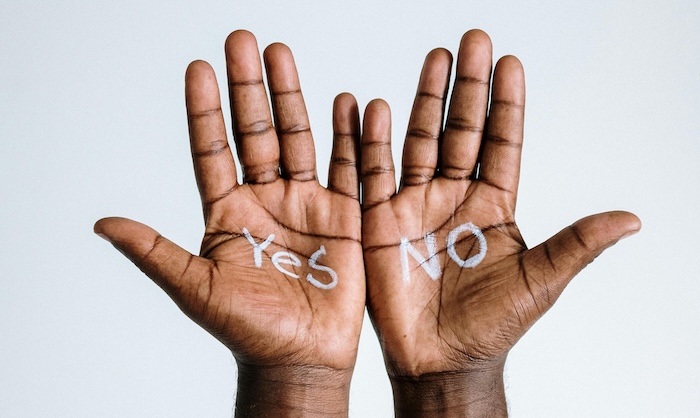
My approach in business is not to morally judge my clients. I give myself one opportunity to make a call: do I pitch for the account or do I not? That’s my one chance to say no if I am uncomfortable doing business with them.
And I absolutely do employ my values in making these calls — and I listen carefully to my team. And I also consider the reputational risk of taking on the brand.
At this point I do say no sometimes. Often, those decisions largely come from my gut, so I am not immune to acts of moral outrage and I would expect, therefore, these decisions to be challenged by those around me.
Mix of good, bad and everything in-between
We must all be careful not to stand in judgement of companies or brands on simplistic, reductionist grounds. This is true of mass food producers, petroleum companies, big tobacco, banking, insurance, big tech, and on and on. In my experience, every company, like every person, is a complex mix of good, bad, and everything in-between.
And an act of generosity on the part of a fossil fuel producer to improve the environment is not invalidated by their continued extraction of oil from the ground. They are a business that does some good and that does some bad.
Lazy moralising is one of the worst character flaws of humans. It makes us feel good to categorise people as good or evil. “Trump is all bad, he’s a fascist, Hitler re-incarnate”; “Mother Theresa was a saint (literally), totally selfless, good to the core.” These are childish and cartoonish caricatures and they don’t do the job of summarising something as complex as a human being — let alone a large company.
Once I’ve accepted a client’s business, I am crystal clear that my job is not to judge them but to service them. They will take care of their own ethics, and their shareholders, staff and customers will hold them accountable for them.
Act of humility
As a service provider who they are bringing on to help them achieve their business goals, they expect — and should expect — total commitment to their ambitions. They don’t need to give me their business, and if they feel that I am vacillating on moral grounds they can just as easily hire someone else.
Withholding judgement is an act of humility. And I am a big believer in staying humble. I have done many things in my life that others could, fairly, judge harshly. As an imperfect person, I am in no position to categorise my clients into “good” and “evil” boxes.
Perhaps the deeper question behind your question is: how do you sleep at night? How do you look yourself in the mirror, or face your family and friends, when you’re working with someone who has a challenging public reputation?
I am clear what my role in the world is. As the CEO of an advertising agency that is part of a global group, my job is to win and serve large clients and to subordinate my goals to theirs. When I use the word “service,” I really mean it.
A murky pond
These people are hiring me to do the best I can with every ounce of my energy and enthusiasm. That’s the transaction. I can’t die for your sins, nor should I, but I can provide my brains, heart and hands to help you in getting where you’re trying to go.
Ethics is a murky pond. Philosophers have spent millennia debating what the perfect ethical framework is. Religions have codified these as commandments. Countries have enshrined them in constitutions and bills of rights. Families impart them to children. But we must all ultimately admit that there is no definitive list of right and wrong.
And in the case of servicing clients, once I’ve taken the business, it just doesn’t come into it. My conscience is clear that, no matter how many chickens have died, they’re not on my scorecard — I am only, and proudly, a service provider; the moral choices are made elsewhere.
Finally, I also need to know where my values are on the line. And that’s in my own business. Here I am totally accountable for how I lead my people, how I treat suppliers, and how I give back to the country I love. And in my personal life, the choices I make are where I need to focus my moral energy.
~ Jarred
This story was first published in Jarred Cinman’s Burning Questions newsletter on LinkedIn. Jarred Cinman is the CEO of VML South Africa.