
• Subscribe to our newsletter
The Media Online
  • Home
  • MOST Awards
  • News
    • Awards
    • Media Mecca
  • Print
    • Newspapers
    • Magazines
    • Publishing
  • Broadcasting
    • TV
    • Radio
    • Cinema
    • Video
  • Digital
    • Mobile
    • Online
  • Agencies
    • Advertising
    • Media agency
    • Public Relations
  • OOH
    • Events
  • Marketing
    • Thought Leaders
    • Campaigns
    • Research
    • Media Education
      • Media Mentor
  • Press Office
    • Press Office
    • TMO.Live Blog
    • Events
    • Jobs
No Result
View All Result
  • Home
  • MOST Awards
  • News
    • Awards
    • Media Mecca
  • Print
    • Newspapers
    • Magazines
    • Publishing
  • Broadcasting
    • TV
    • Radio
    • Cinema
    • Video
  • Digital
    • Mobile
    • Online
  • Agencies
    • Advertising
    • Media agency
    • Public Relations
  • OOH
    • Events
  • Marketing
    • Thought Leaders
    • Campaigns
    • Research
    • Media Education
      • Media Mentor
  • Press Office
    • Press Office
    • TMO.Live Blog
    • Events
    • Jobs
No Result
View All Result
The Media Online
No Result
View All Result
Home Digital Mobile

When everyone can buy reach, what does a brand compete on?

Smartphones are now the primary battleground for consumer attention.

by Avashnee Moodley
April 8, 2026
in Mobile
0 0
0
When everyone can buy reach, what does a brand compete on?

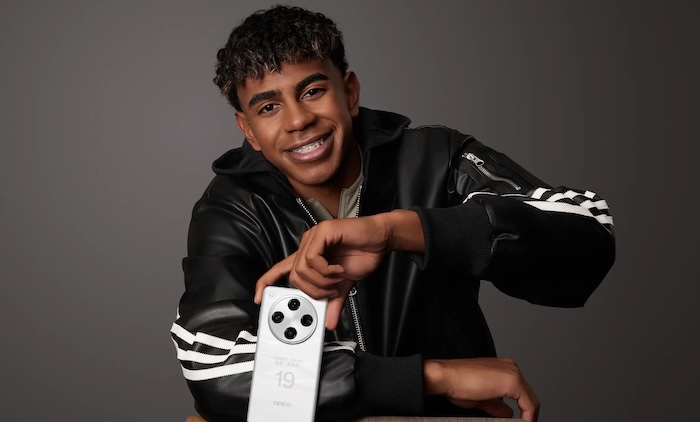
Lamine Yamal is a Global Brand Ambassador for OPPO

Share on FacebookShare on Twitter

We are entering what can only be described as an attention recession, driven by an oversupply of content produced and pushed at such scale that the average consumer is doing what any rational person does in an overwhelmed environment: filtering, ignoring, and tuning out as subscription fatigue, notification fatigue, and platform fatigue converge into a single lived reality where relentless saturation turns even the most precisely targeted message into background noise.

Right at the centre of this reality sits the smartphone, the gateway to modern life and the device people touch first thing in the morning and last thing at night. Now the primary battleground for consumer attention, smartphone brands have fought performance wars for more than a decade through faster chips, higher megapixels, bigger storage, and thinner frames.

Those metrics still matter, but in 2026, they no longer carry the differentiating power they once did.

Attention is finite. The typical internet user already spends about 6 hours and 40 minutes online each day, and the volume of content keeps rising, with YouTube alone receiving over 500 hours of video uploads every minute. In that environment, reach loses value fast: visibility is easier to buy than to convert into memory, loyalty, or action.

For smartphone brands, this is urgent because the product is deeply personal and intensely competitive, and the consumer journey is shaped by peers, creators, culture, status signals, and ecosystem fit, which means brands competing as though attention is endlessly available will often see even large campaigns arrive with impact diluted by the noise around them.

What drives preference now is relevance

Performance parity across devices has narrowed. Most reputable brands now deliver a dependable baseline of speed, battery life, camera quality, and design polish, which means hardware advantages are increasingly incremental and harder to translate into everyday value that people can actually feel.

Relevance is the differentiator. It shows up in how a device fits into real life, supporting identity and ambition, creativity and connection, work and play, and it shows up in how a brand participates in culture with an understanding of how people live online.

This is why marketing needs to move beyond specifications and earn attention through meaning, utility, and experiences people want to remember and share.

The distribution squeeze

Feeds are more crowded, and organic distribution is harder to earn, so brands lean into what still scales: paid placement and performance-driven amplification. Paid media remains essential in smartphones because launches need reach and speed, and it provides predictability when attention is fragmented, yet it carries a clear risk when it amplifies messaging that lacks meaning, because spend can scale visibility without building preference.

The trap is easy to spot. Campaigns get louder, messaging gets broader, and content gets shaped for platforms rather than people, creating short bursts of attention that do not translate into memory, loyalty, or advocacy. Preference is built between campaigns through clarity, consistency, and trust, and paid media works best when it amplifies that foundation.

Why community beats reach

In a recession, the smartest businesses stop renting and start building assets, and the same logic applies to attention, because paid distribution buys moments of visibility while community builds an owned base of people who choose to return, engage, and carry the brand forward even when the campaign budget quiets down.

Community is a growth strategy that changes the relationship between brand and consumer from transaction to belonging, turning customers into advocates because they feel included, understood, and part of something they want to be associated with, while creating continuity between campaigns, compounding trust over time, and reducing the pressure to keep paying for the right to be noticed.

For smartphone brands, community matters because their devices support many use cases, from creators and entrepreneurs to students, professionals, gamers, photographers, and everyday users. The strongest brands build ecosystems around these real needs by supporting creator communities, providing useful tools and platforms, and showing up in culture in ways that add value.

Long-term engagement follows. Impressions come and go, while community builds repeated interaction, feedback loops, and credible advocacy that grows through real people over time.

The return of experiential marketing, and a new scorecard for influence

In a screen-saturated world, real-world experiences matter again because they create memories, and memory is what cuts through when attention is scarce. Experiential marketing works when it proves value in real life: letting people test the camera in real lighting, see durability under real conditions, and use the features in real workflows, so claims turn into stories people actually remember and share.

This also requires a sharper scorecard, because impressions and vanity reach can signal activity without proving influence, and the better measures are preference and trust over time as in, do people choose the brand when they upgrade, recommend it without prompting, stay in the ecosystem, participate repeatedly, and does paid media amplify something that already resonates rather than trying to force resonance.

The path forward is clear, simplify the message, sharpen the value story, prove it in real-world experiences, and build community programmes that keep people engaged between launches.

Avashnee Moodley is head of marketing at OPPO South Africa. OPPO is a global smart device brand. Since launching its first smartphone – Smiley Face – in 2008, OPPO has been in relentless pursuit of the synergy of aesthetic satisfaction and innovative technology. 


Tags: Avashnee Moodleyconsumersmobilemobile marketingmobile mediaOPPO

Avashnee Moodley

Avashnee Moodley is head of marketing at OPPO South Africa. OPPO is a global smart device brand. Since launching its first smartphone – Smiley Face – in 2008, OPPO has been in relentless pursuit of the synergy of aesthetic satisfaction and innovative technology. 

Follow Us

  • twitter
  • threads
  • Trending
  • Comments
  • Latest
Awards Wrap: Radio Workshop nominated for Podcast of the Year, Bar & Beverage Awards 2023 winners announced, grab those MOST Awards tickets now

Awards Wrap: PRISM Awards honours PR professionals, Euphoria Telecom launches No Bull Prize, Red & Yellow students thrive at The Loeries

October 21, 2025
Marketing technology platforms need to balance AI with human expertise

Marketing technology platforms need to balance AI with human expertise

August 27, 2026
Who watches the watchers?

Who watches the watchers?

August 27, 2026
Media Moves: TASTE turns 20, Anele, Lira and Janine van Wyk are FEARLESS in new campaign; Alex Okosi new MD for Google Africa, Accenture Song wins Telkom business

Media moves: Joe Public makes Virgin Bet’s first brand campaign outside the UK, Penquin makes two leadership appointments, The Jester Group unveils new structure

August 27, 2026
FTC and 22 US states sue Amazon over alleged secret advertising price inflation

FTC and 22 US states sue Amazon over alleged secret advertising price inflation

0
Louise Jooste on steering RSG in an omni-channel era

Louise Jooste on steering RSG in an omni-channel era

0
Entries open for the 2026 Telkom Radio Awards

Entries open for the 2026 Telkom Radio Awards

0
Turning constraints into commercial advantage in Mozambique

Turning constraints into commercial advantage in Mozambique

0
FTC and 22 US states sue Amazon over alleged secret advertising price inflation

FTC and 22 US states sue Amazon over alleged secret advertising price inflation

September 2, 2026
Louise Jooste on steering RSG in an omni-channel era

Louise Jooste on steering RSG in an omni-channel era

September 2, 2026
Entries open for the 2026 Telkom Radio Awards

Entries open for the 2026 Telkom Radio Awards

September 1, 2026
Engaging the ‘disengaged’

Engaging the ‘disengaged’

September 1, 2026

Recent News

FTC and 22 US states sue Amazon over alleged secret advertising price inflation

FTC and 22 US states sue Amazon over alleged secret advertising price inflation

September 2, 2026
Louise Jooste on steering RSG in an omni-channel era

Louise Jooste on steering RSG in an omni-channel era

September 2, 2026
Entries open for the 2026 Telkom Radio Awards

Entries open for the 2026 Telkom Radio Awards

September 1, 2026
Engaging the ‘disengaged’

Engaging the ‘disengaged’

September 1, 2026

ABOUT US

The Media Online is the definitive online point of reference for South Africa’s media industry offering relevant, focused and topical news on the media sector. We deliver up-to-date industry insights, guest columns, case studies, content from local and global contributors, news, views and interviews on a daily basis as well as providing an online home for The Media magazine’s content, which is posted on a monthly basis.

Follow Us

  • twitter
  • threads

ARENA HOLDING

Editor: Glenda Nevill
nevillg@themediaonline.co.za
Sales and Advertising:
Tarin-Lee Watts
wattst@arena.africa
Download our rate card

OUR NETWORK

TimesLIVE
Sunday Times
SowetanLIVE
BusinessLIVE
Business Day
Financial Mail
HeraldLIVE
DispatchLIVE
Wanted Online
SA Home Owner
Business Media MAGS
Arena Events

NEWSLETTER SUBSCRIPTION

 
Subscribe
  • About
  • Advertise
  • Privacy & Policy
  • Contact

Copyright © 2015 - 2026 The Media Online. All rights reserved. Part of Arena Holdings (Pty) Ltd

Welcome Back!

Login to your account below

Forgotten Password?

Retrieve your password

Please enter your username or email address to reset your password.

Log In

Add New Playlist

No Result
View All Result
  • Home
  • MOST Awards
  • News
    • Awards
    • Media Mecca
  • Print
    • Newspapers
    • Magazines
    • Publishing
  • Broadcasting
    • TV
    • Radio
    • Cinema
    • Video
  • Digital
    • Mobile
    • Online
  • Agencies
    • Advertising
    • Media agency
    • Public Relations
  • OOH
    • Events
  • Research & Education
    • Research
    • Media Education
      • Media Mentor
  • Press Office
    • Press Office
    • TMO.Live Blog
    • Events
    • Jobs

Copyright © 2015 - 2026 The Media Online. All rights reserved. Part of Arena Holdings (Pty) Ltd

Not enough quota to unlock this post
Unlock left : 0
Are you sure want to cancel subscription?