
- The “all-in-one” CMO is unrealistic for most scale-ups
- Fractional CMOs are rapidly becoming mainstream
- Scale-ups often need leadership, not just campaigns
- M/O’s outsourced CMO model combines multiple specialists
- The new marketing model is built for businesses “in the middle” *
I need to tell you something.
The all-in-one scale-up CMO is a myth.
In boardrooms across sectors, leadership teams search for a lone hero to don the CMO-cape. The hero who will set strategy, shape brand, lead digital and performance, translate data into meaningful insights, align with sales, guide product, develop communications plans, and execute with discipline.
That, my friends, is a unicorn.
A mythical creature whose cost of belief is written in the blood of tense relationships, burnt-out marketing executives, reactive and duct-taped campaigns, and unfinished strategies buried under years of hopeful meeting minutes.
Effective marketing teams today must understand and drive everything ranging from strategy to internal culture to data literacy. All of this with a deep requirement of commercial acumen.
Except for large, established and resource-rich organisations, where years of budget and teasing of organisational knots have yielded neatly packaged dashboards and streamlined reporting flows, it is fundamentally unrealistic for a lone hero CMO to lead all these functions effectively.
The model of ‘the ideal CMO’ has been stress-tested, literally
Scale-ups rarely have the budget, appetite or brand maturity to hire a full-time CMO. So, the market has done what it always does: found workarounds. Fractional CMOs, interim leads and consultants have moved from niche fix to visible trend.
In December 2024, Axios reported that a LinkedIn search for “fractional” returned 144 000 profiles, up from around 2 000 in 2022.
While a fractional leader is typically on the org chart and part of leadership, a consultant usually sits outside the organisation on a project basis, and either may be moving towards a full-time position or packaging the brand in a way that can be handed over to executors. All of which have pros and cons.
From frustration to opportunity
A repetitive pattern has emerged.
Clients hire agencies to deliver campaigns. The work would be signed off with energy, only to become diluted, delayed or distorted once it moved inside the business. Not because the client teams lacked talent, but because they often lacked the structure, seniority or coordination to carry strategy through to measurable impact.
They were buying ideas and plans. What they really needed was leadership to own the journey from end to end.
Enter a new way of thinking
Several years ago, Joshua Platt, (now M/O’s head of strategy), and Daniell Barnard, (now M/O’s head of operations), began to trial a solution in their agency, EightyOne. A client came along who, quite fortuitously, had recently let go of their head of marketing.
The guys were onboarded onto a brand strategy project and then asked to fill the gap when it came to handover. A year or so later, a similar opportunity arose. After a few years, they’d run this outsourced CMO model for a handful of clients, and it was showing some real promise.
Patrick Pearson, (now M/O’s head of creative) and Ryan Amory, (now M/O’s head of business development), encountered the same challenge through their own company, Checkpoint Marketing.
My experience at my agency, Formation, saw the same pattern from another angle: marketing was too often brought in to support product decisions made without proper market insight, while strategy became a post-rationalisation rather than a source of direction.
After more than half a decade of collaboration, Josh and Dan approached me to lead a new business as managing director. That business became M/O: Modus Operandi.
The hard truth
The fact of the matter is that most scale-up organisations aren’t ready for a CMO, even if they need one.
Like CEOs, whose role is to lean on a strong knowledge and experience-base, and good lines of insight into the organisation, to make the “expensive decisions”, CMOs need a mature and established department to lead in the right direction.
If the maturity of the business isn’t there, the CMO is little more than a disconnected steering wheel getting stuck in operational work.
Unlike the rest of their department, a CMO’s job isn’t to be a creator; it’s to use expertise and acumen to eloquently fight for marketing’s end of the budget rope. For organisations between ‘bootstrapped start-up’ and ‘established market player’ – the “precipice stage” – it can be a rocky road without the right leadership.
If you can’t be the unicorn, build the unicorn
For over a year, the team and I worked on how to position our offering and tested it with industry professionals. We answered questions around how disciplines connect, how the economics of something like this could work, how to offer a true executive function and ultimately, how does a cohort of people create a team that is neither a person nor an agency, but somewhere wonderfully in between?
The idea of M/O resonates because it works backwards: instead of trying to find the unicorn, we’ve built it by combining several experts into one coherent leadership function, and it works with the people and agencies already part of the client business.
Attention captured
As someone who has led the marketing engine of brands such as kulula.com and Hollard and filled fractional and consulting roles over the years, Heidi Brauer – affectionately known to many as ‘The Brand Mama’ – believes M/O is a clever step beyond decentralisation.
“I’ve been on the receiving end of scale-up clients who have given up hope in finding the right combination of talent/cost/ambition/skill set. M/O offers all those things in a nimble, personalised and highly structured way. And it works,” she says.
Heidi has recently joined the team as partner and advisor.
Built for businesses in the middle
For scale-ups that need senior marketing leadership but aren’t ready for a full-time CMO, M/O offers a different model.
We step into the business as a structured leadership function – not another agency – bringing strategy, creative, operations and commercial thinking together under one roof. The job is not to add more advice. It is to take ownership, create direction, and help turn the work into measurable impact.
For leaders who know their business can be more, this is the new Modus Operandi.
*Summary created by AI
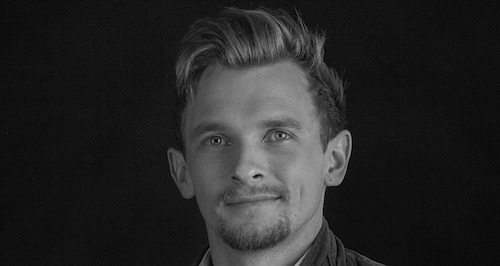
Simon Säll is managing director of M/O.