
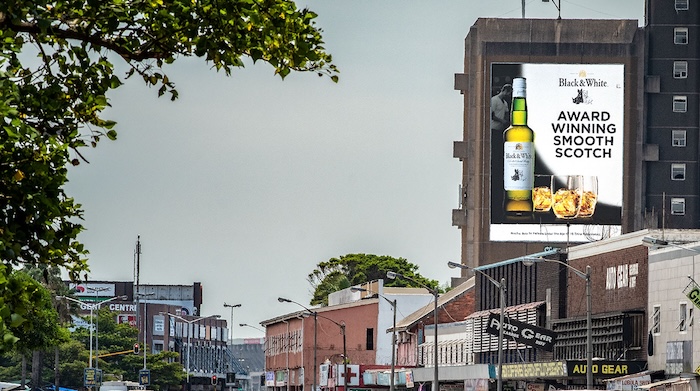
- Design for the glance, not the screen
- One clear idea outperforms clutter
- Context matters more than repurposing
- Structure content for fast comprehension
- Plan for the environment from the start
Here’s the uncomfortable truth. Most digital roadside billboard creative isn’t failing. It was never designed for digital roadside billboard.
Most campaigns begin with a key visual or TV commercial, which is refined, approved and then rolled out across channels. When it reaches digital out-of-home, it is often simply resized and placed, carrying the same message onto a different screen.
However, the environment is not the same. No one is standing still, waiting to absorb your ad. People are moving, in traffic, in conversation and attention is brief. That is the disconnect. If your message does not land in seconds, it is already gone.
The past
The advertising industry has spent decades refining the 30-second television commercial. It is a format built for emotive storytelling and resolution.
But those rules do not carry over into out-of-home.
When a campaign designed for TV or digital is reduced to a static billboard or a short roadside loop, it doesn’t become a sharper idea. It becomes an idea stripped of the context that made it work.
And yet this is still the default approach.
Outdoor audiences engage with a message for just two to three seconds. Not because they are distracted, but because they are moving.
Treating out-of-home as an afterthought, or something solved by resizing existing assets, is costing brands real impact.
The future
The creative that performs best in digital out-of-home usually communicates one clear idea, quickly and powerfully. It does not try to tell the whole story. It lands one message with enough visual strength that the audience understands it almost instantly.
Each media platform works differently. DOOH is built for impact, not long form storytelling.
In most cases, you don’t get a full view. You get a glance. That means the message has to land instantly. One idea. One visual. One clear takeaway. If there’s a call to action, it must be immediate and obvious. Not something the audience needs to work for.
Because in this environment, clarity isn’t a bonus. It’s the whole job. It’s what turns a passing glance into attention, and attention into impact.
The role of creative agency vs OOH media specialists
The more honest conversation the industry needs to have is about where creative responsibility sits. In many cases, marketers brief their lead agency, receive work designed primarily for television, online video or social, and then pass those assets to an out-of-home specialist to make them fit to a list of specs on a chase list.
At that stage, the task becomes technical adaptation rather than creative optimisation. The most important question often goes unanswered: what will this audience actually experience?
There are brands getting this right. The ones that do, tend to share a common approach: they brief out-of-home as a distinct creative challenge from the start, resisting the temptation to carry over executions from other channels and they test for legibility in real conditions rather than on a studio monitor.
The results perform better, because they’re built for the environment they’re entering.
That is why specialist expertise matters. Out-of-home agencies and creative specialists working in this space understand how audiences move through different environments, how message hierarchy shifts across formats and how context affects performance.
Within the Provantage group, for example, Ant Lion focuses specifically on helping brands think through these creative and strategic nuances in a way that is grounded in the realities of the medium. That kind of specialist input changes the conversation from “how do we make this fit?” to “how do we make this work?”
Different creative approaches perform differently depending on time of day, movement, and environment. Motion can support recall, not just attract attention. Factors like traffic flow, dwell time, weather, and proximity to purchase all shape how a message lands.
The advantage comes from applying that thinking early, at brief stage, not after the campaign is already built.
How to make the shift
A shift in thinking is required. Specifically, it requires marketers to know where their ad will flight, as well as how it will be encountered. What time of day? What speed? What competing stimuli? What single thing do we need this audience to take away?
When a brief is written with those questions at its centre, the creative that comes back is different. It’s simpler. It’s more confident. It stops trying to do too much, because the constraint is understood from the start.
In conclusion, digital roadside creative works when it is planned for the glance. The recipe is simple: one idea, one strong visual, two to three-second readability and a clear hierarchy that controls what the viewer sees first, second and last.
That means the brand, message and visual cue must work together instantly, under real-world conditions where people and traffic are moving and attention is limited. The shift has to happen at brief stage, with marketers and agencies asking how the audience will encounter the screen before the creative is built.
That is how out-of-home moves from resized campaign assets to purposeful, high-impact communication designed for the medium itself.
Shamy Naidu is executive director at Provantage.