- AI-powered disinformation is reshaping African politics
- Narrative control is now a geopolitical weapon
- “Fake news” laws are increasingly tied to repression
- The battlefield has shifted to algorithms and digital platforms
- Africa is becoming a critical test case for information integrity
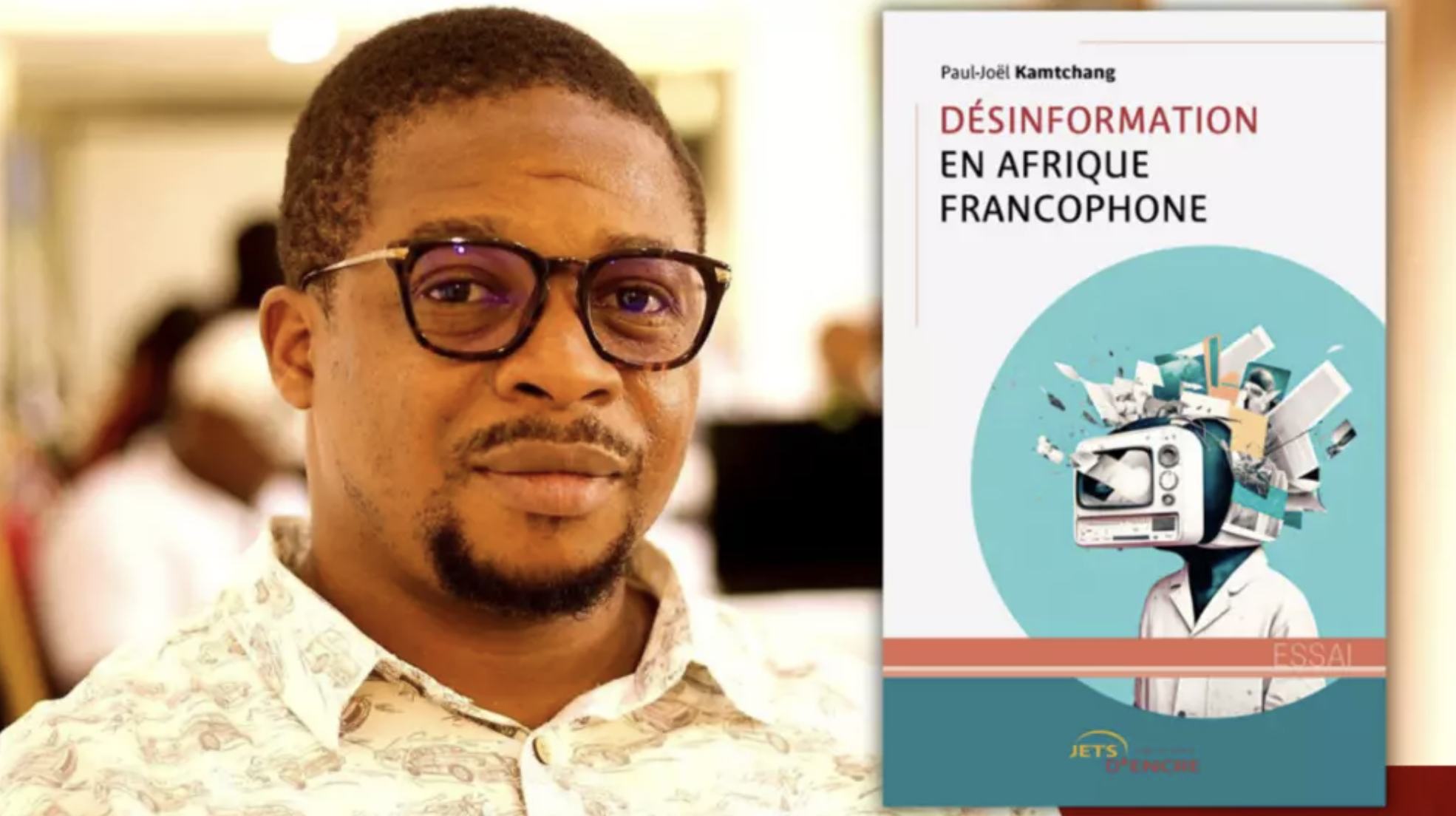
Across parts of West and Francophone Africa, misinformation is no longer a side issue – it is fast becoming a defining feature of political power. A data journalist and activist, Paul-Joël Kamtchang, has emerged as one of the most compelling voices on this subject.
For South African media audiences, the dynamics may feel uncomfortably familiar. The tactics differ in scale and intensity, but the underlying question is the same: who controls the narrative, and to what end?
Stark reality
In his book Disinformation in Francophone Africa, published in Paris last year, Kamtchang lays out a stark reality – information warfare is no longer peripheral.
“Among the most dangerous forms is the kind produced using AI,” he says. It is sophisticated, difficult to detect, and designed to exploit how people naturally process information. The result is a system where false narratives spread quickly – and where almost anyone, with minimal resources, can manipulate public perception.”
But technology is only part of the story. Geopolitics sits just beneath the surface. Investigations by organisations such as All Eyes on Wagner and Forbidden Stories have documented how coordinated information campaigns are being deployed across the region, shaping public debate and influencing political outcomes.
Disinformation marketplace
“In Francophone Africa, it’s both geopolitical and domestic,” Kamtchang explains. Anti-Western rhetoric, often framed as a new form of Pan-Africanism, has become “a marketplace where disinformation is the commodity.” At the same time, domestic actors deploy disinformation to steer public opinion and control narratives.
The rise in anti-French sentiment illustrates the complexity. Some protests are rooted in legitimate historical grievances and economic frustration. Others are amplified, sometimes engineered, with ordinary citizens drawn into movements where the real drivers remain obscured.
At the same time, governments across the region have begun to respond in the language of “fake news”. Kamtchang is blunt: this is often a pretext. Censorship, internet shutdowns, and restrictions on digital platforms are increasingly used not to protect information integrity, but to control it.
Regulation and repression
Digital spaces are flooded with coordinated pro-government messaging, while independent journalists face pressure and intimidation.
For media practitioners, the question is unavoidable: where does regulation end and repression begin?
Kamtchang’s answer is not to choose between analysis and advocacy, but to combine them. “Analysis provides the lens. Advocacy gives it purpose,” he says. The task is not only to identify falsehoods, but to protect civic space before democratic regression becomes entrenched.
He points to what is often described as the FIMI model – the manipulation of family, media, and information networks – as a growing force in parts of the Sahel. Its impact is tangible, shaping development trajectories, security environments, and the freedoms people experience daily.
Gaining urgency
And yet, there are signs of resistance. Across the continent – from Praia to Pretoria – conversations around information integrity and digital governance are gaining urgency.
In The Gambia, engagement between government and civil society suggests that regulation, when transparent and accountable, can strengthen rather than weaken democratic space.
The question is whether those models can hold in more volatile environments. Because if Kamtchang is right, Africa’s next battles won’t be fought only on the ground.
They will be fought in timelines, in algorithms, and in the quiet, persistent shaping of what people come to believe is true.
Paula Slier is an international journalist and speaker who works on information warfare, disinformation and media literacy. She has reported from conflict zones across the Middle East, Africa and Europe.