- Gqom proves that authentic culture starts in communities, not boardrooms: The most influential cultural movements are community-led, not brand-created.
- Community is the distribution channel: Before streaming platforms and algorithms, Gqom spread through taxi networks and WhatsApp groups.
- Cultural relevance scales globally when it stays locally rooted: Gqom remained deeply connected to KwaMashu and Durban while becoming a global phenomenon, achieving 5,732% growth in Spotify streams.
- Cultural connectors matter more than corporate amplification: DJs, independent labels, tastemakers, and platforms such as Boiler Room helped Gqom travel internationally because they understood the culture first
- Brands create value when they serve culture, not exploit it: Successful cultural marketing requires contribution, respect, and shared value rather than extraction and trend-chasing.
The sound is a heavy, syncopated thud that seems to come from somewhere primordial, yet the tracks were made last night in a backroom in KwaMashu on a cracked laptop running Fruity Loops. The older woman on the pavement refuses to get in. She calls it noise. The rest of the world, it turns out, calls it Gqom, and they cannot get enough of it.
Spotify’s numbers make for startling reading. Since 2018, global streams of Gqom have grown by 5 732 per cent. Peak listening hits every Saturday between 5pm and 6pm, across time zones, hemispheres and cultures that could not be more different from the townships of eThekwini, where this music was born.
Gqom’s a global phenomenon
London dances to it. Nairobi dances to it. Harare and Gaborone have made it their own. A genre invented by broke, self-taught teenagers who could not afford instruments has become one of the most remarkable cultural export stories of the 21st century.
For marketers, brand leaders and the executives tasked with making sense of culture, the rise of Gqom is not merely a music story. It is a masterclass in how authentic cultural movements are born, how they spread and why brands that understand this will always outperform those that do not.
The word Gqom derives from ‘UkuGqoma’, a Zulu term for a persistent rhythmic thud, originally used to describe the grinding of maize, later associated with tribal drumbeats.
Born of necessity, not strategy
But the modern genre, the one that found its way onto a Beyoncé album and into a Marvel blockbuster, emerged somewhere between 2009 and 2012 in the townships of Durban. No label commissioned it. No brand brief sanctioned it. No focus group validated it.
It was born because a generation of young people, unemployed, overlooked and hemmed in by the economic contradictions of post-apartheid South Africa, needed a sound that matched the speed and urgency of their lives.
Deep house was too slow, too polished, too connected to a world of studios and record deals they could not access. So they built something new with what they had: cheap software, second-hand computers and an unshakeable instinct for rhythm.
No nepo babies here
“Almost every DJ and producer making Gqom started in a back room in their parent’s yard using cheap software,” Que, one half of the Distruction Boyz, one of the genre’s founding acts, tells Vice. “We have pride in that, and we have pride in our music.”
The genre’s anatomy was deliberately rule-breaking. As KingIce of pioneering group the Naked Boyz explains: “We made a conscious choice to do something that didn’t exist before – the tempo and the layering of the sounds had to break every rule.”
This is the first lesson for marketers. The most enduring cultural movements are rarely engineered from the top down. They emerge from communities with something real to say, something genuinely at stake. Gqom was not a niche being served. It was a voice being heard for the first time.
Propelled by the underground network
Before Spotify algorithms, before playlist pitching, before a single publicist was involved, Gqom had its own distribution infrastructure. And it was hiding in plain sight on the streets of Durban.
The city’s minibus taxi industry – the informal, often chaotic transport network that carries millions of South Africans daily – became the genre’s first radio station. As competing cab operators fitted their vehicles with ever-louder speaker systems to attract passengers during the party hours, a new kind of music promotion emerged.
Artists would give their freshest tracks to taxi drivers; the taxi was the test. If a track could hold a packed minibus, it could hold anything.
As Nan Kolè, founder of the Rome-based Gqom Oh! label, put it to Pan Africa Music: “The main test for a track is through the taxi, and it’s also the promo tool. If you have a taxi driver friend, that’s a blessing for getting your music out.”
WhatsApp, the viral fire starter
In parallel, Gqom built its digital infrastructure on WhatsApp, the platform that Africa had already adopted as its primary social layer. Artists shared tracks, producers shared demos and fans shared mixes through tightly closed group chats.
When DJ Lag released his first EP, it dropped not through a label website or a streaming platform, but into a WhatsApp group. The music spread hand to hand, number to number, in a system built entirely on trust and cultural belonging.
“I was the only number outside of South Africa in most of the groups,” Polish DJ Mikolaj of Basy Tropikalne, one of the earliest European adopters of Gqom, told Pan Africa Music. “I had to send the guys videos of me playing their tracks from the studio in Poland before they would trust me enough to keep sharing.”
The scene was closed, but not closed to the world. Just closed to outsiders who had not yet earned their place in it.
South Africa’s burgeoning, music-loving taxi industry
“The main test for a track is through the taxi, and it’s also the promo tool. If you have a taxi driver friend out there, then it’s sort of a blessing for getting your music out,” Nan Kolè, of Gqom Oh! told Pan African Music.
The lesson here is profound for anyone in brand communications. Community-first distribution is not a new idea. But Gqom executed it without infrastructure, budget or a marketing team.
The community was the infrastructure. The culture was the content strategy. And because every node of that network was a genuine believer, the signal was trusted absolutely.
How a local sound became a global movement
The global breakthrough of Gqom did not happen overnight, nor did it happen because a corporation decided to scale it. It happened because a series of cultural connectors, people who understood the music on its own terms, chose to carry it forward.
First came the labels. Gqom Oh!, launched in Rome by Italian DJ Francesco Cucchi and South African Lerato Phiri, began mining file-sharing sites to find authentic Gqom material and release it as curated compilations for European audiences.
This was not cultural appropriation; it was cultural amplification, done with the explicit involvement of the artists and the community. London’s Goon Club Allstars followed, signing Rudeboyz and DJ Lag to vinyl releases that introduced Gqom to UK underground club culture.
What feels good, feels good
Felix from Goon Club articulated his motivation simply in Dazed: “This is just that good shit, and I wanted to put the world onto it. A part of me didn’t want to see these tracks become lost classics.”
Then came the tastemakers. Kode9, head of legendary British label Hyperdub and one of the most influential figures in UK electronic music, began weaving Gqom into his sets.
British producer Mumdance explained the resonance precisely to The Guardian: “It puts a very specific mood in a room when you play it. It harnesses a similar feeling to grime, while coming from an entirely different and completely independent angle.”
Cultural credibility, it turns out, travels. Durban’s darkness sounded like something London already knew but had never heard quite this way.
Gqom goes mainstream
The Boiler Room platform, which livestreams club sets to millions of followers worldwide, gave Gqom artists a stage that transcended geographic boundaries. And then came the mainstream collision: Babes Wodumo’s ‘Wololo’ became the first Gqom track aired on South African national radio and was later featured on the soundtrack of Marvel’s Black Panther, the highest-profile African cultural moment in cinema history.
DJ Lag’s production appeared on Beyoncé’s companion album to The Lion King, sharing space with artists from across the African diaspora on the track ‘My Power’. Sho Madjozi’s ‘John Cena’ spawned a global TikTok dance challenge that reached the set of The Ellen DeGeneres Show, bringing the titular wrestler to surprise her on live television.
None of this was engineered. It was earned. Each milestone was built on the integrity of what came before it.
What marketers must understand about cultural movements
There is a version of this story that a brand could try to replicate. It would involve identifying an emerging subculture, hiring a few influencers with cultural credibility, releasing a limited-edition product with some township-inspired packaging and calling it authentic. It would fail.
The reason Gqom succeeded, and why the brands that attach themselves to it now must do so with extraordinary care, is that it was never a marketing exercise. It was a community expressing itself.
The music is the ritual. The dancing is the call-and-response. The WhatsApp group is the congregation. DJ Lag himself described the genre’s fundamental purpose in these terms: “Gqom is an escape first and foremost. If it doesn’t make you dance or forget your problems, then it’s not Gqom and that song has failed.”
The magic lives in community
Culture works because it is communal and specific. It carries the weight of where it came from, the inequality, the creativity, the joy, the resistance. Brands that arrive to capitalise on that weight without understanding it risk exactly what Massive Q of the Rudeboyz warned against early in the genre’s rise: “A lot of people want to cash in on Gqom and exploit the culture. If we don’t protect it, what we’ve built will be exploited and die out fast.”
Spotify’s Mother of Music (MOM) campaign, currently spotlighting Durban, offers a template for engaging with cultural movements responsibly. Rather than extracting the aesthetic and discarding the context, Spotify chose to honour the roots and return value to the originating community.
“Gqom is more than a genre,” said Spotify’s Sub-Saharan Africa head of music, Phiona Okumu. “It’s a movement. And it started here. MOM gives us a chance to honour Gqom’s roots, spotlight the artists, and fuel its next chapter.”
Brands must live in service of culture
For CMOs and brand leaders, these are the takeaways.
First, communities build culture before brands discover it. The role of a brand is not to create the movement but to serve it, but only when invited in.
Second, authenticity is structural, not aesthetic. It is not about using the right sounds or the right faces. It is about whether your brand genuinely understands what the culture means to the people who built it, and whether your engagement creates value for them, not just for your quarterly report.
Third, the communities that create culture are its guardians. The most durable brand partnerships in cultural marketing are the ones where the community retains ownership of the narrative.
Gqom’s essential truth
Gqom grew because it was rooted in a specific place, a specific people, and a specific truth. It went global because that truth was universal enough to translate, the need for escape, for belonging, for a rhythm that matches your heartbeat. But it never lost where it came from.
That is what gives it staying power, from a Saturday night in KwaMashu to a Saturday afternoon in London, five thousand miles and a 5 732 per cent stream surge away from the back room where it began.
The brands that will matter in the next decade are not the ones that opportunistically chase culture. They are the ones who understand it, respect it and earn the right to be invited to serve it.
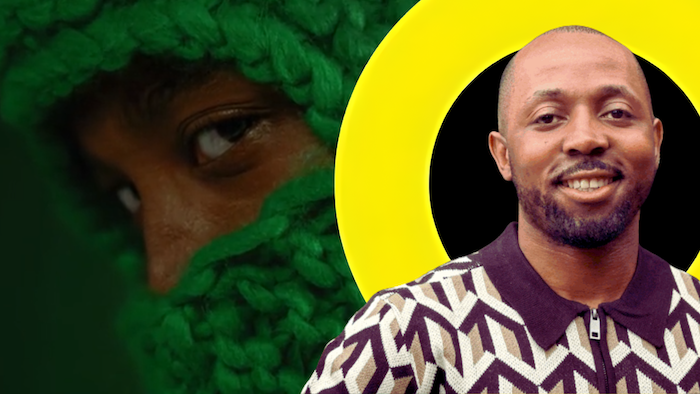
Japhet Manda is a digital marketing manager at the Brave Group, based in Johannesburg. He writes on digital strategy, cultural marketing and brand building in the South African market. Connect with Japhet on LinkedIn or visit juffmanda.com. Brave Group is an integrated marketing and communications company that brings together strategy, creativity, and technology to help brands grow. Its specialist businesses span creative, PR, experiential, and innovation-led marketing solutions. For more information, go to: https://bravegroup.co.za