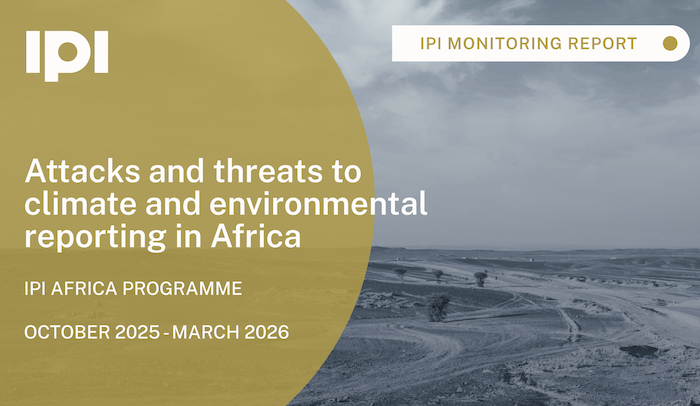
- IPI documented 26 attacks and threats against environmental journalists in sub-Saharan Africa between October 2025 and March 2026.
- Journalists covering illegal mining, logging and oil management faced the highest levels of intimidation and violence.
- Reporters in the Democratic Republic of the Congo, Ghana, Mozambique, Chad, Namibia and Zimbabwe were among those targeted.
- State security forces remained the main perpetrators, although companies, armed groups and local actors were also responsible for attacks.
- IPI warns that environmental reporting is increasingly linked to investigations into corruption, governance and natural resource management. *
Journalists reporting on climate and environmental issues across Africa continue to face intimidation, violence and legal harassment, with illegal mining, deforestation and natural resource exploitation emerging as some of the most dangerous beats on the continent.
The International Press Institute (IPI) documented 26 attacks and threats against environmental journalists in sub-Saharan Africa between October 2025 and March 2026. According to the organisation, reporters investigating illegal mining, logging and oil management were particularly vulnerable to assault, intimidation and arrest.
During the six-month period, journalists in the Democratic Republic of the Congo, Ghana and Mozambique faced abuse and threats while covering illegal mining and logging operations. In Chad and Namibia, reporters were arrested or intimidated after scrutinising the management of national oil resources.
Documented attacks
IPI also found that journalists reporting on land and water management, particularly stories examining the impact of mining and infrastructure projects on local communities, were frequently harassed.
The organisation said these cases highlight the critical role of independent journalism in exposing environmental issues that directly affect people’s lives and livelihoods.
The documented attacks ranged from physical assaults and intimidation to arrests and other forms of legal harassment. Two journalists arrested during the reporting period remain in detention, including Zimbabwean journalist Gideon Madikatidze.
He was arrested in February on cyberbullying charges after his news outlet reported on alleged corruption linked to a multi-million-dollar waste-to-energy project involving a private waste management company and Zimbabwean authorities.
A growing trend
IPI said the case reflects a growing trend of governments using cybercrime legislation to suppress investigative journalism, particularly reporting that exposes corruption or environmental mismanagement.
While police and other state security agencies remain the primary source of threats to environmental journalists, IPI’s research found that private companies, armed groups and even local community members were also responsible for attacks in some cases.
The organisation said the findings demonstrate that pressure on environmental reporters often comes from multiple actors with vested interests in natural resource exploitation, particularly in regions affected by conflict or weak rule of law.
Beyond environmental reporting, many of the documented cases involved investigations into corruption and abuse of power, reinforcing the close relationship between environmental journalism and the watchdog role of the media in promoting transparency and democratic accountability.
Monitoring and verifying
As part of its Africa programme, IPI continues to monitor and verify attacks on journalists covering climate and environmental issues.
The organisation said independent reporting is becoming increasingly important as African countries grapple with the effects of climate change, water scarcity, extreme weather events and the environmental impact of resource extraction.
Despite the growing public importance of these stories, journalists covering them continue to face significant risks from governments, businesses and other powerful interests seeking to silence critical reporting.
* Summary created by AI.