
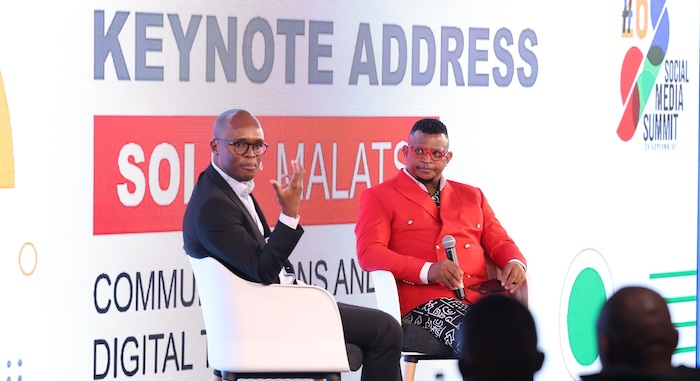
South Africa’s digital transformation risks deepening inequality unless it remains focused on people rather than technology, delegates heard at the fourth annual Social Media Summit for Government, held at the University of Johannesburg Business School last week.
The summit, convened by Decode. in partnership with the University of Johannesburg Business School and endorsed by the Public Relations Institute of Southern Africa (PRISA), brought together government leaders, communicators, academics, technologists and media professionals under the theme, Reimagining Citizen Engagement through Human Intelligence + Artificial Intelligence.
Discussions centred on how artificial intelligence can improve public services without excluding citizens who lack affordable data, devices or digital literacy.
Benefit all South Africans
Delivering the keynote address, communications minister Solly Malatsi warned that government must ensure digital transformation benefits all South Africans.
“A promise made only to the connected is not a promise to the nation,” Malatsi said. “If the digital state works beautifully for those with good smartphones, affordable data, high literacy, strong connectivity, English fluency and confidence online, then we have not built a digital state,” he said. “We have built a premium service layer for the already included.”
He cautioned against allowing “digital-first” government services to become “digital-only” and said artificial intelligence should be used to improve public services rather than automate existing inefficiencies.
Malatsi also called on technology platforms to take greater responsibility for addressing misinformation and operating in line with South Africa’s constitutional values, warning that regulation would become necessary if self-governance proved insufficient.
The measure of a digital state
Decode. founder and CEO Lorato Tshenkeng said the summit reinforced the role of communication as a core function of democratic governance.
“The measure of a digital state is not its dashboards. It is whether it reaches the citizen who has been excluded, unheard or priced out,” Tshenkeng said, adding that AI should be used as “an instrument of inclusion rather than a faster way to leave people behind”.
PRISA president, Dr Caroline Azionya, said communicators have an increasingly important role in protecting public trust as synthetic media, misinformation and digital manipulation reshape the information landscape. She emphasised the need for ethical communication and responsible AI adoption across the profession.
Reshaping audience engagement
The two-day programme explored topics including AI in government, digital storytelling, ethics, citizen participation, attention economics and the changing relationship between journalism and social media.
One of the featured discussions, led by JJ Tabane, examined how podcasts and independent media are reshaping audience engagement, with panellists arguing that communities are built through conversation rather than one-way communication.
The summit concluded with delegates committing to closer collaboration between government, academia, technology companies and communications professionals to ensure AI strengthens democratic participation.
Organisers also announced a strategic partnership with the University of Johannesburg Business School to introduce a short learning programme in government and public sector communication, alongside the launch of new industry awards in 2027.