• Subscribe to our newsletter
The Media Online
  • Home
  • MOST Awards
  • News
    • Awards
    • Media Mecca
  • Print
    • Newspapers
    • Magazines
    • Publishing
  • Broadcasting
    • TV
    • Radio
    • Cinema
    • Video
  • Digital
    • Mobile
    • Online
  • Agencies
    • Advertising
    • Media agency
    • Public Relations
  • OOH
    • Events
  • Research & Education
    • Research
    • Media Education
      • Media Mentor
  • Press Office
    • Press Office
    • TMO.Live Blog
    • Events
    • Jobs
No Result
View All Result
  • Home
  • MOST Awards
  • News
    • Awards
    • Media Mecca
  • Print
    • Newspapers
    • Magazines
    • Publishing
  • Broadcasting
    • TV
    • Radio
    • Cinema
    • Video
  • Digital
    • Mobile
    • Online
  • Agencies
    • Advertising
    • Media agency
    • Public Relations
  • OOH
    • Events
  • Research & Education
    • Research
    • Media Education
      • Media Mentor
  • Press Office
    • Press Office
    • TMO.Live Blog
    • Events
    • Jobs
No Result
View All Result
The Media Online
No Result
View All Result
Home Broadcasting

From the inside out: why AI prompting is pulling editors upstream

by Garon Campbell
May 4, 2026
in Broadcasting
0 0
0
From the inside out: why AI prompting is pulling editors upstream

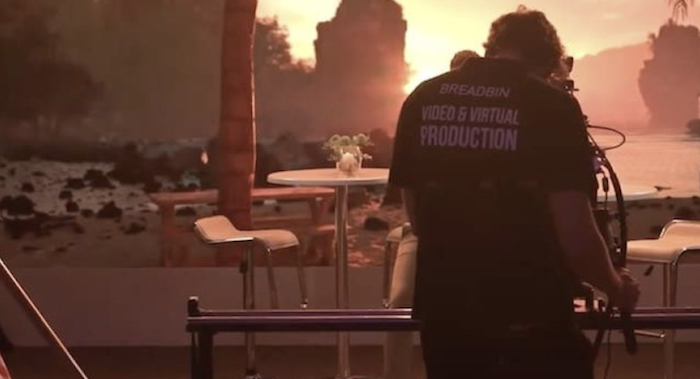
AI prompting is pulling editorial judgment earlier into the creative process — helping teams identify gaps sooner, reduce costly rework, and make stronger decisions before production begins/Breadbin Productions

Share on FacebookShare on Twitter
  • Editing issues stem from process, not creativity
  • Late-stage editing limits what can be fixed
  • AI shifts feedback earlier in the workflow
  • Editors are becoming early-stage decision-makers
  • Clarity, not speed, is the real transformation

Most editors recognise this pattern, even if it is rarely called out directly: the footage arrives, the first assembly begins and somewhere along the early cuts, it becomes clear that something is not working in the way it was expected to.

The pacing feels slightly off, the tone doesn’t fully land, and a scene that looked convincing on paper struggles to hold together on screen.

Nothing is obviously broken, but the piece as a whole lacks cohesion.

At that point, the work shifts into adjustment. Tightening, restructuring, removing, and reworking, all in an effort to shape something coherent out of material that was never fully aligned to begin with.

For a long time, this has been accepted as part of the editing craft. In reality, it is not a creative problem, it is a process problem. To be more specific, it is a timing problem.

Editing has been happening too late

In most production workflows, alignment does not happen in a single, unified moment. Instead it happens in stages, often across different teams and at different times, with each group responding to a slightly different version of the same idea.

Scripts are approved before visuals are properly understood, tone is discussed, but not experienced, and decisions are made sequentially, without a shared reference point that allows everyone to respond to the same thing in the same way.

By the time footage reaches post-production, many of those decisions are already fixed, which limits how much can realistically be changed. This is why editors often find themselves (frustratingly) solving problems that did not originate in the edit.

Prompting changes where the work happens

AI does not solve this by producing perfect outputs, and that is not where its real value lies. What it does is make thinking visible much earlier, giving teams something concrete to respond to before anything is locked in.

A prompt produces an output that, while not final, is tangible enough to interrogate. It allows teams to see how an idea plays out, understand how it feels, and identify where it holds together and where it starts to break down.

This immediately exposes gaps, removes ambiguity, and surfaces weak decisions before they become embedded in the production process. Crucially, all of this happens before production begins.

This is part of a broader shift across AI-driven workflows, where correction is no longer something reserved for post-production, but something that is pulled forward into the earliest stages of development.

Editors are no longer waiting at the end

When editors are brought into this earlier stage, their role changes in a meaningful and practical way. They are no longer responding to material that has already been created, but are instead shaping it while it is still fluid and open to change.

The core instincts remain exactly the same. Understanding structure, rhythm, pacing, and narrative clarity. knowing what to keep, what to remove, what is missing, and what does not belong. What changes is when those instincts are applied.

Instead of working around decisions, editors influence them. Instead of refining intent after the fact, they help define it from the outset. And because this happens earlier in the process, the result is not only faster, but significantly cleaner, with fewer compromises and far less need for rework later on.

Clarity, not speed, defines the story

AI undeniably accelerates the process. Iterations that once took days can now be explored within hours, and multiple creative directions can be tested without committing to a shoot.

However, speed is not the most important shift taking place. Clarity is.

When ideas are made visible early and tested before execution, fewer assumptions carry through to production, and far fewer surprises emerge in post. The edit becomes what it was always intended to be, a stage for refinement and strengthening, rather than a point of rescue.

The role doesn’t disappear. It sharpens

There is a growing perception that prompting may reduce the role of the editor. In practice, the opposite is happening.

As AI introduces more options and variation, the need for judgment becomes more critical, not less. The ability to determine what works, what resonates, and what ultimately feels right remains a human responsibility. AI can generate endlessly, but it can’t decide. It doesn’t t understand pacing in a human sense, and it can’t recognise when something lands with the intended impact.

That responsibility still sits with the editor. The difference is that it now comes in earlier in the process, where it has a completely different influence on what we see at the end of the process.

What’s actually changing

Essentially, editing is simply being repositioned. For years, it has operated at the end of the production process, shaping what has already been created and working within the constraints of earlier decisions. Now, it is moving closer to the beginning, where it can shape what gets created in the first place.

Prompting hasn’t removed the editor, it has made their role visible sooner. And, that’s where the beauty lies: it’s made them more central to the process than they have ever been.

Garon Campbell is founder and director of Breadbin Productions.


Tags: advertisingAI and editorseditorsGaron Campbellmultimediavideovideo production

Garon Campbell

Follow Us

  • twitter
  • threads
  • Trending
  • Comments
  • Latest
Kelders van Geheime: The characters are here

Kelders van Geheime: The characters are here

March 22, 2024
Dissecting the LSM 7-10 market

Dissecting the LSM 7-10 market

May 17, 2023
Getting to know the ES SEMs 8-10 (Part 1)

Getting to know the ES SEMs 8-10 (Part 1)

February 22, 2018
Keri Miller sets the record straight after being axed from ECR

Keri Miller sets the record straight after being axed from ECR

April 23, 2023
Sowetan proves that sex still sells

Sowetan proves that sex still sells

105
It’s black. It’s beautiful. It’s ours.

Exclusive: Haffajee draws a line in the sand over racism

98
The Property Magazine and Media Nova go supernova

The Property Magazine and Media Nova go supernova

44
Warrant of arrest authorised for Media Nova’s Vaughan

Warrant of arrest authorised for Media Nova’s Vaughan

41
Tech bros, foreign interference and disinformation an urgent threat to press freedom

Tech bros, foreign interference and disinformation an urgent threat to press freedom

May 4, 2026
The community advantage: Why smart advertisers are moving closer to audiences

The community advantage: Why smart advertisers are moving closer to audiences

May 4, 2026
From the inside out: why AI prompting is pulling editors upstream

From the inside out: why AI prompting is pulling editors upstream

May 4, 2026
South African influencers engage in ‘online strike’

South African influencers engage in ‘online strike’

April 30, 2026

Recent News

Tech bros, foreign interference and disinformation an urgent threat to press freedom

Tech bros, foreign interference and disinformation an urgent threat to press freedom

May 4, 2026
The community advantage: Why smart advertisers are moving closer to audiences

The community advantage: Why smart advertisers are moving closer to audiences

May 4, 2026
From the inside out: why AI prompting is pulling editors upstream

From the inside out: why AI prompting is pulling editors upstream

May 4, 2026
South African influencers engage in ‘online strike’

South African influencers engage in ‘online strike’

April 30, 2026

ABOUT US

The Media Online is the definitive online point of reference for South Africa’s media industry offering relevant, focused and topical news on the media sector. We deliver up-to-date industry insights, guest columns, case studies, content from local and global contributors, news, views and interviews on a daily basis as well as providing an online home for The Media magazine’s content, which is posted on a monthly basis.

Follow Us

  • twitter
  • threads

ARENA HOLDING

Editor: Glenda Nevill
nevillg@themediaonline.co.za
Sales and Advertising:
Tarin-Lee Watts
wattst@arena.africa
Download our rate card

OUR NETWORK

TimesLIVE
Sunday Times
SowetanLIVE
BusinessLIVE
Business Day
Financial Mail
HeraldLIVE
DispatchLIVE
Wanted Online
SA Home Owner
Business Media MAGS
Arena Events

NEWSLETTER SUBSCRIPTION

 
Subscribe
  • About
  • Advertise
  • Privacy & Policy
  • Contact

Copyright © 2015 - 2023 The Media Online. All rights reserved. Part of Arena Holdings (Pty) Ltd

No Result
View All Result
  • Home
  • MOST Awards
  • News
    • Awards
    • Media Mecca
  • Print
    • Newspapers
    • Magazines
    • Publishing
  • Broadcasting
    • TV
    • Radio
    • Cinema
    • Video
  • Digital
    • Mobile
    • Online
  • Agencies
    • Advertising
    • Media agency
    • Public Relations
  • OOH
    • Events
  • Research & Education
    • Research
    • Media Education
      • Media Mentor
  • Press Office
    • Press Office
    • TMO.Live Blog
    • Events
    • Jobs

Copyright © 2015 - 2023 The Media Online. All rights reserved. Part of Arena Holdings (Pty) Ltd

Welcome Back!

Login to your account below

Forgotten Password?

Retrieve your password

Please enter your username or email address to reset your password.

Log In

Add New Playlist

Are you sure want to unlock this post?
Unlock left : 0
Are you sure want to cancel subscription?