- TV ads drive AI queries about products, actors, music, claims and creative concepts.
- TV generates demand that search captures, meaning last-click models can undervalue its contribution.
- TV creates a cross-channel halo effect, influencing search, website visits and ecommerce activity.
- AI answer engines are changing attribution, adding another layer to how advertising drives discovery and consideration.
- Over-reliance on search and social can hurt growth by underfunding demand-generation channels such as TV. *
We all know that many ad channels like TV, audio and out-of-home have holistic impacts on consumers’ actions in other channels like search, web visits and ecommerce, which our industry continues to ignore as it over-focuses its attention, spend and mix model optimisations on last-click and bottom-of-the-funnel channels.
And I expect more of the same with AI-driven ‘answer engines’ like ChatGPT, Gemini and Claude beginning to muscle in on the search engine space.
So I decided to ask an answer engine — Google’s Gemini — what it thought about the impact of TV advertising on the searches and questions it receives.
Me: Do linear TV ads impact the searches and questions you receive?
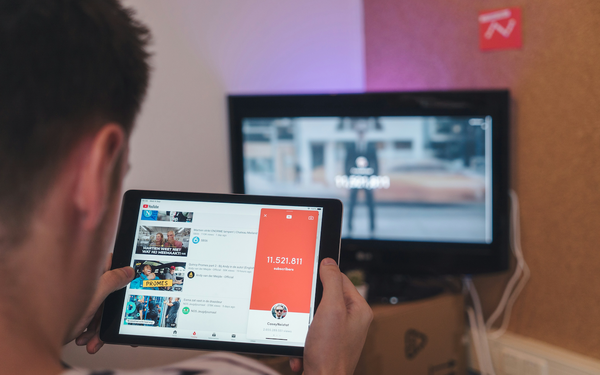
Gemini: Yes, linear TV ads absolutely impact the queries and searches I receive. When a commercial airs on traditional television, it often triggers an immediate wave of curiosity, leading users to ask me about the featured products, background songs, or actors.
Me: Please explain how TV ads drive AI queries.
Gemini: Spontaneous fact-checking: Users ask about the accuracy of claims made in political, supplement or insurance ads.
Identifying media elements: I frequently get questions like “What is the song playing in the new car commercial?” or “Who is the actor in the phone company ad?
Explaining complex visuals: Users describe confusing or high-concept ads to ask what the commercial was actually trying to sell.
Product research: Commercials introduce new gadgets or financial services, prompting users to ask me for direct comparisons, feature breakdowns or pricing.
Cultural phenomenons: Super Bowl commercials or viral ad campaigns cause massive, coordinated spikes in specific questions for days after airing.
Me: How much of a brand’s search volume and value can be attributed to its linear TV ads?
Gemini: Television advertising typically drives a 20% to 60% uplift in a brand’s search ad volume. While paid search campaigns excel at capturing existing demand, linear and connected TV (CTV) are the primary engines that generate it.
Because 83% of viewers watch television with a ‘second screen’ (a phone or laptop) in hand, TV commercials act as an immediate behavioural trigger. This creates a massive ‘halo effect’ where lower-funnel search performance is heavily subsidised by broadcast investments.
Me: Have brands shifted too much of their spend from linear TV ads to search and social?
Gemini: Yes, a vast majority of brands have pulled back too far from TV advertising, over-indexing on search and social. This imbalance has created a modern marketing crisis known as “attribution theatre.”
By prioritising hyper-targeted digital channels that offer immediate, trackable clicks, brands have accidentally starved the top of their marketing funnel. This over-reliance on performance marketing has led to plateauing growth and surging customer acquisition costs (CAC).
Wow. Even Google’s Gemini knows that too much money is being spent on Google’s search ads.
Ready to take Gemini on sales calls with you? I am.
* Summary created by AI.
This story was first published by MediaPost.com and is republished with the permission of the author.

Dave Morgan, a lawyer by training, is the CEO and founder of Simulmedia. He previously founded and ran both TACODA, Inc, an online advertising company that pioneered behavioural online marketing and was acquired by AOL in 2007 for $275 million, and Real Media, Inc, one of the world’s first ad serving and online ad network companies and a predecessor to 24/7 Real Media (TFSM), which was later sold to WPP for $649 million. Follow him on Twitter @davemorgannyc