

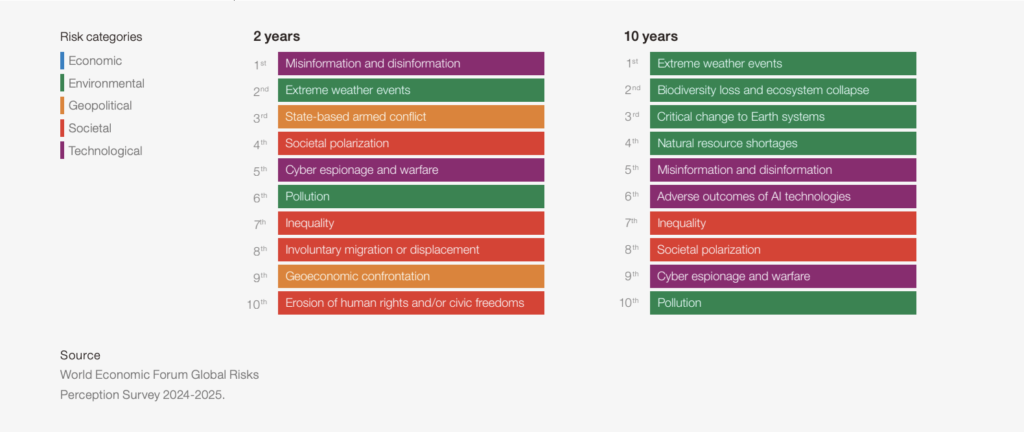
The 2025 World Economic Forum Risk Report underscored how misinformation and disinformation are increasingly spread for profit or political gain. This deliberate flooding of society with false information makes it harder to identify genuine warnings about deception and respond appropriately.
The relentless barrage of misleading narratives not only confuses public discourse but also erodes trust in legitimate sources of information, leaving society more vulnerable to manipulation.
As deceptive content becomes increasingly sophisticated, distinguishing fact from fiction requires stronger media literacy and greater vigilance from both the media and public relations industries.
The impact of information overload on public awareness
The intentional saturation of society with misleading or false information significantly complicates efforts to recognise authentic warnings. Individuals increasingly struggle to distinguish between credible alerts and fabricated narratives.
This manufactured confusion undermines informed decision-making and weakens society’s ability to respond effectively to genuine threats.
The World Economic Forum’s Risk Report identifies misinformation, disinformation and technological advances such as AI as critical risks. Meanwhile, the distortion of reality remains a common tactic among those seeking to influence public opinion.
Blurring the line between PR and journalism
Since 2025, the growing volume of persuasive and highly targeted messaging has made it increasingly difficult for credible journalism to stand out in an information environment saturated with content.
This evolving landscape demands that journalists and PR practitioners adapt quickly, refining their approaches to prioritise transparency, accuracy and credibility. As digital platforms accelerate the speed and reach of information, the responsibility to uphold ethical standards and support informed public debate becomes even more important.
The challenge is no longer only to combat misleading content, but also to rebuild trust among audiences who are increasingly sceptical of traditional gatekeepers.
By embracing accountability and leveraging technologies that support fact-checking and audience engagement, both professions can strengthen their role in creating a more truthful and resilient information environment.
Opportunities for authenticity and action
As audiences grow weary of repetitive, algorithm-driven content, authentic engagement and reliable information have an opportunity to stand out. With climate change and other global challenges demanding urgent attention, the coming decade represents a critical window for meaningful progress.
To meet these challenges, public relations and media must continue to evolve through improved digital literacy, ethical technology design and stronger user protections.
At this crossroads, media and public relations professionals have an opportunity to work together to rebuild public trust through transparency, accountability and a renewed commitment to factual reporting.
This includes partnering with educational, environmental and government institutions to strengthen media literacy, investing in tools that help audiences identify credible sources, and encouraging diverse perspectives that challenge echo chambers.
By promoting open dialogue and prioritising long-term societal well-being over short-term gains, these industries can help counter misinformation while fostering a more informed, engaged and resilient public.
Through sustained investment in transparency, audience empowerment and ethical communication, public relations and journalism can reaffirm their shared responsibility in helping society navigate complex challenges and ensuring that informed, authentic voices drive collective action.
Sasha Kupritz is an experienced creative B2B specialist who has worked with agencies of all sizes on countless brands. While many campaigns fade from memory, some remain defining moments for both her and the South African advertising industry.