
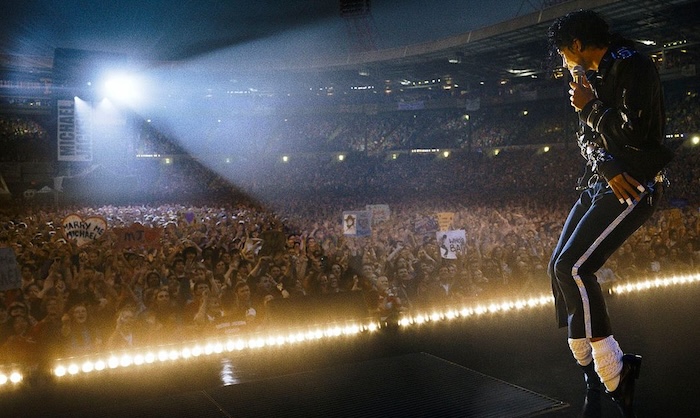
That is no small feat, particularly as Michael has entered the top 20 highest-grossing films in local box-office history.
For me, Michael’s record-smashing success represents something bigger. It reminds us of cinema’s enduring emotional power and the role it continues to play in shaping culture. South Africans have always responded to stories of talent overcoming adversity.
Michael Jackson’s journey from humble beginnings to global icon status tapped into themes that resonate deeply in a country where ambition and resilience remain central to many people’s lived experience.
Locally, what made Michael’s release unique was that we were also able to turn the film into a cultural moment. Social media played a major role in the campaign, with collaborations involving content creators helping to amplify the conversation in creative ways.
The South African premiere became an event in itself, bringing together celebrities, creators and media personalities, helping to make the film feel relevant within our context. Localisation matters. Audiences want to feel that global entertainment has an authentic place in local culture.
Michael’s success has not happened in isolation. South Africa has just recorded its highest May attendances in the post-pandemic era, mirroring global trends. In the US, 2026 has been the strongest year at the cinema box office since 2019. After a challenging period for the industry, cinema has shown its resilience and continued relevance, particularly among younger audiences.
Why audiences are showing up in their numbers
The conversation about cinema often centres on ticket prices, but 2026 offers the opportunity for a different perspective. Overall, audiences have been served a much stronger lineup of films this year, and I believe we should spend more time talking about the value and experience of going to the cinema.
Audiences are signalling that they appreciate immersive, communal experiences in an increasingly digital world and are willing to invest in entertainment when it feels worthwhile.
What has surprised me most this year is not that audiences are returning to cinemas, but how deliberately they are choosing the experience.
We witnessed this with films such as Barbie and Oppenheimer in 2023, which generated more than R50 million and R25 million at the South African box office, respectively, as audiences transformed movie-going into a shared cultural moment.
We are seeing similar trends locally. Premium Large Formats (PLF) such as IMAX, Scene Xtreme and 4DX continue to perform remarkably well because people want immersion and an experience that can’t be replicated. They want scale, sound, and spectacle. They want to feel transported.
South Africa’s cinema industry is also adapting. In addition to PLF cinema options, Ster-Kinekor and NuMetro continue to refine their footprints and invest in more tailored experiences, such as luxury-format offerings and children’s cinemas.
Independent cinemas are also holding their own, finding creative ways to make the cinema experience memorable. While this has always been a content-driven industry, the environment in which audiences experience movies matters enormously.
How younger audiences are experiencing cinema
This year has seen outstanding performance from films outside the traditional blockbuster mould. Obsession, a micro-budget horror film, is defying conventional box office patterns.
For five consecutive weekends, the film increased its box office performance week-on-week, an exceptionally rare occurrence in modern theatrical exhibition, helping to make it one of the year’s biggest breakout success stories.
Super Mario Galaxy Movie became the biggest animated release of the year so far, earning over R20 million locally and over $1 billion worldwide. These proof points are a testament to younger consumers consciously seeking out experiences that feel social, memorable and worth sharing.
Worldwide, cinema is acknowledged as a valuable third space for the youth and Generation Z has become the single-most important cinema-going audience segment. In their context, cinema offers something increasingly rare: uninterrupted immersion.
For two hours, audiences can disconnect from notifications and engage with a story together, enjoying the JOMO (joy of missing out online) that they crave. For many parents, cinemas are also viewed as trusted spaces where their kids can socialise safely.
Globally, brands have noticed how cinema creates moments of connection that become part of culture and are partnering with major movie releases. These collaborations create powerful synergies that further fuel the marketing engine.
The opportunity we should not ignore
Roughly 40% of South Africa’s population is under 25, representing around 25 million people. Globally, Gen Z is shaping the future of cinema. This presents an incredibly exciting growth opportunity for South African cinema in looking ahead.
As an industry, I believe we should be asking bigger questions. How do we create experiences that genuinely resonate with younger audiences in ways that feel authentic to them? How do we make cinema part of their entertainment rhythm and build on what makes the experience special? How do brands, creators and business leaders help make cinema more culturally relevant and accessible to younger South Africans?
Most importantly, how do we ensure that more young people get to participate in the cultural phenomenon of cinema, not only as audiences, but through the jobs, opportunities and creative industries that surround it? Cinema in South Africa is at an inflection point. The momentum is there, the content slate is strong and audiences are showing up.
The question now is not whether cinema matters. The evidence is becoming difficult to ignore. In an increasingly fragmented world, people still crave moments that bring them together. That may be the strongest argument for cinema’s future yet.
*Summary created by AI
Cameron Hogg is managing director at United International Pictures, South Africa.