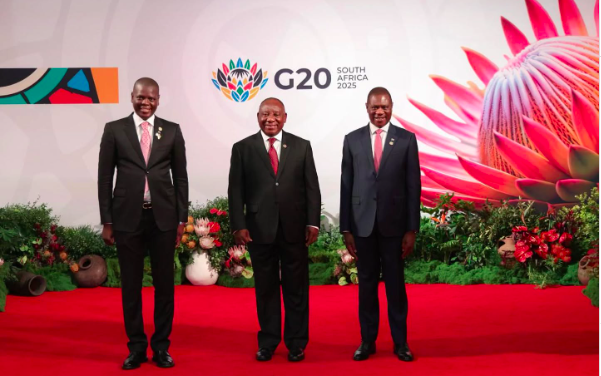
South Africa’s hosting of the G20 Summit in 2025 wasn’t just a diplomatic milestone. It was a live, high-stakes demonstration of what strategic communication looks like when the stakes are global, the audience is fragmented, and the entire world is refreshing their news feeds for the next headline.
For those of us working in marketing, media, and professional communications, the summit delivered a masterclass. Many of the lessons are surprisingly transferable to the boardroom, the campaign war room, and the brands we build daily.
Below are the five non-negotiable insights that stood out most, not from a political lens, but from a communications leadership perspective.
1. Africa took control of its own narrative: The power of pre-framing
One of the biggest strategic wins of G20 Johannesburg was how intentionally South Africa, as the first African host, shaped the narrative before anyone else could. Analysts and global media often arrive with “pre-loaded assumptions” about Africa, assumptions that, if left unchallenged, become the default story.
South Africa didn’t wait for external validation. It proactively framed the summit around a powerful, values-driven theme: Solidarity, Equality, and Sustainability. This was more than a slogan; it was a narrative filter. It ensured every discussion, from debt relief to climate finance and global wealth inequality, was interpreted through the lens of the Global South’s priorities and a distinctly African voice.
Furthermore, the early adoption of the Leaders’ Declaration, a move celebrated by many nations but reportedly opposed by the US, sent an immediate, decisive message about the host’s agenda-setting power and multilateral consensus.
Marketing takeaway:
- Brands must learn to pre-frame their story with clear, intentional values. If you do not define your positioning and narrative anchor, the market, competitors, or external crises will do it for you, and they won’t always be kind or accurate.
- Reputation isn’t built by accident; it’s authored. The G20 showed what it looks like to author that story confidently, even in the face of geopolitical pressure, by aligning every action and statement with a single, clear theme.
2. Integrated communication works: internal & external must align
A standout element was how seamlessly domestic communication and global communication were integrated.
The government didn’t just speak to foreign media; they spoke to South Africans in communities, on social platforms, and through outreach programmes like the establishment of the Township20 (TS20) engagement group.
The goal was clearly: “Let South Africans understand the G20’s relevance and let the world hear the voices and priorities of all South Africans.”
This deep, concerted effort secured an essential social licence for the event. By the time the summit kicked off, citizens were talking about it with a sense of ownership, not distance or apathy. This internal buy-in became a protective shield, allowing the hosts to focus on the external narrative while maintaining national cohesion.
Marketing takeaway
- Internal buy-in isn’t a nice-to-have; it’s your reputation’s first line of defence. Your employees, stakeholders, and local communities are your first and most credible influencer network.
- If your people aren’t aligned, excited, or informed, your external messaging will inevitably fracture and wobble under scrutiny. For any major product launch or corporate rebrand, the internal launch must be as robust as the external campaign.
3. The M20 Media Summit elevated information integrity to a global strategic imperative
The M20 Media Summit, convened by the South African National Editors’ Forum (SANEF) and Media Monitoring Africa (MMA), was not a side-show, but a powerful, proactive call to action. African media leaders successfully tabled the Johannesburg Declaration, and its formal handover to President Ramaphosa ahead of the main summit cemented its standing as a major agenda point.
The M20 Declaration fundamentally framed Information Integrity as essential to democracy, development, and the achievement of the G20’s goals.
Key planks of this declaration
- Combating Disinformation & AI Governance: The declaration called for urgent, coordinated action against misinformation, demanding stronger accountability from technology companies for the design of their Artificial Intelligence (AI) tools. It reframes AI not just as a technology story, but as a story about power, control, and ethical deployment.
- Journalist Safety & Protection: It stressed the relentless persecution of journalists globally, specifically condemning the targeting of media professionals in conflict zones like Gaza, and demanding an end to impunity for attackers.
- Media Viability and Sustainability: Recognising the financial crisis facing independent journalism, the M20 called on G20 nations to take decisive steps toward establishing sustainable funding models that prioritise the public interest.
Marketing and media takeaway
- We are entering an era where truth, transparency, and verification are commercial differentiators, not just ethical considerations. Brands cannot survive in a ‘post-truth’ environment; they need to be active champions of information integrity.
- Authenticity is no longer a trend; it is critical infrastructure. Brands that communicate clearly, avoid opportunistic ‘spin’, and value verifiable information will earn and maintain trust in a hyper-sceptical digital world. Marketers must integrate ethical AI usage and source transparency into their foundational communication policies.
4. Complex crises can be turned into reputation wins
The summit wasn’t without dramatic tensions: the glaring absence of a major G20 leader (the US), geopolitical conflicts dominating headlines, and relentless online noise were real threats to the host’s success. Yet, South Africa’s communication response was a study in narrative discipline.
Instead of reacting defensively to the US boycott or allowing the absence to derail the talks, the hosts calmly reframed the story. The narrative became: “Multilateralism still works, with or without certain powers.”
The early adoption of the Declaration in the face of opposition reinforced a confident stance, allowing objective progress, the focus on the Global South agenda, climate finance, and debt relief, to replace political theatre as the main story. This pivot turned a potential crisis into a proof point for the strength of the collective and the host’s strategic resolve.
Marketing takeaway
- Crisis communication is not about dodging bullets; it’s about controlling the meaning of the moment. A setback can become a proof point; a criticism can be reframed into perspective.
- The key is narrative discipline. Marketers must build, not borrow, the resilience to stick to their core message and strategic theme, even when external forces try to change the subject.
5. The world responds to consistency and professional rigour
Perhaps the most important lesson for our industry is that the success was not accidental. South Africa didn’t improvise its way to a strong outcome. Every element, from the core messaging, the high standard of the media centre experience, the social sentiment tracking, the community dialogue, and the aligned leadership narratives, was part of a coordinated, professional effort.
That consistency is why the payoff was so big: renewed international respect, stronger national pride, better-informed global audiences, and global recognition for Africa’s communication maturity. The seamlessness of the operation, widely lauded by the media, reinforced the credibility of the entire agenda.
Marketing takeaway
The formula for building value remains the same, whether you’re running a global summit or launching a new consumer brand:
- Consistency builds Credibility.
- Credibility builds Influence.
- Influence builds Reputation.
- Reputation builds Value.
The bottom line?
The G20 was a potent reminder that communication is not window dressing; it is a strategic asset and a source of competitive advantage. It also confirmed that Africa is not a passive participant in global storytelling; we are increasingly a co-author of the global narrative. This requires communicators who can work with cultural intelligence, data, creativity, and professional discipline.
As we continue our work of raising professional standards, strengthening narrative leadership, and championing ethical communication, the G20 stands as proof that South Africa can communicate at a world-class level, with world-shaping impact. Our industry should take that momentum seriously and build on it loudly, proudly, and intentionally. The world is clearly still listening, and we have the capacity to lead the narrative.
Bradly Howland is the CEO of Alkemi Collective, a Cape Town based communications and marketing agency.