• Subscribe to our newsletter
The Media Online
  • Home
  • MOST Awards
  • News
    • Awards
    • Media Mecca
  • Print
    • Newspapers
    • Magazines
    • Publishing
  • Broadcasting
    • TV
    • Radio
    • Cinema
    • Video
  • Digital
    • Mobile
    • Online
  • Agencies
    • Advertising
    • Media agency
    • Public Relations
  • OOH
    • Events
  • Marketing
    • Thought Leaders
    • Campaigns
    • Research
    • Media Education
      • Media Mentor
  • Press Office
    • Press Office
    • TMO.Live Blog
    • Events
    • Jobs
No Result
View All Result
  • Home
  • MOST Awards
  • News
    • Awards
    • Media Mecca
  • Print
    • Newspapers
    • Magazines
    • Publishing
  • Broadcasting
    • TV
    • Radio
    • Cinema
    • Video
  • Digital
    • Mobile
    • Online
  • Agencies
    • Advertising
    • Media agency
    • Public Relations
  • OOH
    • Events
  • Marketing
    • Thought Leaders
    • Campaigns
    • Research
    • Media Education
      • Media Mentor
  • Press Office
    • Press Office
    • TMO.Live Blog
    • Events
    • Jobs
No Result
View All Result
The Media Online
No Result
View All Result
Home Digital

Exposing online romance scams

Who the fraudsters are, how they operate, and why they do it.

by Suleman Lazarus
February 12, 2025
in Digital
0 0
0
Exposing online romance scams

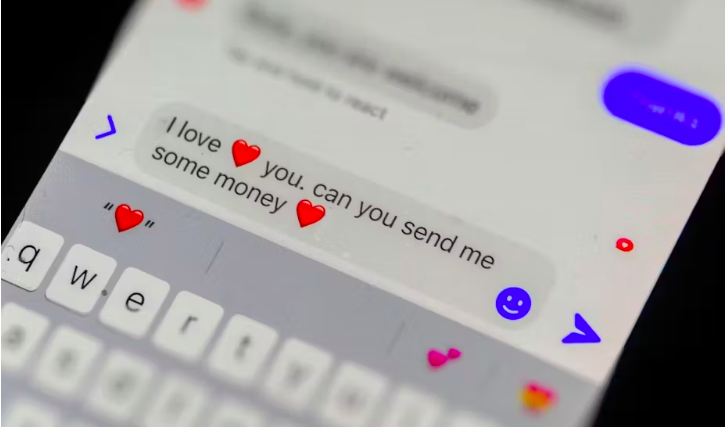
Some romance scams operate from countries in west Africa. Getty Images/Frank Brennan

Share on FacebookShare on Twitter

People find love in many ways and through diverse mediums. Online platforms have become popular meeting places for people looking to find intimate partners, making them a prime target for cybercriminals.

Online romance fraud has become a global phenomenon. According to the Federal Bureau of Investigation in the US, romance scams accounted for losses to about 24,000 Americans, exceeding US$1 billion, in 2022.

On the African continent, Nigeria and Ghana have emerged as hubs for internet fraud. The Yahoo Boys operating in Nigeria and Sakawa Boys in Ghana have a reputation for engaging in various fraudulent schemes, including online romance scams.

Over the past decade, I have researched cybercrime and criminology, focusing on west African online fraudsters. Coverage of romance scams often centres on victim narratives or sensational headlines, leaving offender-focused research largely unexplored.

Target Western societies

In a recent paper, I studied the cases of 50 people convicted of online romance in Nigeria. A separate research study I spearheaded involved interviews with active offenders in Ghana. Rather than relying solely on fragmented media accounts, the two research papers offer a robust, evidence-based understanding of the cultural, economic and historical factors driving cybercriminal behaviour.

My findings from both papers show that romance fraud offenders frequently present themselves as white and primarily target western societies. In framing fraud as a way to reclaim wealth they believed was unjustly taken during colonial rule, many saw their actions as a civic duty. In the case file study on Nigerian fraudsters, I found that many were driven by “socioeconomic needs”.

My findings provide insights into offenders’ tactics and motivations. This could be useful for law enforcement officials developing targeted interventions, and for policymakers wanting to frame informed strategies.

Who, where, how and why

This article uses “scam” and “fraud”, as well as “scammers” and “fraudsters”, interchangeably. The media, financial institutions, and the public typically use “scams” and “scammers”. Academics often prefer “fraud” and “fraudsters” to emphasise the seriousness of these crimes, as noted in my research.

I examined case files of 50 individuals convicted of romance fraud in Nigeria following prosecutions by the Economic and Financial Crimes Commission. In a separate study I conducted interviews with active romance fraud offenders in Ghana.

My decision to focus on Nigeria and Ghana was based on findings in research done earlier. For example, I co-authored a paper that reviewed 21 years of empirical studies (2000–2021) in which we found that many west African scammers predominantly targeted individuals in the west.

Another research study I spearheaded showed how songs by Nigerian artists glamorised the actions of scammers and highlighted their preference for western victims.

Similarly, the Nigeria case file study found that over half of the romance scam victims (56%) were in the US. My interviews with offenders in Ghana further showed that romance scammers viewed their actions as “legitimate retribution for colonial injustice”.

These scammers operate within a historical framework in which colonial subjugation narratives influence their motivations and societal attitudes toward cybercrime.

Profile of an online fraudster

The analysis of the case files of the 50 convicted romance scammers showed patterns in offender profiles and strategies. Most were young – 81.7% were under 26. Nearly 60% preferred Apple’s iPhone for their fraudulent schemes. When it came to occupation, 74% were university students.

Offenders carefully constructed their online personas. Nearly half (46%) posed as white American males, 12% as military personnel, and 10% as white European males.

The victims they chose were mostly women: 70% of offenders primarily targeted females, 14% targeted males, 10% targeted both genders and 6% did not specify the victim’s gender.

Facebook was the most commonly used platform, appearing in 46% of the Nigerian cases.

Some of the Ghanaian scammers said they saw their crimes as acts of service to a greater cause. This included loyalty to their communities or the pursuit of economic justice. They portrayed their scams as efforts to reclaim wealth from nations historically exploiting their regions.

Policymakers and law enforcement agencies can use these findings to develop more effective prevention strategies and intervention measures.The Conversation


Suleman Lazarus, Visiting Fellow, Mannheim Centre for Criminology, London School of Economics and Political Science

This article is republished from The Conversation under a Creative Commons license. Read the original article.



 

Tags: Dr Suleman LazarusInternetLondon School of Economicsonlineonline romance scamsonline scamssocial mediaValentine's Day

Suleman Lazarus

Dr Suleman Lazarus holds a PhD in cybercrime and criminology. He is an associate editor for the Association for Computing Machinery (ACM) journal "Digital Threats: Research and Practice." Dr Lazarus is a visiting fellow at the Mannheim Centre for Criminology at the London School of Economics and Political Science (LSE) and a fellow at the Centre of Excellence on Ageing (CEA) at the University of Surrey. He is also an honorary lecturer at the University of Portsmouth. Dr Lazarus created the “Tripartite Cybercrime Framework (TCF),” categorising cybercrimes into socioeconomic, psychosocial and geopolitical motivational groups. He has authored numerous peer-reviewed articles in journals such as "Telematics and Informatics," “Deviant Behavior,” and "Cyberpsychology, Behavior, and Social Networking." Dr. Lazarus's research focuses on cyber criminals and society.

Follow Us

  • twitter
  • threads
  • Trending
  • Comments
  • Latest
Adtopia expands DStv channel portfolio

Adtopia expands DStv channel portfolio

August 20, 2026
We measure the cost of strategy. Why don’t we measure its value?

We measure the cost of strategy. Why don’t we measure its value?

August 18, 2026
Awards Wrap: Radio Workshop nominated for Podcast of the Year, Bar & Beverage Awards 2023 winners announced, grab those MOST Awards tickets now

Awards Wrap: PRISM Awards honours PR professionals, Euphoria Telecom launches No Bull Prize, Red & Yellow students thrive at The Loeries

October 21, 2025
You killed the medium, bro

You killed the medium, bro

August 20, 2026
The only L’s I take are Lessons

The only L’s I take are Lessons

0
NCC clarifies new opt-out registry rules for direct marketers

NCC clarifies new opt-out registry rules for direct marketers

0
I love social media. But I hate it

I love social media. But I hate it

0
Media Moves: TASTE turns 20, Anele, Lira and Janine van Wyk are FEARLESS in new campaign; Alex Okosi new MD for Google Africa, Accenture Song wins Telkom business

Media moves: SABC the official broadcast partner for Taste of Cape Town, Mpumelelo Zondi joins Humanz, MultiChoice Group announced as super sponsor of FAME Week Africa

0
The only L’s I take are Lessons

The only L’s I take are Lessons

August 21, 2026
I love social media. But I hate it

I love social media. But I hate it

August 21, 2026
NCC clarifies new opt-out registry rules for direct marketers

NCC clarifies new opt-out registry rules for direct marketers

August 21, 2026
You killed the medium, bro

You killed the medium, bro

August 20, 2026

Recent News

The only L’s I take are Lessons

The only L’s I take are Lessons

August 21, 2026
I love social media. But I hate it

I love social media. But I hate it

August 21, 2026
NCC clarifies new opt-out registry rules for direct marketers

NCC clarifies new opt-out registry rules for direct marketers

August 21, 2026
You killed the medium, bro

You killed the medium, bro

August 20, 2026

ABOUT US

The Media Online is the definitive online point of reference for South Africa’s media industry offering relevant, focused and topical news on the media sector. We deliver up-to-date industry insights, guest columns, case studies, content from local and global contributors, news, views and interviews on a daily basis as well as providing an online home for The Media magazine’s content, which is posted on a monthly basis.

Follow Us

  • twitter
  • threads

ARENA HOLDING

Editor: Glenda Nevill
nevillg@themediaonline.co.za
Sales and Advertising:
Tarin-Lee Watts
wattst@arena.africa
Download our rate card

OUR NETWORK

TimesLIVE
Sunday Times
SowetanLIVE
BusinessLIVE
Business Day
Financial Mail
HeraldLIVE
DispatchLIVE
Wanted Online
SA Home Owner
Business Media MAGS
Arena Events

NEWSLETTER SUBSCRIPTION

 
Subscribe
  • About
  • Advertise
  • Privacy & Policy
  • Contact

Copyright © 2015 - 2026 The Media Online. All rights reserved. Part of Arena Holdings (Pty) Ltd

Welcome Back!

Login to your account below

Forgotten Password?

Retrieve your password

Please enter your username or email address to reset your password.

Log In

Add New Playlist

No Result
View All Result
  • Home
  • MOST Awards
  • News
    • Awards
    • Media Mecca
  • Print
    • Newspapers
    • Magazines
    • Publishing
  • Broadcasting
    • TV
    • Radio
    • Cinema
    • Video
  • Digital
    • Mobile
    • Online
  • Agencies
    • Advertising
    • Media agency
    • Public Relations
  • OOH
    • Events
  • Research & Education
    • Research
    • Media Education
      • Media Mentor
  • Press Office
    • Press Office
    • TMO.Live Blog
    • Events
    • Jobs

Copyright © 2015 - 2026 The Media Online. All rights reserved. Part of Arena Holdings (Pty) Ltd

Not enough quota to unlock this post
Unlock left : 0
Are you sure want to cancel subscription?