
- Marketing is shifting from campaigns to always-on AI systems.
- AI now recommends brands, making machine-readable content essential.
- Trust, structured data and credibility drive AI visibility.
- CMOs must redesign workflows, not just adopt AI tools.
- Human judgement and systems thinking are the new competitive advantage. *
The campaign is no longer the atomic unit of marketing. The system is. Which changes what a CMO must be good at.
A few weeks ago, I watched a colleague plan an entire weekend away without opening a single website. She told an AI assistant she wanted three days in the Cape Winelands, a budget, and a toddler in tow.
Within a minute, it had compared guesthouses, filtered out the ones with poor reviews on child-friendliness, booked a table at a restaurant with a play area, and quietly ignored the two hotel chains that had spent months trying to reach her by email.
No brand won her attention that day. An algorithm did the choosing, and the brands it chose had never met her.
How AI drives brand selection, and why
That small moment is the whole future of marketing compressed into 60 seconds.
For 30 years, the discipline has been organised around a single unit of work: the campaign. We briefed, we created, we launched, we measured, and then we did it all again. The campaign was our heartbeat.
What the technology now arriving makes unavoidable is that the heartbeat is being replaced by something closer to a nervous system. A system that is always on, continuously sensing, and continuously responding.
McKinsey calls it the shift “from campaigns to continuous growth”. BCG frames the same move as marketing, finally learning to do both the “art” and the “science” at once. Strip away the consultancy language, and the point is blunt: the campaign is no longer the atomic unit of marketing. The system is.
Interlooped systems are the future
Nearly half of consumers already use AI-powered search at some point in their buying journey, and more than half now lean on AI to help decide what to buy. When a machine is doing the shortlisting, the old game of buying attention starts to look quaint.
We are moving from an attention economy, where the prize was being seen, to a better-described trust economy, where the prize is being recommended. Being visible is no longer enough. A brand now has to be legible to a machine. Today a brand’s claims must be verifiable, its data structured, its reputation readable by a model that will never watch your thirty-second film.
Here is the part that should unsettle every CMO, and the reason so few have cracked it. Roughly nine in ten marketing chiefs are experimenting with AI, yet fewer than one in ten have scaled it into real value.
The failure is rarely the technology. It is that most of us have bolted AI onto the old machine, while leaving the campaign-era plumbing intact. The organisations pulling ahead have done something harder. They have rewired the workflow itself, breaking marketing into tasks and asking, coldly, which belong to a human and which to an agent.
The singularity has arrived
The real skills conversation begins with where and how machines and humans integrate. This is a far more interesting concept than the conversation we keep having about prompt engineering.
The instinct of every anxious marketing leader is to reach for technical fluency: learn the tools, hire the data scientists, buy the platform. Useful, but it misreads the moment. When machines can generate a thousand competent variations of an idea before lunch, competence stops being scarce.
Taste becomes scarce. Judgment becomes scarce. The ability to look at what the system produced and know, instantly, whether it is on-brand or off, brave or bland, true or merely plausible. That is the capability that appreciates as the cost of production collapses toward zero.
Given that, the skills CMOs need to build are not the ones software vendors are selling. Three matter most:
The first is systems literacy
Not coding, but the ability to design and steer a machine that runs without you. To understand how insight, creative, personalisation and media now feed one another in a loop. The best marketing leaders of the next decade will look less like directors and more like conductors of a very fast orchestra, most of whose players are software.
The second is editorial courage
If AI floods every channel with adequate content, the only defence is a point of view sharp enough to cut through it. Brands that treat their voice, values and creative guardrails as infrastructure will keep their distinctiveness. Those that let the machine decide what they sound like will slowly dissolve into everyone else.
The third, and least discussed, is the discipline of capturing value.
The dirty secret of AI in marketing is that it often works and yet delivers nothing to the bottom line, because time saved is quietly reabsorbed rather than reinvested. A marketer who wins back a fifth of their week and spends it on more of the same has generated no value at all. Leaders now need the rigour to track outcomes rather than activity, and the nerve to reallocate the moment something is not working.
None of this diminishes the human. It does the opposite. As the plumbing becomes automated, the premium on human judgment rises. Technology is not making the marketer redundant. It is making the mediocre marketer redundant and the wise one indispensable.
The temptation is to wait until the picture is clearer. It will not become clearer; it will only move faster.
The brands my colleague’s assistant ignored were not badly run. They were simply still writing campaigns while the world had started building systems.
The most valuable thing on a CMO’s desk this year is not the next brief.
It is the honest answer to a single question: are we automating our marketing, or are we rebuilding systems of real business value?
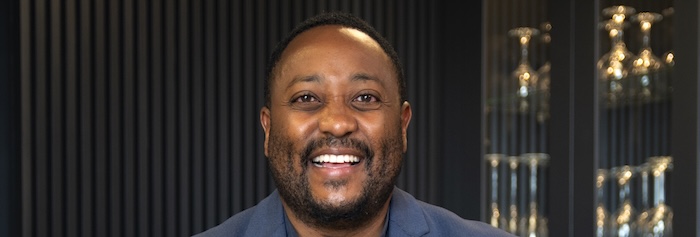
Musa Kalenga is a technologist, marketer, brand communicator and entrepreneur. He is the author of Ladders and Trampolines. He is the Group CEO and a shareholder of Brave Group and a co-founder of Bridge Labs. A member of the DukeCE faculty, Kalenga teaches about digital transformation, business growth, women in leadership and allyship. In The Brave Code, Kalenga shares his journey with Brave Group, offering a blueprint for African innovation by merging creativity and technology. His upcoming work, Do it Blind – Optimism in the Age of AI, envisions a future where AI enhances human potential, encouraging readers to embrace technological change with positivity and purpose.
Brave Group is a tech-forward, innovative communications company that delivers fully integrated brand solutions that combine creativity, strategy, and technology to grow brands.